
Politics
Supreme Court Orders West Bengal to Recalculate DA for Employees

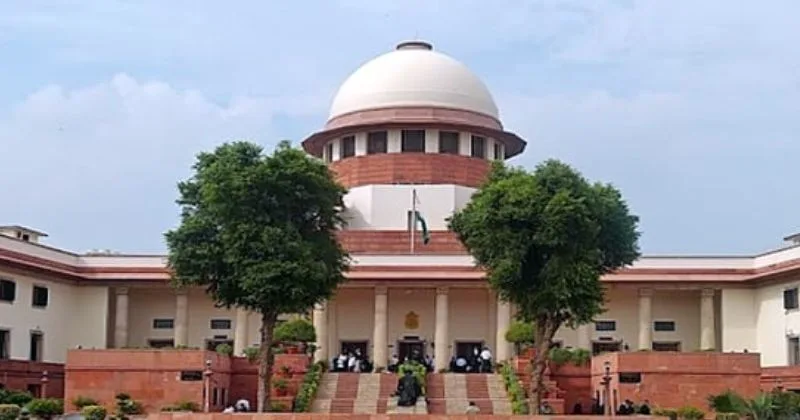
The Supreme Court of India has directed the West Bengal government to recalculate the Dearness Allowance (DA) owed to state employees for the period from 2009 to 2019. This ruling, delivered on February 5, 2024, asserts that DA is a statutory right, integral to the total emoluments under the Revision of Pay and Allowances (ROPA) Rules. The court emphasized that the state cannot arbitrarily deviate from established formulas for calculating DA.
The bench, consisting of Justice Sanjay Karol and Justice P.K. Mishra, highlighted the importance of adhering to statutory rules governing service conditions. The ruling comes in response to the West Bengal government’s previous decision to alter the calculation of DA, resulting in significantly lower payments for its employees compared to those in the central government.
In its decision, the Supreme Court stated that DA is not a discretionary benefit but an essential component of overall employee compensation. The court noted, “Dearness Allowance is not static in nature. It is dynamic and subject to change under the applicable rules,” reinforcing that DA exists to counteract inflation’s impact and cannot be diluted without appropriate justification.
Formation of High-Level Committee
Recognizing the financial implications of releasing DA arrears spanning over a decade, the Supreme Court established a high-level committee to determine the exact DA payable. This committee, headed by Justice Indu Malhotra, will include two retired Chief Justices of High Courts and the Comptroller and Auditor General (CAG) or a senior officer designated by the CAG.
The panel is tasked with recalculating DA according to the ROPA Rules, assessing the total arrears owed to employees and pensioners, and developing a phased payment schedule in cooperation with the state government. The Supreme Court has set a deadline for this process, requiring the committee to complete its work by March 6, 2026. The first installment of DA arrears is expected to be paid by March 31, 2026.
The ruling is set to benefit not only current government employees but also retired employees and pensioners entitled to receive recalculated DA arrears. This decision is anticipated to impact a significant number of current and former West Bengal government employees, many of whom have engaged in ongoing litigation over this issue.
Legal and Constitutional Implications
The Supreme Court’s decision arose from appeals filed by the West Bengal government, contesting earlier court rulings that mandated alignment of DA calculations with established norms. Employee unions had argued that the state’s DA rates fell short of inflation-linked benchmarks, resulting in a decline in real wages.
During the hearings, the Supreme Court addressed 13 key legal and constitutional questions, including the interpretation of Article 309 of the Constitution and the consistency of the state’s DA rules with the ROPA framework. The court scrutinized whether DA is a static or dynamic benefit, the validity of directives from the Central Administrative Tribunal (CAT), and the impact of financial constraints on the state’s ability to meet these obligations.
In a decisive comment, the court criticized the West Bengal government for its arbitrary changes to the DA calculation mechanism, stating that such unilateral actions undermine the predictability and fairness essential in public service employment. The bench pointed out that government employees have legitimate expectations based on periodic revisions linked to inflation indices like the All India Consumer Price Index (AICPI).
The court firmly rejected the state’s argument that the central government was overstepping its authority with DA-linked guidelines, describing this notion as a “figment of imagination.” Furthermore, the Supreme Court established a critical principle of law: once a right is conferred under statutory rules, fiscal policy cannot override that entitlement, indicating that budgetary constraints cannot justify the denial of lawful rights.
While the court recognized DA as a statutory and enforceable right, it refrained from classifying it as a fundamental right, leaving that determination for future cases. This landmark ruling not only reaffirms the rights of West Bengal government employees but also sets a precedent for how DA is viewed in relation to statutory entitlements across India.

Albert Camus’ Insightful Quote on Human Identity Resurfaces

Drone Strikes and Missile Attacks Disrupt UAE Amid Rising Tensions

Japanese Yen Rises Sharply Against US Dollar Ahead of Key Decisions

Priyanka Chopra and Nick Jonas Avoid Near Miss en Route to Oscars

Gujarat Vaccinates Over 11 Lakh Infants in Major Health Drive

Alexandre Singh Wins Oscar, Celebrates Immigrant Heritage

Lok Sabha Speaker Issues Warning Over Placards in Parliament

Global Electrosurgical Devices Market Expands to $10.2 Billion by 2034

North Zone Dominates Cricket; SJAM-1 Shines in Table Tennis

SBI Announces QIP Floor Price at ₹811.05 Per Share

Cept Unveils ₹3.1 Crore Urban Mobility Plan for Sustainable Growth

Comparing Subscription Prices: Spotify, Apple Music, and YouTube Music in India

New Blood Group Discovered in South Indian Woman at Rotary Centre

Konkani Cultural Organisation to Host Pearl Jubilee in Abu Dhabi

Torrential Rains Cause Flash Flooding in New York and New Jersey

Nothing Headphone 1 Review: A Bold Contender in Audio Design

Broad Advocates for Bowling Change Ahead of Final Test Against India

Air India Crash Investigation Highlights Boeing Fuel Switch Concerns
-
 World1 year ago
SBI Announces QIP Floor Price at ₹811.05 Per Share
-
 Lifestyle1 year ago
Cept Unveils ₹3.1 Crore Urban Mobility Plan for Sustainable Growth
-
 Science12 months ago
Comparing Subscription Prices: Spotify, Apple Music, and YouTube Music in India
-
 Science1 year ago
New Blood Group Discovered in South Indian Woman at Rotary Centre
-
 Top Stories1 year ago
Konkani Cultural Organisation to Host Pearl Jubilee in Abu Dhabi
-
 World1 year ago
Torrential Rains Cause Flash Flooding in New York and New Jersey
-
 Science1 year ago
Nothing Headphone 1 Review: A Bold Contender in Audio Design
-
 Sports1 year ago
Broad Advocates for Bowling Change Ahead of Final Test Against India
-
 Top Stories1 year ago
Air India Crash Investigation Highlights Boeing Fuel Switch Concerns
-

 Business1 year ago
Indian Stock Market Rebounds: Sensex and Nifty Rise After Four-Day Decline
-

 Sports1 year ago
Cristian Totti Retires at 19: Pressure of Fame Takes Toll
-

 Politics1 year ago
Abandoned Doberman Finds New Home After Journey to Prague