
Politics
Iran’s Women Rise Against Repression Amidst Conflict and Turmoil

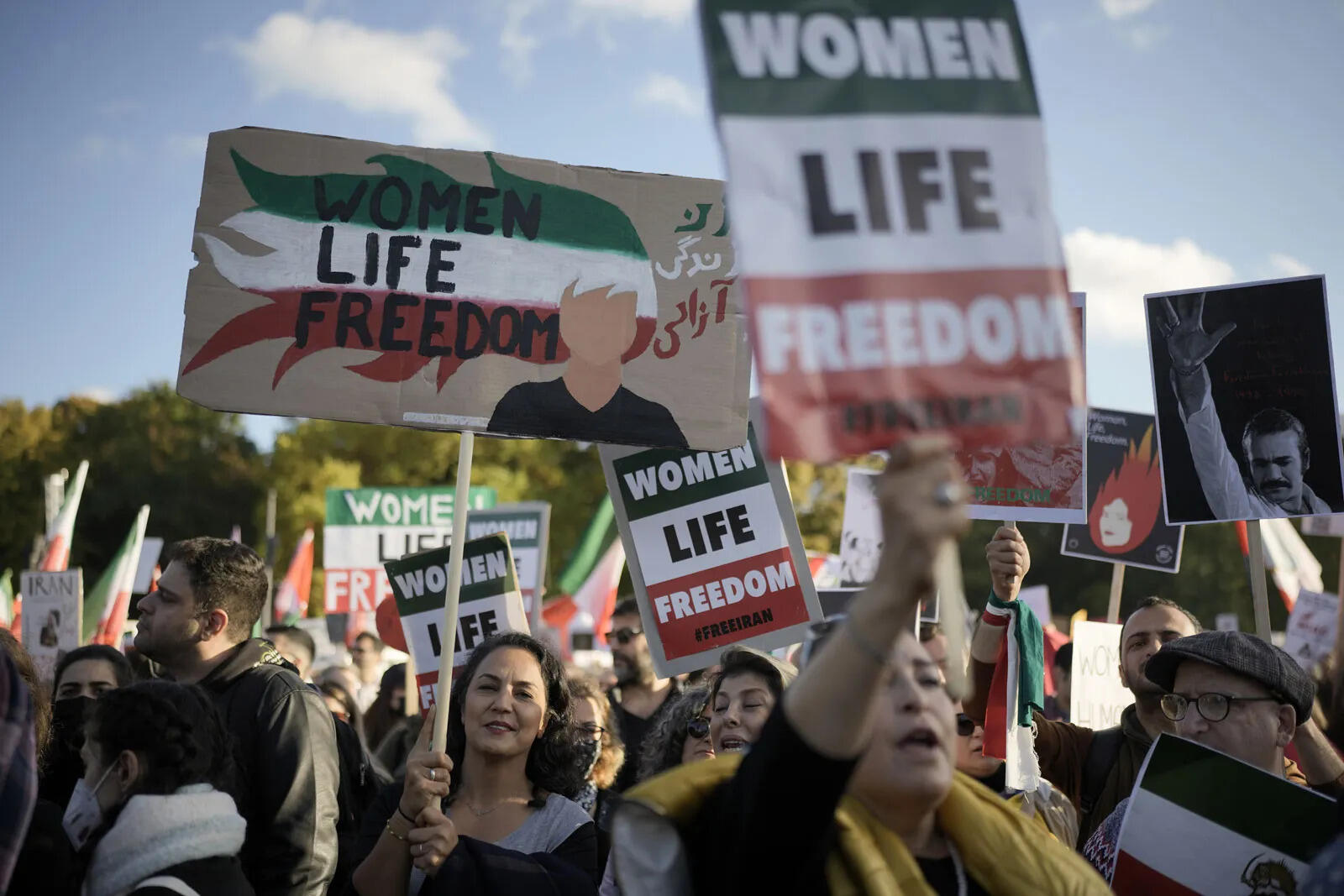
On September 13, 2022, the death of twenty-two-year-old Kurdish-Iranian woman Mahsa Amini sparked widespread protests across Iran. Amini was detained by the morality police for allegedly wearing her hijab incorrectly. Official accounts claimed she suffered a heart attack, but leaked medical scans revealed severe injuries, including a fractured skull and cerebral haemorrhage. Her death catalyzed the largest wave of protests since the 1979 revolution, highlighting systemic repression against women in Iran.
Protests Erupt Following Amini’s Death
The unrest began at Amini’s funeral in her hometown of Saqqez, where women defiantly removed their headscarves. The Kurdish chant “Jin, Jiyan, Azadi” (Woman, Life, Freedom) quickly became the rallying cry for demonstrators across more than ninety cities nationwide. For the first time in decades, protests transcended ethnic, class, and geographic boundaries, uniting Iranians in their demand for change.
In response, the regime deployed live ammunition and conducted mass arrests, resulting in numerous casualties. According to Iran Human Rights, at least 551 individuals were killed during the protests, including 68 minors. The government intensified its crackdown, revealing that the violence against women was not an isolated incident but part of a broader policy of oppression.
A Rising Toll on Women
Following Amini’s death, other young women became victims of state violence. Sixteen-year-old Nika Shakarami was abducted and killed after protesting. Reports indicated she was sexually assaulted and beaten to death by agents of the Islamic Revolutionary Guard Corps (IRGC). Similarly, Hadis Najafi, a twenty-two-year-old TikTok creator, was shot multiple times during a demonstration. Sixteen-year-old Sarina Esmailzadeh was killed by baton blows, with the government falsely claiming suicide—a narrative contradicted by Amnesty International, which confirmed she was beaten to death.
The regime’s brutality extended to minors as well. Fifteen-year-old Asra Panahi faced violence in her school for refusing to participate in pro-regime activities. Medical professionals like Dr. Ayda Rostami, who attempted to treat injured protesters, also faced severe consequences for their actions.
The Journalists Who Faced Repression
Journalists covering the protests were not spared from the regime’s heavy-handed tactics. Niloofar Hamedi, a reporter for the reformist daily Shargh, was the first to report on Amini’s condition and was arrested shortly thereafter, charged with collaborating with the United States. Elahe Mohammadi, who reported on Amini’s funeral, was also detained on similar charges. Both women endured harsh conditions in Evin Prison, becoming symbols of the fight for press freedom in Iran.
Conflict as a Shield for Repression
By spring 2023, street protests had largely been suppressed. However, escalating tensions between Iran and Israel culminated in the June 2025 Twelve-Day War, providing the Iranian government with a pretext to intensify its crackdown. Executions surged, with over 1,400 reported in 2025 alone. The regime labeled internal dissent as foreign interference, claiming that women who defied hijab laws were collaborating with external enemies.
Despite the oppressive environment, Iranian women persisted. They appeared in public without headscarves, continued to protest, and even burned portraits of Supreme Leader Ali Khamenei. This civil resistance grew more pronounced, with women becoming central figures in the fight against the regime’s oppressive policies.
The December Crackdown and External Strikes
In December 2025, protests reignited amid worsening economic conditions. By January 2026, millions took to the streets across all provinces, prompting the government’s deadliest crackdown in recent history. Internal estimates suggest at least 30,000 were killed within the first 48 hours. An internet blackout obscured the extent of the violence.
On February 28, 2026, coordinated strikes by the United States and Israel targeted Iran, resulting in the death of Khamenei and numerous high-ranking officials. While the stated objective was regime change, many Iranians found themselves caught in a paradox. They celebrated Khamenei’s death yet faced bombings from foreign forces claiming to liberate them.
A student from the northern city of Babol expressed the conflicting emotions felt by many: “We do not know whether to be happy about the elimination of the criminals who oppress us or to remain silent in the face of the US.”
As Iranian women continue to navigate the complexities of their situation, their resilience remains evident. From Amini’s tragic death to the ongoing struggle against state violence and geopolitical turmoil, they remain unwavering in their pursuit of freedom. Their story reflects the harsh realities of oppression, the fight for justice, and the enduring spirit of defiance.

Albert Camus’ Insightful Quote on Human Identity Resurfaces

Drone Strikes and Missile Attacks Disrupt UAE Amid Rising Tensions

Japanese Yen Rises Sharply Against US Dollar Ahead of Key Decisions

Priyanka Chopra and Nick Jonas Avoid Near Miss en Route to Oscars

Gujarat Vaccinates Over 11 Lakh Infants in Major Health Drive

Alexandre Singh Wins Oscar, Celebrates Immigrant Heritage

Lok Sabha Speaker Issues Warning Over Placards in Parliament

Global Electrosurgical Devices Market Expands to $10.2 Billion by 2034

North Zone Dominates Cricket; SJAM-1 Shines in Table Tennis

SBI Announces QIP Floor Price at ₹811.05 Per Share

Cept Unveils ₹3.1 Crore Urban Mobility Plan for Sustainable Growth

Comparing Subscription Prices: Spotify, Apple Music, and YouTube Music in India

New Blood Group Discovered in South Indian Woman at Rotary Centre

Konkani Cultural Organisation to Host Pearl Jubilee in Abu Dhabi

Torrential Rains Cause Flash Flooding in New York and New Jersey

Nothing Headphone 1 Review: A Bold Contender in Audio Design

Air India Crash Investigation Highlights Boeing Fuel Switch Concerns

Broad Advocates for Bowling Change Ahead of Final Test Against India
-
 World1 year ago
SBI Announces QIP Floor Price at ₹811.05 Per Share
-
 Lifestyle1 year ago
Cept Unveils ₹3.1 Crore Urban Mobility Plan for Sustainable Growth
-
 Science1 year ago
Comparing Subscription Prices: Spotify, Apple Music, and YouTube Music in India
-
 Science1 year ago
New Blood Group Discovered in South Indian Woman at Rotary Centre
-
 Top Stories1 year ago
Konkani Cultural Organisation to Host Pearl Jubilee in Abu Dhabi
-
 World1 year ago
Torrential Rains Cause Flash Flooding in New York and New Jersey
-
 Science1 year ago
Nothing Headphone 1 Review: A Bold Contender in Audio Design
-
 Top Stories1 year ago
Air India Crash Investigation Highlights Boeing Fuel Switch Concerns
-
 Sports1 year ago
Broad Advocates for Bowling Change Ahead of Final Test Against India
-

 Business1 year ago
Indian Stock Market Rebounds: Sensex and Nifty Rise After Four-Day Decline
-

 Sports1 year ago
Cristian Totti Retires at 19: Pressure of Fame Takes Toll
-

 Politics1 year ago
Abandoned Doberman Finds New Home After Journey to Prague