
Politics
India Strengthens Nuclear Capabilities with K-4 Missile Test

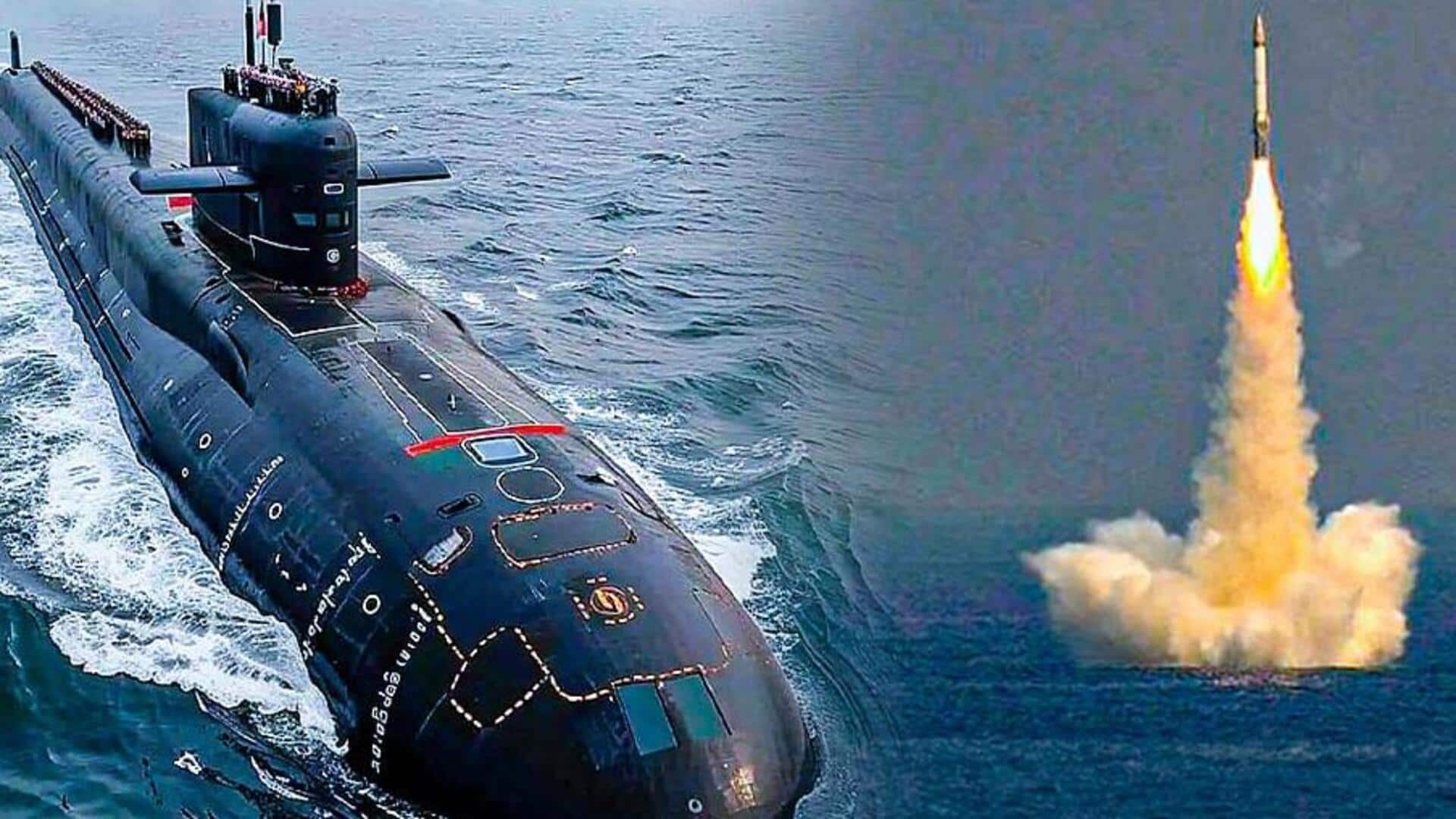
India has successfully tested the K-4 ballistic missile from the nuclear-powered submarine INS Arighaat, marking a significant advancement in its nuclear triad capabilities. This test, conducted on March 12, 2024, off the coast of Vishakhapatnam in the Bay of Bengal, demonstrates India’s ability to enhance its sea-based nuclear strike potential with a striking range of 3,500 kilometers.
The K-4 missile represents an important addition to India’s strategic arsenal, allowing for the targeting of key strategic locations while maintaining crucial elements of stealth and survivability. With this new capability, India reinforces its credible deterrence against potential adversaries, solidifying its position as one of the few nations capable of launching nuclear weapons from land, air, and underwater platforms.
K-4 Missile Specifications and Capabilities
Inducted into the Indian Navy on August 29, 2024, the K-4 is adapted from the Agni-III land-based missile system and stands as India’s longest-range sea-based strategic weapon. This submarine-launched ballistic missile (SLBM) is uniquely designed for underwater launches, allowing it to emerge from a submarine launch silo, surface on the ocean, and ignite its rocket motor.
The K-4 missile carries a payload of 2.5 tonnes, making it a formidable component of India’s nuclear deterrent strategy. It can be deployed from the Arihant-class submarines, which are integral to India’s underwater warfare capabilities.
The designation ‘K’ in the K-4 missile pays tribute to the late APJ Abdul Kalam, a prominent scientist who played a pivotal role in India’s Integrated Guided Missile Development Program (IGMDP). His contributions have been foundational to India’s advancements in missile technology.
Strategic Implications
The successful test of the K-4 missile underscores India’s commitment to modernizing its defense capabilities amid evolving regional security dynamics. This advancement not only enhances India’s military readiness but also serves as a strategic counterbalance in the complex geopolitical landscape of South Asia.
As nations continue to develop their military technologies, India’s progress with the K-4 missile demonstrates a significant leap in its strategic deterrence capabilities. The ability to launch a nuclear weapon from a submarine enhances India’s operational flexibility and security, allowing it to respond effectively to any potential threats.
The implications of this successful test extend beyond technical achievements; they reflect India’s ongoing efforts to ensure national security and maintain stability in the region. With the K-4 missile now part of its arsenal, India positions itself as a robust player in the realm of nuclear deterrence.

Albert Camus’ Insightful Quote on Human Identity Resurfaces

Drone Strikes and Missile Attacks Disrupt UAE Amid Rising Tensions

Japanese Yen Rises Sharply Against US Dollar Ahead of Key Decisions

Priyanka Chopra and Nick Jonas Avoid Near Miss en Route to Oscars

Gujarat Vaccinates Over 11 Lakh Infants in Major Health Drive

Alexandre Singh Wins Oscar, Celebrates Immigrant Heritage

Lok Sabha Speaker Issues Warning Over Placards in Parliament

Global Electrosurgical Devices Market Expands to $10.2 Billion by 2034

North Zone Dominates Cricket; SJAM-1 Shines in Table Tennis

SBI Announces QIP Floor Price at ₹811.05 Per Share

Cept Unveils ₹3.1 Crore Urban Mobility Plan for Sustainable Growth

Comparing Subscription Prices: Spotify, Apple Music, and YouTube Music in India

New Blood Group Discovered in South Indian Woman at Rotary Centre

Konkani Cultural Organisation to Host Pearl Jubilee in Abu Dhabi

Torrential Rains Cause Flash Flooding in New York and New Jersey

Nothing Headphone 1 Review: A Bold Contender in Audio Design

Broad Advocates for Bowling Change Ahead of Final Test Against India

Air India Crash Investigation Highlights Boeing Fuel Switch Concerns
-
 World1 year ago
SBI Announces QIP Floor Price at ₹811.05 Per Share
-
 Lifestyle1 year ago
Cept Unveils ₹3.1 Crore Urban Mobility Plan for Sustainable Growth
-
 Science12 months ago
Comparing Subscription Prices: Spotify, Apple Music, and YouTube Music in India
-
 Science1 year ago
New Blood Group Discovered in South Indian Woman at Rotary Centre
-
 Top Stories1 year ago
Konkani Cultural Organisation to Host Pearl Jubilee in Abu Dhabi
-
 World1 year ago
Torrential Rains Cause Flash Flooding in New York and New Jersey
-
 Science1 year ago
Nothing Headphone 1 Review: A Bold Contender in Audio Design
-
 Sports1 year ago
Broad Advocates for Bowling Change Ahead of Final Test Against India
-
 Top Stories1 year ago
Air India Crash Investigation Highlights Boeing Fuel Switch Concerns
-

 Business1 year ago
Indian Stock Market Rebounds: Sensex and Nifty Rise After Four-Day Decline
-

 Sports1 year ago
Cristian Totti Retires at 19: Pressure of Fame Takes Toll
-

 Politics1 year ago
Abandoned Doberman Finds New Home After Journey to Prague