
Politics
BDA Challenges RERA Order, Raising Concerns Over Homebuyer Rights

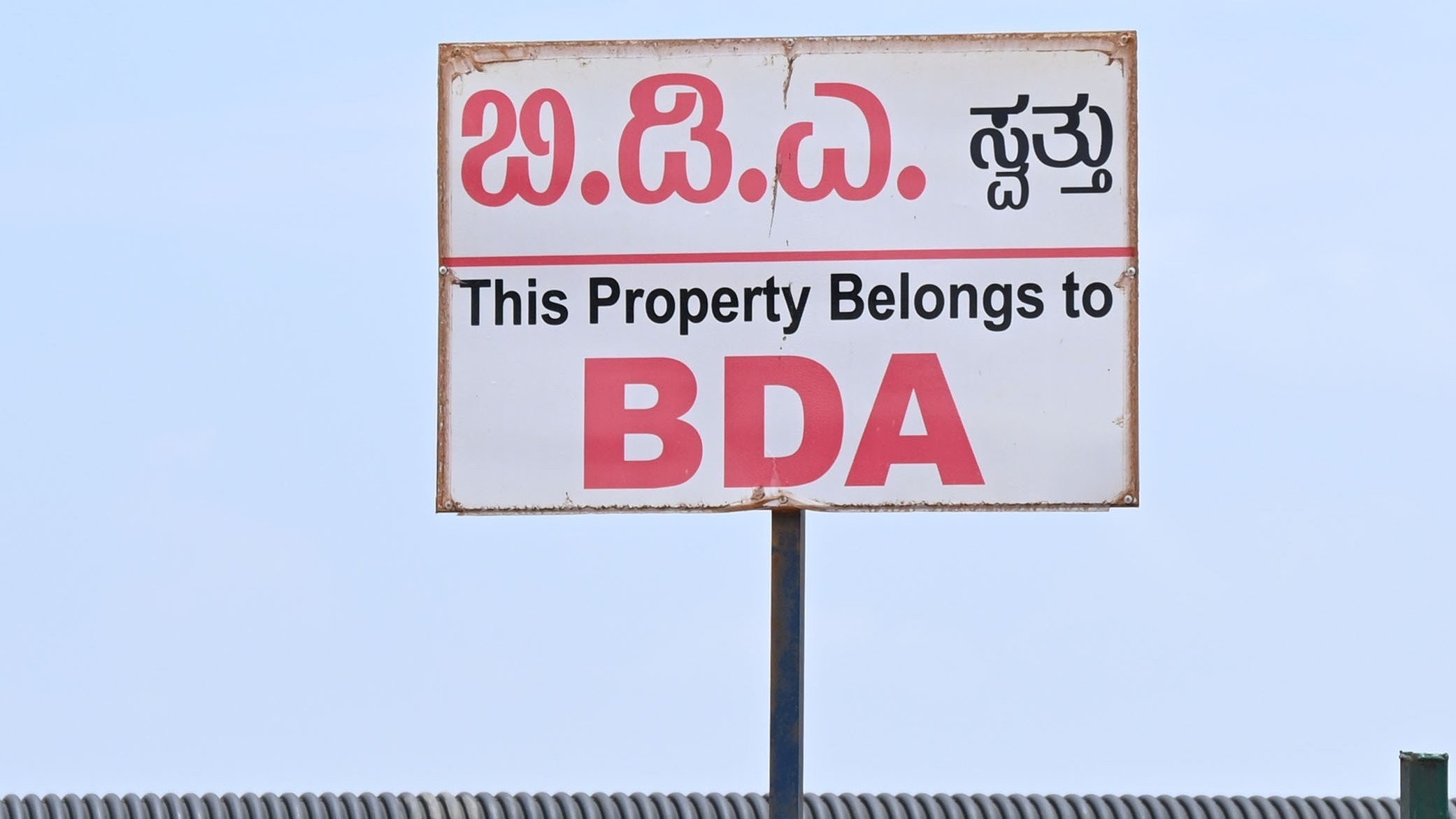
The Bangalore Development Authority (BDA) has announced plans to appeal against a ruling from the Karnataka Real Estate Regulatory Authority (K-RERA), which mandated the registration of its housing projects under the Real Estate (Regulation and Development) Act. This decision, articulated by Deputy Chief Minister D K Shivakumar in the Assembly, has raised significant concerns about the rights of homebuyers in the region.
The controversy originates from complaints regarding the long-delayed Nadaprabhu Kempegowda Layout (NPKL). Prior to the K-RERA’s ruling, the BDA argued that it should be exempt from the Act, asserting its status as a statutory body established under the Bangalore Development Authority Act of 1976. The BDA contended that complying with RERA’s requirements—such as stringent timelines, financial disclosures, and compensation for delays—would severely hinder its operations, particularly due to the complexities surrounding land acquisition and the potential for prolonged legal disputes.
K-RERA unequivocally rejected these arguments. According to Section 2 (zk) of the RERA Act, any entity that develops land or buildings for sale to the public qualifies as a promoter, regardless of whether it operates for profit or public benefit. Importantly, the authority invoked Section 89 of the Act, which grants RERA precedence over any conflicting state laws, including those governing the BDA. Consequently, the BDA was directed to register the NPKL and provide detailed information regarding its progress and financial status.
The BDA’s assertion that compliance with RERA would impose an untenable financial burden is fundamentally flawed. If the authority struggles to compensate allottees for delays extending nearly a decade, it indicates issues of chronic mismanagement rather than an inability to comply. RERA’s stipulation that 70 percent of buyer funds be held in an escrow account is intended to prevent the misuse of allottee funds, a concern that has plagued the BDA for years.
There is no logical justification for exempting the BDA from RERA’s regulations. The organization functions similarly to private developers: it markets layouts, collects substantial sums from citizens, and pledges essential infrastructure such as roads, water, and electricity. While recent administrative changes under the current BDA commissioner, P Manivannan, have shown potential for improvement, backing the appeal against RERA suggests a desire to maintain bureaucratic immunity and protect entrenched corruption.
For Bengaluru’s urban governance to advance, it is crucial that its primary development authority is held to the same standards of transparency, accountability, and legal consequences as any other developer. Compliance with RERA is not merely a recommendation; it is an essential requirement that must be embraced for the benefit of homebuyers and the integrity of the housing market.

Albert Camus’ Insightful Quote on Human Identity Resurfaces

Drone Strikes and Missile Attacks Disrupt UAE Amid Rising Tensions

Japanese Yen Rises Sharply Against US Dollar Ahead of Key Decisions

Priyanka Chopra and Nick Jonas Avoid Near Miss en Route to Oscars

Gujarat Vaccinates Over 11 Lakh Infants in Major Health Drive

Alexandre Singh Wins Oscar, Celebrates Immigrant Heritage

Lok Sabha Speaker Issues Warning Over Placards in Parliament

Global Electrosurgical Devices Market Expands to $10.2 Billion by 2034

North Zone Dominates Cricket; SJAM-1 Shines in Table Tennis

SBI Announces QIP Floor Price at ₹811.05 Per Share

Cept Unveils ₹3.1 Crore Urban Mobility Plan for Sustainable Growth

Comparing Subscription Prices: Spotify, Apple Music, and YouTube Music in India

New Blood Group Discovered in South Indian Woman at Rotary Centre

Konkani Cultural Organisation to Host Pearl Jubilee in Abu Dhabi

Torrential Rains Cause Flash Flooding in New York and New Jersey

Nothing Headphone 1 Review: A Bold Contender in Audio Design

Broad Advocates for Bowling Change Ahead of Final Test Against India

Air India Crash Investigation Highlights Boeing Fuel Switch Concerns
-
 World1 year ago
SBI Announces QIP Floor Price at ₹811.05 Per Share
-
 Lifestyle1 year ago
Cept Unveils ₹3.1 Crore Urban Mobility Plan for Sustainable Growth
-
 Science12 months ago
Comparing Subscription Prices: Spotify, Apple Music, and YouTube Music in India
-
 Science1 year ago
New Blood Group Discovered in South Indian Woman at Rotary Centre
-
 Top Stories1 year ago
Konkani Cultural Organisation to Host Pearl Jubilee in Abu Dhabi
-
 World1 year ago
Torrential Rains Cause Flash Flooding in New York and New Jersey
-
 Science1 year ago
Nothing Headphone 1 Review: A Bold Contender in Audio Design
-
 Sports1 year ago
Broad Advocates for Bowling Change Ahead of Final Test Against India
-
 Top Stories1 year ago
Air India Crash Investigation Highlights Boeing Fuel Switch Concerns
-

 Business1 year ago
Indian Stock Market Rebounds: Sensex and Nifty Rise After Four-Day Decline
-

 Sports1 year ago
Cristian Totti Retires at 19: Pressure of Fame Takes Toll
-

 Politics1 year ago
Abandoned Doberman Finds New Home After Journey to Prague