
Health
Experts Urge Community-Based Elder Care to Tackle Aging Crisis in India

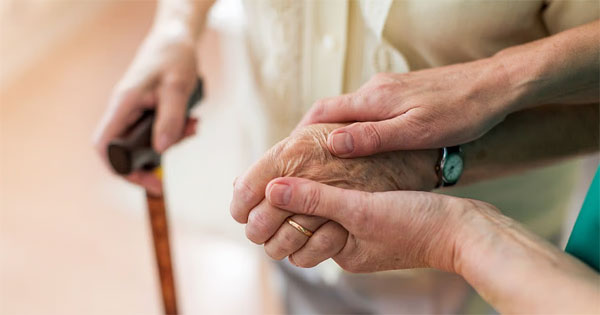
The rapid ageing of India’s population has prompted health experts to call for a significant shift in elder care, advocating for a home-based, community-driven approach to meet the needs of the elderly. During an event in New Delhi on February 3, specialists highlighted the pressing challenges faced by senior citizens and the need for more inclusive care models that address their unique circumstances.
India’s elderly population is projected to reach approximately 230 million by 2036, making up about 15 percent of the total population. Many of these individuals are grappling with serious health issues, including age-related conditions such as dementia and Alzheimer’s disease. Inadequate healthcare infrastructure, particularly in rural areas, exacerbates these challenges, leaving many seniors without essential services.
Dr. Rajinder K. Dhamija, Director of the Institute of Human Behaviour and Allied Sciences (IHBAS), emphasized the importance of a compassionate and coordinated approach to geriatric care. He stated, “Ageing is not just about adding years to life, but adding life to those years. Geriatric care must be coordinated, continuous, community-based, and compassionate.” Dr. Dhamija highlighted that mental and emotional well-being are as vital as physical health, particularly in the context of nuclear families and increasing social isolation.
Former secretary of the Ministry of Health & Family Welfare, Rajesh Bhushan, reiterated that elder care should not be confined to specialized hospitals. He argued that care must begin at home, supported by district-level healthcare systems. Many health issues faced by the elderly can be effectively managed through trained caregivers and home-based services. Bhushan stated, “The real challenge lies in scale, integration, and last-mile delivery.”
To further enhance elder care, experts advocated for the upskilling of general physicians, integrating social and medical services, and looking to countries like Japan and South Korea for inspiration. These nations have developed unified elder care models that combine healthcare, rehabilitation, and social support.
A significant issue raised by the experts was the widening digital divide affecting seniors. Many elderly individuals struggle with technology due to limited access and a lack of age-friendly training. Additionally, public infrastructure—including transport systems, emergency response, and communal spaces—remains largely unprepared to support the safety and mobility of older adults.
Prof. Nirmal Kumar Ganguly, former Director General of the Indian Council of Medical Research (ICMR), emphasized the importance of social engagement and proactive management of chronic conditions. He remarked, “Social engagement, mental stimulation, and proactive management of chronic conditions like vision, hearing, balance, diabetes, and hypertension can dramatically improve quality of life.”
Technology and advancements in medical science can aid in improving elder care, but only if they are made accessible and equitable for all. The experts concluded that addressing the needs of India’s rapidly growing senior population requires a coordinated, community-led, and compassionate approach to elder care.
In summary, the call for systemic change in elder care is urgent. As India faces a demographic shift, the focus must be on creating comprehensive support systems that prioritize the well-being of its elderly citizens.

Albert Camus’ Insightful Quote on Human Identity Resurfaces

Drone Strikes and Missile Attacks Disrupt UAE Amid Rising Tensions

Japanese Yen Rises Sharply Against US Dollar Ahead of Key Decisions

Priyanka Chopra and Nick Jonas Avoid Near Miss en Route to Oscars

Gujarat Vaccinates Over 11 Lakh Infants in Major Health Drive

Alexandre Singh Wins Oscar, Celebrates Immigrant Heritage

Lok Sabha Speaker Issues Warning Over Placards in Parliament

Global Electrosurgical Devices Market Expands to $10.2 Billion by 2034

North Zone Dominates Cricket; SJAM-1 Shines in Table Tennis

SBI Announces QIP Floor Price at ₹811.05 Per Share

Cept Unveils ₹3.1 Crore Urban Mobility Plan for Sustainable Growth

New Blood Group Discovered in South Indian Woman at Rotary Centre

Konkani Cultural Organisation to Host Pearl Jubilee in Abu Dhabi

Torrential Rains Cause Flash Flooding in New York and New Jersey

Nothing Headphone 1 Review: A Bold Contender in Audio Design

Indian Stock Market Rebounds: Sensex and Nifty Rise After Four-Day Decline

Air India Crash Investigation Highlights Boeing Fuel Switch Concerns

Broad Advocates for Bowling Change Ahead of Final Test Against India
-
 World12 months ago
SBI Announces QIP Floor Price at ₹811.05 Per Share
-
 Lifestyle12 months ago
Cept Unveils ₹3.1 Crore Urban Mobility Plan for Sustainable Growth
-
 Science12 months ago
New Blood Group Discovered in South Indian Woman at Rotary Centre
-
 Top Stories12 months ago
Konkani Cultural Organisation to Host Pearl Jubilee in Abu Dhabi
-
 World12 months ago
Torrential Rains Cause Flash Flooding in New York and New Jersey
-
 Science12 months ago
Nothing Headphone 1 Review: A Bold Contender in Audio Design
-
 Business12 months ago
Indian Stock Market Rebounds: Sensex and Nifty Rise After Four-Day Decline
-
 Top Stories12 months ago
Air India Crash Investigation Highlights Boeing Fuel Switch Concerns
-
 Sports12 months ago
Broad Advocates for Bowling Change Ahead of Final Test Against India
-

 Sports12 months ago
Cristian Totti Retires at 19: Pressure of Fame Takes Toll
-

 Politics12 months ago
Abandoned Doberman Finds New Home After Journey to Prague
-

 Lifestyle12 months ago
Villagers Unite to Raise ₹45 Lakh for Water Solutions in Vadgam