
Entertainment
The Power of Photography: Capturing Life, Loss, and Artistry

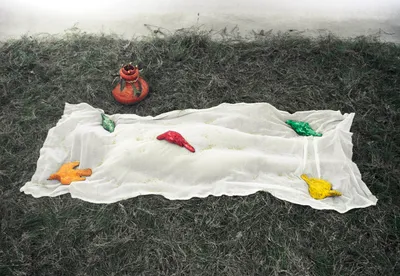
Photography holds a profound place in human expression, capturing moments that reflect vulnerability, time, and the complexities of life. This art form has evolved significantly since its inception, transforming from a tool for documentation to a medium of artistic exploration and emotional resonance.
Susan Sontag, in her seminal work “On Photography,” eloquently stated, “To take a photograph is to participate in another person’s (or thing’s) mortality, vulnerability, mutability.” This notion encapsulates the essence of photography: a medium that freezes time and captures the transient nature of existence. Personal memories, like a studio portrait of a grandmother in a traditional georgette sari, often ignite a passion for photography, intertwining familial bonds with visual storytelling.
With the advent of digital technology, photography has become accessible to the masses. Today, social media platforms enable individuals to share their lives through filtered selfies and carefully curated images. Yet, this democratization of photography raises questions about artistic integrity and the balance between documentation and art.
The Evolution of Photography as Art
From the 1830s to the 1940s, photography primarily served as a documentary tool. It was the first medium capable of preserving reality with mechanical precision, capturing everything from war scenes to high-society portraits. Early skeptics dismissed photography as a soulless craft, while innovators like the Pictorialists argued for its artistic merit, emphasizing the photographer’s role in manipulating images rather than merely recording them.
Post-World War II, the focus shifted dramatically with the influence of figures like Henri Cartier-Bresson, known as the father of modern photojournalism. His philosophy of capturing the “decisive moment” transformed photography into a poetic and subjective art form. Cartier-Bresson’s poignant coverage of significant events, including Mahatma Gandhi’s funeral in 1948, exemplified how photography could transcend mere documentation to convey deep emotional truths.
The impact of iconic photographs in India’s history is undeniable. Images that depict human suffering and societal issues have the power to evoke public discourse and shape collective memory. The heartbreaking scenes from the Partition of India, where refugees were crammed into trains, resonate deeply. Similarly, the haunting image of a child during the Bhopal gas tragedy remains etched in the national consciousness, symbolizing wider socio-political tragedies.
Contemporary Voices in Photography
The recent launch of Prof Bhupinder Brar’s book “Time and Transience” further explores the emotional depth of photography. Through a narrative lens, Brar captures fleeting moments of grief and vulnerability, inviting readers to connect with the extraordinary in everyday experiences. This work underscores how photography can evoke reflection and empathy, beyond mere documentation.
Another compelling artist is Pushpamala N, whose performative photography blurs the lines between subject and artist. Her series “Phantom Lady” showcases her engagement with Hindu mythology and theatrical traditions, creating elaborate tableaux that challenge conventional narratives. By embodying both the photographer and the performer, Pushpamala reinvents storytelling within the medium, offering a fresh perspective on mythological themes.
Similarly, Diwan Manna stands out as a multi-faceted artist in Chandigarh. As both a photographer and curator, he emphasizes the creative process behind each image. Manna believes that photography is not a passive act but a deliberate arrangement of reality, where light and composition shape the viewer’s experience. His works, often infused with surrealism, invite contemplation of the ordinary, transforming everyday objects into portals of existential reflection.
Photography, as both an art form and a documentary tool, continues to enrich the global narrative landscape. The interplay of personal stories, historical events, and artistic expression weaves a complex tapestry of human experience. From the sepia-toned memories of family to the poignant reflections on social justice, photography endures as a powerful medium that captures the essence of life, loss, and artistic creativity.

Albert Camus’ Insightful Quote on Human Identity Resurfaces

Drone Strikes and Missile Attacks Disrupt UAE Amid Rising Tensions

Japanese Yen Rises Sharply Against US Dollar Ahead of Key Decisions

Priyanka Chopra and Nick Jonas Avoid Near Miss en Route to Oscars

Gujarat Vaccinates Over 11 Lakh Infants in Major Health Drive

Alexandre Singh Wins Oscar, Celebrates Immigrant Heritage

Lok Sabha Speaker Issues Warning Over Placards in Parliament

Global Electrosurgical Devices Market Expands to $10.2 Billion by 2034

North Zone Dominates Cricket; SJAM-1 Shines in Table Tennis

SBI Announces QIP Floor Price at ₹811.05 Per Share

Cept Unveils ₹3.1 Crore Urban Mobility Plan for Sustainable Growth

New Blood Group Discovered in South Indian Woman at Rotary Centre

Konkani Cultural Organisation to Host Pearl Jubilee in Abu Dhabi

Torrential Rains Cause Flash Flooding in New York and New Jersey

Nothing Headphone 1 Review: A Bold Contender in Audio Design

Indian Stock Market Rebounds: Sensex and Nifty Rise After Four-Day Decline

Air India Crash Investigation Highlights Boeing Fuel Switch Concerns

Broad Advocates for Bowling Change Ahead of Final Test Against India
-
 World12 months ago
SBI Announces QIP Floor Price at ₹811.05 Per Share
-
 Lifestyle12 months ago
Cept Unveils ₹3.1 Crore Urban Mobility Plan for Sustainable Growth
-
 Science11 months ago
New Blood Group Discovered in South Indian Woman at Rotary Centre
-
 Top Stories12 months ago
Konkani Cultural Organisation to Host Pearl Jubilee in Abu Dhabi
-
 World12 months ago
Torrential Rains Cause Flash Flooding in New York and New Jersey
-
 Science12 months ago
Nothing Headphone 1 Review: A Bold Contender in Audio Design
-
 Business12 months ago
Indian Stock Market Rebounds: Sensex and Nifty Rise After Four-Day Decline
-
 Top Stories12 months ago
Air India Crash Investigation Highlights Boeing Fuel Switch Concerns
-
 Sports11 months ago
Broad Advocates for Bowling Change Ahead of Final Test Against India
-

 Sports11 months ago
Cristian Totti Retires at 19: Pressure of Fame Takes Toll
-

 Politics12 months ago
Abandoned Doberman Finds New Home After Journey to Prague
-

 Lifestyle12 months ago
Villagers Unite to Raise ₹45 Lakh for Water Solutions in Vadgam