
Business
Telangana High Court Rules Against Union Bank’s Recovery Actions

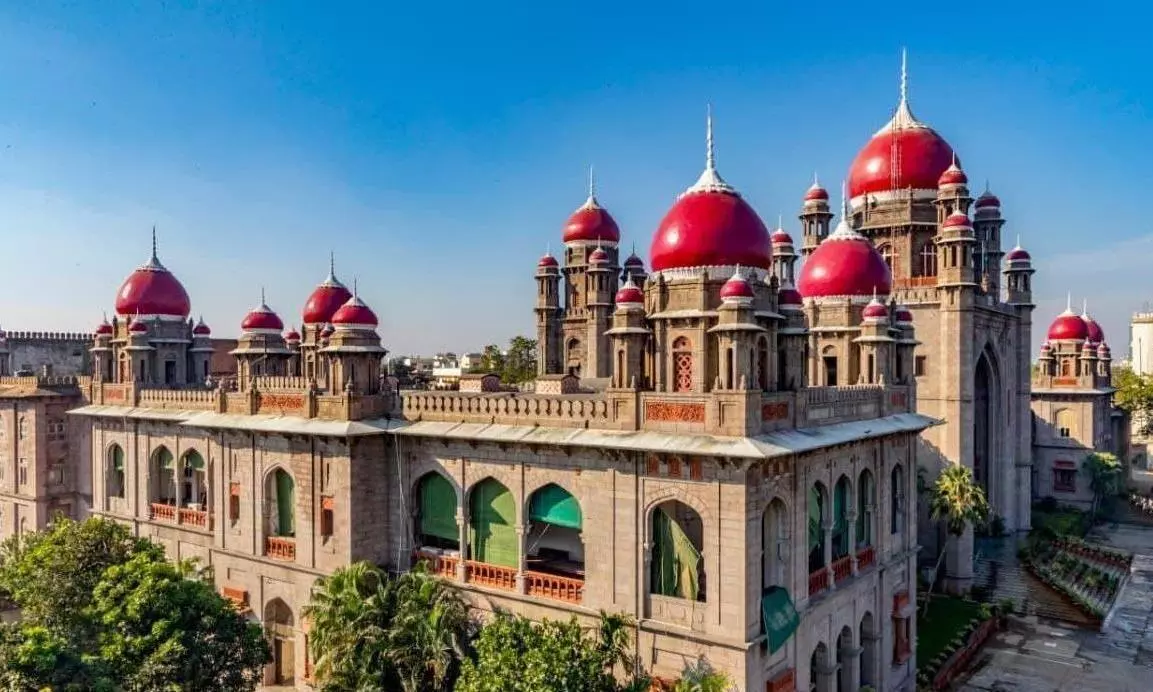
The Telangana High Court has ruled against the Union Bank of India (UBI) for bypassing statutory regulations in its attempts to recover dues from BRG Energy Ltd. The court found that UBI initiated parallel recovery proceedings against the Hyderabad-based company despite ongoing winding-up processes, which included the appointment of an official liquidator to manage the company’s assets.
The legal dispute centers on a valuable asset—a 20,675-square-meter land parcel located in the Pashamylaram industrial park. As the official liquidator prepared to oversee the sale of this property, UBI set a reserve price of Rs. 21.18 crore for an auction, despite interested parties offering Rs. 32.29 crore. Notably, the bank conducted the auction without involving the official liquidator in the valuation and sale process, raising significant legal and ethical concerns.
Background of the Case
The case arose following the financial collapse of BRG Energy Ltd, a manufacturer of power distribution transformers. Proceedings were initiated before the Board for Industrial and Financial Reconstruction (BIFR), leading to winding-up petitions against the company. In a decisive ruling in 2018, the court ordered the company’s liquidation and appointed an official liquidator to oversee its assets and liabilities.
The official liquidator took control of the secured asset—Plot No. 40 in the Pashamylaram Industrial Park—yet UBI proceeded with its own independent auction, receiving 25 percent of the advance payment from the successful bidder without coordinating with the liquidator. This unilateral action prompted significant legal scrutiny.
The bank justified its actions by claiming it had obtained a recovery certificate from the Debt Recovery Tribunal-II in Hyderabad for Rs. 69.60 crore owed by BRG Energy and its directors. UBI argued that the directors had failed to meet the terms of a one-time settlement (OTS) amounting to Rs. 26.10 crore, resulting in the forfeiture of their upfront payment.
High Court’s Decision
The Company Court initially set aside UBI’s auction, a decision that the bank subsequently challenged in the High Court. In its ruling, the division bench, comprising Justice K. Lakshman and Justice V. Ramakrishna Reddy, upheld the Company Court’s order. The judges emphasized that recovery proceedings under the SARFAESI Act cannot be pursued independently once winding-up procedures are in progress.
The bench articulated that once a company is ordered to be liquidated, its assets fall under the jurisdiction of the Company Court, with the official liquidator designated as the lawful custodian responsible for safeguarding the interests of all stakeholders—this includes secured and unsecured creditors as well as employees.
This ruling underscores the necessity for financial institutions to adhere to legal protocols when dealing with companies in distress, particularly in contexts involving multiple stakeholders and ongoing legal proceedings. The decision serves as a reminder that regulatory compliance is paramount in safeguarding the rights of all parties involved in insolvency cases.

Albert Camus’ Insightful Quote on Human Identity Resurfaces

Drone Strikes and Missile Attacks Disrupt UAE Amid Rising Tensions

Japanese Yen Rises Sharply Against US Dollar Ahead of Key Decisions

Priyanka Chopra and Nick Jonas Avoid Near Miss en Route to Oscars

Gujarat Vaccinates Over 11 Lakh Infants in Major Health Drive

Alexandre Singh Wins Oscar, Celebrates Immigrant Heritage

Lok Sabha Speaker Issues Warning Over Placards in Parliament

Global Electrosurgical Devices Market Expands to $10.2 Billion by 2034

North Zone Dominates Cricket; SJAM-1 Shines in Table Tennis

SBI Announces QIP Floor Price at ₹811.05 Per Share

Cept Unveils ₹3.1 Crore Urban Mobility Plan for Sustainable Growth

New Blood Group Discovered in South Indian Woman at Rotary Centre

Konkani Cultural Organisation to Host Pearl Jubilee in Abu Dhabi

Torrential Rains Cause Flash Flooding in New York and New Jersey

Nothing Headphone 1 Review: A Bold Contender in Audio Design

Indian Stock Market Rebounds: Sensex and Nifty Rise After Four-Day Decline

Air India Crash Investigation Highlights Boeing Fuel Switch Concerns

Broad Advocates for Bowling Change Ahead of Final Test Against India
-
 World12 months ago
SBI Announces QIP Floor Price at ₹811.05 Per Share
-
 Lifestyle12 months ago
Cept Unveils ₹3.1 Crore Urban Mobility Plan for Sustainable Growth
-
 Science12 months ago
New Blood Group Discovered in South Indian Woman at Rotary Centre
-
 Top Stories12 months ago
Konkani Cultural Organisation to Host Pearl Jubilee in Abu Dhabi
-
 World12 months ago
Torrential Rains Cause Flash Flooding in New York and New Jersey
-
 Science12 months ago
Nothing Headphone 1 Review: A Bold Contender in Audio Design
-
 Business12 months ago
Indian Stock Market Rebounds: Sensex and Nifty Rise After Four-Day Decline
-
 Top Stories12 months ago
Air India Crash Investigation Highlights Boeing Fuel Switch Concerns
-
 Sports12 months ago
Broad Advocates for Bowling Change Ahead of Final Test Against India
-

 Sports12 months ago
Cristian Totti Retires at 19: Pressure of Fame Takes Toll
-

 Politics12 months ago
Abandoned Doberman Finds New Home After Journey to Prague
-

 Lifestyle12 months ago
Villagers Unite to Raise ₹45 Lakh for Water Solutions in Vadgam