
Business
Jammu Regularizes 31 Colonies, High Court Halts Process

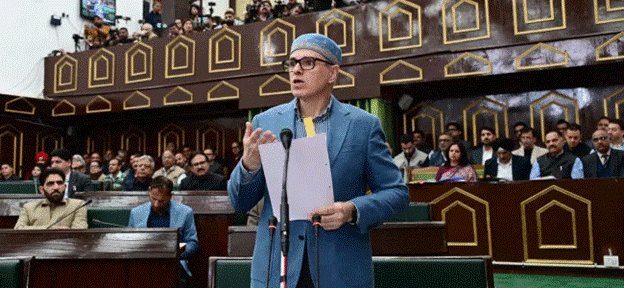
On February 11, 2024, Chief Minister Omar Abdullah announced that the Jammu Development Authority (JDA) has regularized 31 residential colonies in Jammu. However, this process has since been halted by the Jammu and Kashmir High Court. Abdullah provided this information in a written response to a query raised by BJP MLA Sham Lal Sharma during an assembly session regarding the regularization of illegal colonies.
Abdullah, who also oversees the Housing and Urban Development Department, explained that the regularization followed various government orders issued between 1974 and 2009, as well as specific court directives from 2010. He confirmed that while the JDA had successfully regularized these colonies, the court’s ruling has now put a stop to any further actions regarding this matter.
Details of the Regularization Process
The regularization of residential colonies is a significant step towards addressing urban housing issues in Jammu. According to Abdullah, the initiative aimed to provide legal status to these colonies, which had previously been considered illegal. The government’s efforts to regularize these areas were part of a broader strategy to improve urban planning and infrastructure development in the region.
Despite the initial progress, the high court’s intervention has raised concerns about the future of these colonies and the residents who inhabit them. The stay on the regularization process reflects ongoing legal and regulatory challenges in the region, highlighting the complexities involved in land use and urban development.
The JDA’s regularization efforts were intended to align with existing government regulations and provide residents with essential services and security. However, the halt imposed by the high court now places uncertainty on the status of these colonies and the rights of their residents.
Implications for Residents and Future Planning
The decision to regularize these colonies was met with optimism by many residents who have long sought legal recognition of their homes. The high court’s ruling, however, could lead to significant implications for those living in these areas. Residents may face challenges regarding property rights, access to services, and overall stability in their living conditions.
As the situation develops, the government and relevant authorities will need to navigate the legal landscape carefully. The resolution of this issue will be crucial not only for the affected residents but also for the future planning and development of urban areas in Jammu.
In light of these developments, it remains essential for the government to engage with the community and stakeholders to address their concerns and explore viable solutions that align with legal frameworks while ensuring the welfare of residents.

Albert Camus’ Insightful Quote on Human Identity Resurfaces

Drone Strikes and Missile Attacks Disrupt UAE Amid Rising Tensions

Japanese Yen Rises Sharply Against US Dollar Ahead of Key Decisions

Priyanka Chopra and Nick Jonas Avoid Near Miss en Route to Oscars

Gujarat Vaccinates Over 11 Lakh Infants in Major Health Drive

Alexandre Singh Wins Oscar, Celebrates Immigrant Heritage

Lok Sabha Speaker Issues Warning Over Placards in Parliament

Global Electrosurgical Devices Market Expands to $10.2 Billion by 2034

North Zone Dominates Cricket; SJAM-1 Shines in Table Tennis

SBI Announces QIP Floor Price at ₹811.05 Per Share

Cept Unveils ₹3.1 Crore Urban Mobility Plan for Sustainable Growth

New Blood Group Discovered in South Indian Woman at Rotary Centre

Konkani Cultural Organisation to Host Pearl Jubilee in Abu Dhabi

Torrential Rains Cause Flash Flooding in New York and New Jersey

Nothing Headphone 1 Review: A Bold Contender in Audio Design

Indian Stock Market Rebounds: Sensex and Nifty Rise After Four-Day Decline

Air India Crash Investigation Highlights Boeing Fuel Switch Concerns

Broad Advocates for Bowling Change Ahead of Final Test Against India
-
 World12 months ago
SBI Announces QIP Floor Price at ₹811.05 Per Share
-
 Lifestyle12 months ago
Cept Unveils ₹3.1 Crore Urban Mobility Plan for Sustainable Growth
-
 Science12 months ago
New Blood Group Discovered in South Indian Woman at Rotary Centre
-
 Top Stories12 months ago
Konkani Cultural Organisation to Host Pearl Jubilee in Abu Dhabi
-
 World12 months ago
Torrential Rains Cause Flash Flooding in New York and New Jersey
-
 Science12 months ago
Nothing Headphone 1 Review: A Bold Contender in Audio Design
-
 Business12 months ago
Indian Stock Market Rebounds: Sensex and Nifty Rise After Four-Day Decline
-
 Top Stories12 months ago
Air India Crash Investigation Highlights Boeing Fuel Switch Concerns
-
 Sports12 months ago
Broad Advocates for Bowling Change Ahead of Final Test Against India
-

 Sports12 months ago
Cristian Totti Retires at 19: Pressure of Fame Takes Toll
-

 Politics12 months ago
Abandoned Doberman Finds New Home After Journey to Prague
-
 Lifestyle12 months ago
Villagers Unite to Raise ₹45 Lakh for Water Solutions in Vadgam