
Business
India’s Digital Health System Faces New Challenges and Opportunities

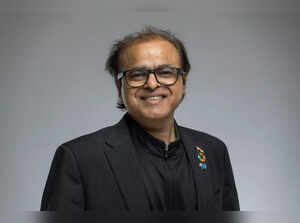
India’s digital health landscape is evolving, yet it faces significant challenges as it transitions from access issues to concerns over quality and integration. While advancements in telemedicine and digital records are notable, experts like Rajendra Pratap Gupta emphasize that the country must now focus on refining these systems to ensure they deliver real value to patients and healthcare providers.
The shift in India’s digital health narrative reflects a narrowing of connectivity gaps. Gupta notes, “We’ve moved from access gaps to quality and depth gaps.” This means that while more people have access to digital health services than a decade ago, the integrity of data, usability of platforms, and integration of clinical practices have come to the forefront.
New Divides in Digital Health
Gupta highlights an unexpected shift in knowledge and expectations between patients and providers. “Patients today are often more aware of digital tools than doctors,” he observes. With health information readily available on social media, the traditional hierarchy of expertise has started to change. As physical infrastructure gaps between urban and rural areas decrease, new divides are emerging, such as awareness versus functionality and intention versus workflow.
The Ayushman Bharat Digital Mission (ABDM) exemplifies this evolving landscape. While the rollout of ABHA IDs has been extensive, Gupta warns that their effectiveness relies on the availability of reliable medical records. “We have rolled out ABHA IDs at scale, but value creation is missing,” he states. The critical question remains: “How much real, usable data exists in these hundreds of millions of IDs?”
Assessing Progress and Future Directions
While Gupta acknowledges the unprecedented scope of ABDM, he emphasizes that its success hinges on continuous improvement rather than superficial metrics. “Functionality, not optics, will determine success,” he asserts. He cites the appointment of a full-time CEO and the transition towards “ABDM 2.0” as indicators of progress. Gupta believes that the primary focus should be on establishing seamless data flow and enhancing quality, necessitating substantial government investment in awareness, adoption, and artificial intelligence integration.
The telemedicine platform eSanjeevani serves as a practical example of how digital health can extend its reach. With over 400 million consultations to date, it has become the largest telemedicine service globally. Gupta remarks, “eSanjeevani shows what scale looks like when digital tools are built for the ground realities of India.” However, challenges persist, including gaps in knowledge, workflows, and skill sets among healthcare professionals.
Gupta recently presented the Functional AI Pyramid at the Global Digital Health Summit 2025, aiming to provide a structured approach for integrating AI into healthcare systems. He cautions that while AI has the potential to enhance certain functions, it will take a minimum of five years to realize its full benefits. Importantly, Gupta insists that India must prioritize high-quality data before embracing the automation promise. “AI is only as good as the data underneath it,” he emphasizes, highlighting the need for strong governance to avoid errors and bias.
Clinicians often perceive India’s digital systems as burdensome, but Gupta argues that technology is essential for modern medicine. “Whether doctors like the process or not, technology is a must-have for 21st-century medicine,” he states. He encourages healthcare providers to integrate digital workflows into their practice, rather than treating them as separate tasks.
Access to healthcare is a primary concern for Gupta, who believes that digital systems can greatly improve care in underserved areas. He envisions a future where up to 400,000 patients receive digital consultations daily in regions lacking adequate medical resources. By linking Jan Aushadhi pharmacies, teleconsultation platforms, and ABDM, he believes the burden on tertiary hospitals could be significantly reduced.
Nevertheless, he acknowledges that further improvements are needed. Despite increased awareness and the establishment of systems, actual usage remains inconsistent, and functionality varies greatly across different regions. Gupta insists that true access requires digital health to be integrated into everyday health behaviors, rather than treated as a temporary initiative.
The startup ecosystem in India’s digital health sector presents additional challenges. Gupta criticizes founders for pursuing trends without a deep understanding of the healthcare domain. This often results in solutions that fail to integrate effectively into clinical workflows. He also points to a lack of serious investment, noting that “there are no investors in India, only retail lenders.” These lenders typically seek quick exits, while developing sustainable digital health solutions can require six to eight years.
The Path to Exporting Digital Health Solutions
Despite its challenges, Gupta believes India has the potential to export its digital health standards, albeit not yet. “For the world to import our solutions, we need scientifically documented outcomes. We haven’t proven success at scale at home,” he explains. He advocates for a clear delineation between government and private sector roles, with the government establishing frameworks and safety oversight while allowing the private sector to deliver services.
As India prepares for a new phase in its digital health journey, Vikalp Sahni, Founder and CEO of Eka Care, emphasizes the significance of ABDM. He asserts that the mission has instilled confidence in building a digital health infrastructure that can be adopted globally. “ABDM’s design is state of the art and most innovative in the world,” he states, urging a sustained focus on data quality, interoperability, and ecosystem development.
Looking ahead, Gupta envisions a healthcare landscape where self-care, AI-supported triage, and predictive medicine become the norm. He predicts that medical education will evolve through simulation, virtual reality, and AI, fundamentally altering the way healthcare is delivered. “None of the things we do today, we’ll be doing in 2030,” he asserts.
In conclusion, India’s digital health future will not be defined by flashy numbers or trendy technologies. Instead, it will depend on trustworthy, practical data management, systems that operate effectively within clinical settings, and a shift from reactive care to proactive, preventative health practices. The nation’s ability to reshape its health infrastructure will be crucial as it moves towards a more integrated, efficient digital health ecosystem.

Albert Camus’ Insightful Quote on Human Identity Resurfaces

Drone Strikes and Missile Attacks Disrupt UAE Amid Rising Tensions

Japanese Yen Rises Sharply Against US Dollar Ahead of Key Decisions

Priyanka Chopra and Nick Jonas Avoid Near Miss en Route to Oscars

Gujarat Vaccinates Over 11 Lakh Infants in Major Health Drive

Alexandre Singh Wins Oscar, Celebrates Immigrant Heritage

Lok Sabha Speaker Issues Warning Over Placards in Parliament

Global Electrosurgical Devices Market Expands to $10.2 Billion by 2034

North Zone Dominates Cricket; SJAM-1 Shines in Table Tennis

SBI Announces QIP Floor Price at ₹811.05 Per Share

Cept Unveils ₹3.1 Crore Urban Mobility Plan for Sustainable Growth

New Blood Group Discovered in South Indian Woman at Rotary Centre

Konkani Cultural Organisation to Host Pearl Jubilee in Abu Dhabi

Torrential Rains Cause Flash Flooding in New York and New Jersey

Nothing Headphone 1 Review: A Bold Contender in Audio Design

Indian Stock Market Rebounds: Sensex and Nifty Rise After Four-Day Decline

Air India Crash Investigation Highlights Boeing Fuel Switch Concerns

Broad Advocates for Bowling Change Ahead of Final Test Against India
-
 World12 months ago
SBI Announces QIP Floor Price at ₹811.05 Per Share
-
 Lifestyle12 months ago
Cept Unveils ₹3.1 Crore Urban Mobility Plan for Sustainable Growth
-
 Science12 months ago
New Blood Group Discovered in South Indian Woman at Rotary Centre
-
 Top Stories12 months ago
Konkani Cultural Organisation to Host Pearl Jubilee in Abu Dhabi
-
 World12 months ago
Torrential Rains Cause Flash Flooding in New York and New Jersey
-
 Science12 months ago
Nothing Headphone 1 Review: A Bold Contender in Audio Design
-
 Business12 months ago
Indian Stock Market Rebounds: Sensex and Nifty Rise After Four-Day Decline
-
 Top Stories12 months ago
Air India Crash Investigation Highlights Boeing Fuel Switch Concerns
-
 Sports12 months ago
Broad Advocates for Bowling Change Ahead of Final Test Against India
-

 Sports12 months ago
Cristian Totti Retires at 19: Pressure of Fame Takes Toll
-

 Politics12 months ago
Abandoned Doberman Finds New Home After Journey to Prague
-

 Lifestyle12 months ago
Villagers Unite to Raise ₹45 Lakh for Water Solutions in Vadgam