
Business
India Pursues Green Credits for Carbon-Efficient Manufacturing

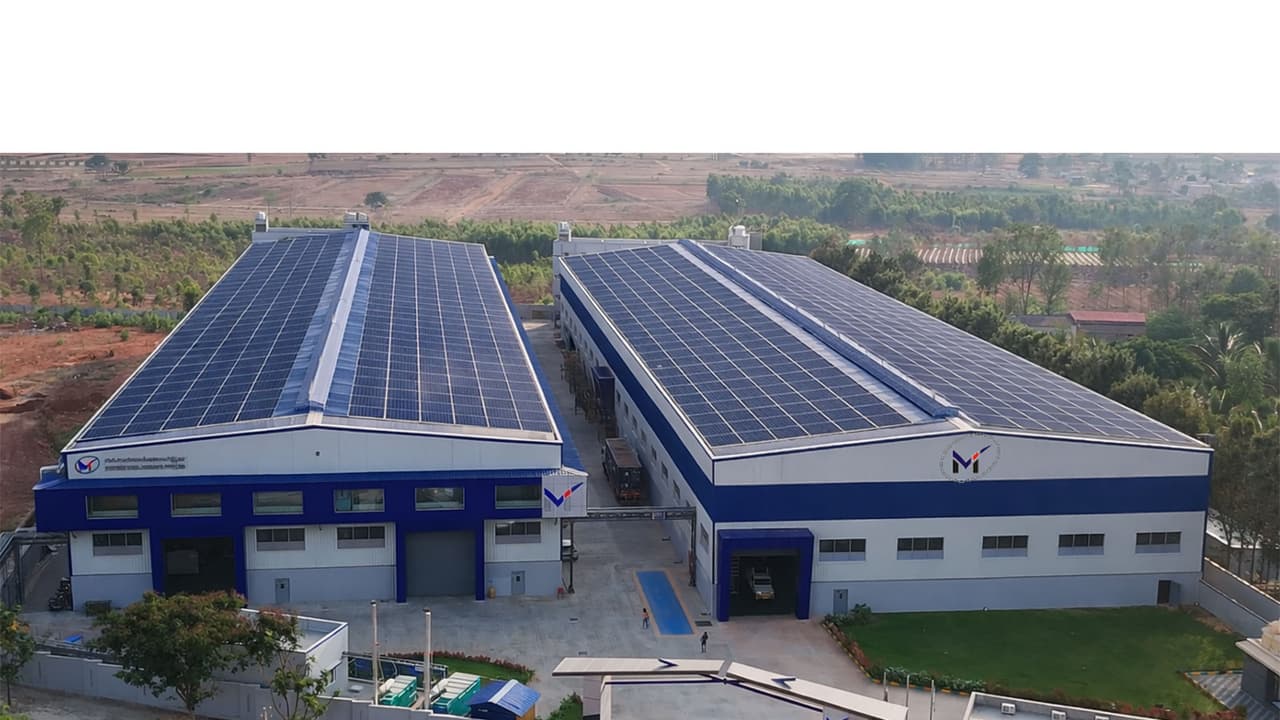
Indian industry leaders are advocating for the recognition of sheet metal cold-roll forming under the Green Credit Programme. This low-carbon manufacturing process significantly reduces waste and energy consumption, aligning with India’s climate objectives and promoting sustainable production practices. As the global manufacturing landscape shifts towards low-carbon operations, sheet metal cold-roll forming is emerging as a vital method for cutting embedded carbon emissions in manufacturing.
Advocates highlight that integrating this process into India’s climate strategy could enhance its commitment to the National Resource Efficiency and Circular Economy frameworks. Industry leaders are pushing for policy recognition of cold-roll forming as a carbon-efficient manufacturing process eligible for green credits, which would support both environmental and economic goals.
A Sustainable Manufacturing Alternative
Sheet metal cold-roll forming stands apart from traditional fabrication techniques such as stamping or laser cutting. Conventional methods often generate excess scrap and consume more energy. In contrast, cold-roll forming shapes components from sheet metal while minimizing waste. This technique not only improves dimensional accuracy and structural strength but also substantially lowers lifecycle emissions.
According to Santosh Venkatasubbaiah, Director – Sales & Marketing at Mother India Forming, “Sheet metal cold-roll forming eliminates scrap at the source and reduces process energy. Any process that prevents waste before it is created strengthens India’s sustainability goals and deserves formal recognition within the national carbon-efficiency framework.” He emphasized that adopting cold-roll forming leads to products with significantly lower carbon footprints, aligning perfectly with the criteria for green-credit eligibility based on efficiency and lifecycle impact.
Integrated Manufacturing Ecosystems
Mother India Forming has established a fully integrated manufacturing ecosystem that encompasses cold-roll forming, fabrication, finishing, and powder coating all under one roof. This consolidation not only streamlines operations but also significantly reduces logistics-related emissions, commonly referred to as Scope-3 emissions, for primary equipment manufacturers.
The company is further enhancing its sustainability efforts by expanding its renewable energy capacity from 150 kW to 5 MW through solar power, reinforcing its low-carbon operational model.
Industry forecasts suggest a robust demand for precision-formed components, with a projected 7-9% compound annual growth rate through 2030. Sectors such as automotive, electric vehicles, renewable energy, and construction are increasingly seeking lightweight, high-strength components with minimal environmental impact.
Framework for Green Credit Eligibility
While definitive statements regarding the generation of carbon credits from sheet metal cold-roll forming are yet to be made, firms like Deloitte, PwC, EY, and Accenture outline the frameworks that enable measurable improvements in waste reduction, energy efficiency, and renewable power adoption to be converted into verifiable carbon credits. A comprehensive Life Cycle Assessment (LCA) and a robust Measurement, Reporting, and Verification (MRV) process could position this manufacturing method within global carbon accounting standards.
Santosh Venkatasubbaiah asserts, “India has a global opportunity. Recognising sheet metal cold-roll forming under the Green Credit Programme will boost the Prime Minister’s Made in India mission by enabling world-class, resource-efficient manufacturing.” He believes that formal policy recognition will not only provide a measurable carbon advantage for Indian industries but also attract global Original Equipment Manufacturers (OEMs) to consider India as a viable manufacturing hub.
Decarbonisation and Future Prospects
The steel sector alone contributes 10-12% of India’s total emissions, making its decarbonisation a critical focus for achieving national climate goals. The Ministry of Steel has established 14 task forces dedicated to exploring green steel initiatives and decarbonisation strategies that support India’s transition to low-carbon manufacturing.
As industries face increasing pressure to decarbonise their supply chains, sheet metal cold-roll forming offers a ready and scalable solution. This technology is not only proven but also positions India to lead in low-carbon manufacturing, marking a significant step towards sustainable industrial practices.

Albert Camus’ Insightful Quote on Human Identity Resurfaces

Drone Strikes and Missile Attacks Disrupt UAE Amid Rising Tensions

Japanese Yen Rises Sharply Against US Dollar Ahead of Key Decisions

Priyanka Chopra and Nick Jonas Avoid Near Miss en Route to Oscars

Gujarat Vaccinates Over 11 Lakh Infants in Major Health Drive

Alexandre Singh Wins Oscar, Celebrates Immigrant Heritage

Lok Sabha Speaker Issues Warning Over Placards in Parliament

Global Electrosurgical Devices Market Expands to $10.2 Billion by 2034

North Zone Dominates Cricket; SJAM-1 Shines in Table Tennis

SBI Announces QIP Floor Price at ₹811.05 Per Share

Cept Unveils ₹3.1 Crore Urban Mobility Plan for Sustainable Growth

New Blood Group Discovered in South Indian Woman at Rotary Centre

Konkani Cultural Organisation to Host Pearl Jubilee in Abu Dhabi

Torrential Rains Cause Flash Flooding in New York and New Jersey

Nothing Headphone 1 Review: A Bold Contender in Audio Design

Indian Stock Market Rebounds: Sensex and Nifty Rise After Four-Day Decline

Broad Advocates for Bowling Change Ahead of Final Test Against India

Air India Crash Investigation Highlights Boeing Fuel Switch Concerns
-
 World11 months ago
SBI Announces QIP Floor Price at ₹811.05 Per Share
-
 Lifestyle11 months ago
Cept Unveils ₹3.1 Crore Urban Mobility Plan for Sustainable Growth
-
 Science10 months ago
New Blood Group Discovered in South Indian Woman at Rotary Centre
-
 Top Stories11 months ago
Konkani Cultural Organisation to Host Pearl Jubilee in Abu Dhabi
-
 World11 months ago
Torrential Rains Cause Flash Flooding in New York and New Jersey
-
 Science11 months ago
Nothing Headphone 1 Review: A Bold Contender in Audio Design
-
 Business11 months ago
Indian Stock Market Rebounds: Sensex and Nifty Rise After Four-Day Decline
-
 Sports10 months ago
Broad Advocates for Bowling Change Ahead of Final Test Against India
-
 Top Stories11 months ago
Air India Crash Investigation Highlights Boeing Fuel Switch Concerns
-

 Sports10 months ago
Cristian Totti Retires at 19: Pressure of Fame Takes Toll
-

 Politics11 months ago
Abandoned Doberman Finds New Home After Journey to Prague
-

 Top Stories11 months ago
Patna Bank Manager Abhishek Varun Found Dead in Well