
Business
India-EU Trade Deal Faces Hurdles from Carbon Lobby and Barriers

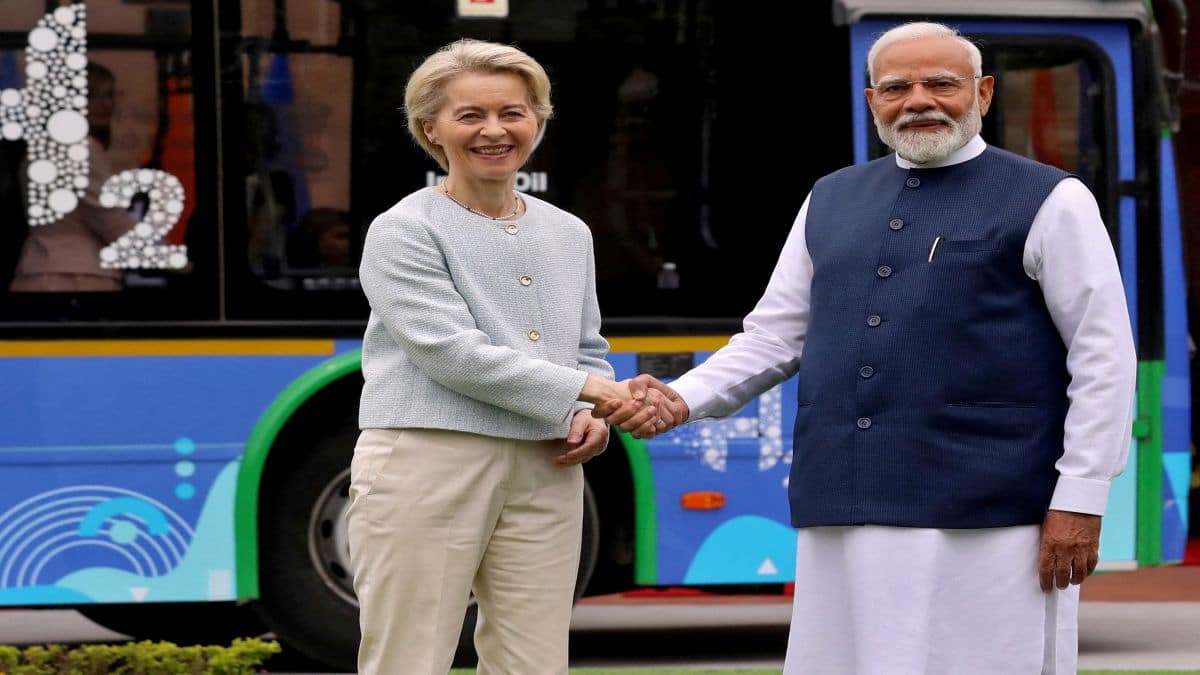
Negotiations for a long-awaited Free Trade Agreement (FTA) between India and the European Union (EU) are advancing, yet significant obstacles remain. A report from Jefferies highlights that non-tariff barriers, particularly the EU’s forthcoming Carbon Border Adjustment Mechanism (CBAM), pose substantial challenges for Indian exporters.
The CBAM seeks to impose a carbon price on imports, ensuring that imported goods face the same carbon costs as those produced within the EU. This mechanism could significantly impact India’s exports, especially from carbon-intensive sectors. Jefferies noted, “Key concern for India is the many non-tariff barriers, such as the upcoming CBAM mechanism for its exports. We see a limited scope of relaxation here.”
India’s main priority in the negotiations is to gain greater access to services trade. This includes advocating for smoother movement of professionals and more lenient visa regulations, particularly for its burgeoning workforce in technology and healthcare. Conversely, the EU is likely to push for increased access to India’s financial, legal, and other services sectors.
Historical Context and Current Developments
The negotiations between India and the EU began in 2007 but faced delays, stalling in 2013 due to complexity and a lack of consensus. Talks resumed in 2022, and a broad agreement to exclude politically sensitive sectors, such as agriculture and dairy, has raised hopes for a deal in the near future.
In terms of trade volume, India’s annual goods trade with the EU is approximately $130 billion, comparable to its trade with the United States and China. Indian exports to the EU are estimated at $75 billion yearly, accounting for about 17% of India’s total exports. Since 2022, India has also maintained an annualised goods trade surplus of $10–15 billion with the EU, largely driven by increased petroleum product exports following the Russia-Ukraine war and a rise in electronics exports, notably mobile phones.
Sectoral Implications and Opportunities
Jefferies pointed out that textiles and apparel could emerge as key beneficiaries of the FTA. The EU imports around $125 billion worth of textiles annually, with India holding a modest 5–6% market share, compared to China’s 30%. An FTA could level the playing field for Indian exporters, especially as higher tariffs imposed by the United States have negatively affected the sector.
As the negotiations progress, the focus will remain on navigating the complex landscape of non-tariff barriers while seeking mutual benefits that could enhance trade relations between India and the EU. The successful conclusion of this deal would not only bolster bilateral trade but also set a precedent for future trade agreements in the region.

Albert Camus’ Insightful Quote on Human Identity Resurfaces

Drone Strikes and Missile Attacks Disrupt UAE Amid Rising Tensions

Japanese Yen Rises Sharply Against US Dollar Ahead of Key Decisions

Priyanka Chopra and Nick Jonas Avoid Near Miss en Route to Oscars

Gujarat Vaccinates Over 11 Lakh Infants in Major Health Drive

Alexandre Singh Wins Oscar, Celebrates Immigrant Heritage

Lok Sabha Speaker Issues Warning Over Placards in Parliament

Global Electrosurgical Devices Market Expands to $10.2 Billion by 2034

North Zone Dominates Cricket; SJAM-1 Shines in Table Tennis

SBI Announces QIP Floor Price at ₹811.05 Per Share

Cept Unveils ₹3.1 Crore Urban Mobility Plan for Sustainable Growth

Comparing Subscription Prices: Spotify, Apple Music, and YouTube Music in India

New Blood Group Discovered in South Indian Woman at Rotary Centre

Konkani Cultural Organisation to Host Pearl Jubilee in Abu Dhabi

Torrential Rains Cause Flash Flooding in New York and New Jersey

Nothing Headphone 1 Review: A Bold Contender in Audio Design

Air India Crash Investigation Highlights Boeing Fuel Switch Concerns

Broad Advocates for Bowling Change Ahead of Final Test Against India
-
 World1 year ago
SBI Announces QIP Floor Price at ₹811.05 Per Share
-
 Lifestyle1 year ago
Cept Unveils ₹3.1 Crore Urban Mobility Plan for Sustainable Growth
-
 Science1 year ago
Comparing Subscription Prices: Spotify, Apple Music, and YouTube Music in India
-
 Science1 year ago
New Blood Group Discovered in South Indian Woman at Rotary Centre
-
 Top Stories1 year ago
Konkani Cultural Organisation to Host Pearl Jubilee in Abu Dhabi
-
 World1 year ago
Torrential Rains Cause Flash Flooding in New York and New Jersey
-
 Science1 year ago
Nothing Headphone 1 Review: A Bold Contender in Audio Design
-
 Top Stories1 year ago
Air India Crash Investigation Highlights Boeing Fuel Switch Concerns
-
 Sports1 year ago
Broad Advocates for Bowling Change Ahead of Final Test Against India
-

 Business1 year ago
Indian Stock Market Rebounds: Sensex and Nifty Rise After Four-Day Decline
-

 Sports1 year ago
Cristian Totti Retires at 19: Pressure of Fame Takes Toll
-

 Politics1 year ago
Abandoned Doberman Finds New Home After Journey to Prague