
Business
ECB Confronts Oil Price Shock as Interest Rates Face Pressure

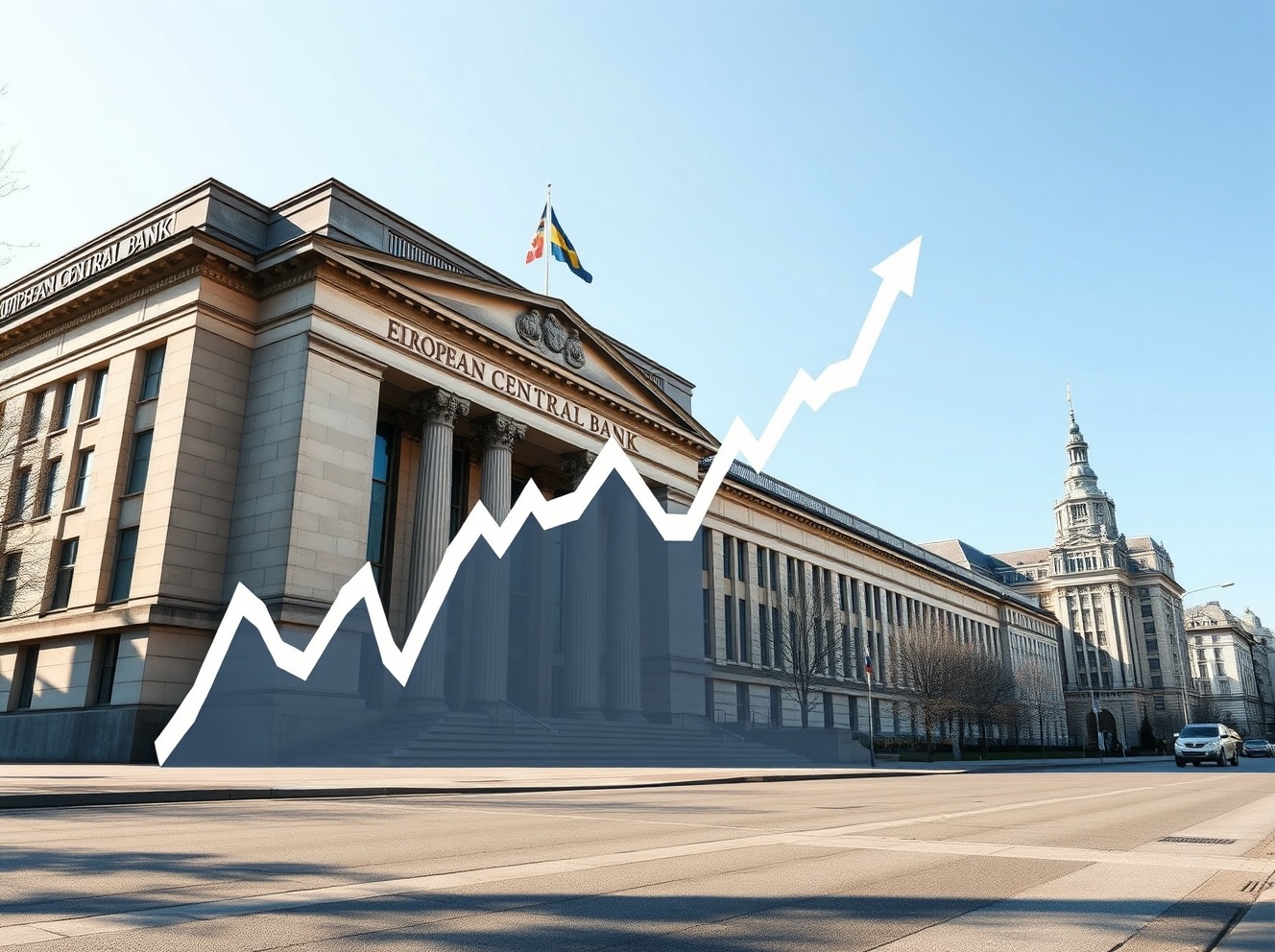
The European Central Bank (ECB) is grappling with significant challenges in its interest rate strategy following unexpected volatility in oil markets. This development complicates monetary policy decisions as highlighted by a recent analysis from Societe Generale. The analysis indicates that energy price fluctuations present a “daunting challenge” to the ECB’s efforts to manage inflation effectively.
Understanding the Impact of Oil Market Volatility
The ECB’s monetary policy committee is faced with unprecedented complexities in setting interest rates. In early 2025, dramatic fluctuations in global oil markets have fundamentally altered inflation projections across the Eurozone. As a result, policymakers must carefully navigate competing economic priorities that lack historical precedent.
According to Societe Generale, a 10% increase in crude oil prices typically leads to an additional 0.2-0.3 percentage points of inflation within six months across European economies. This is particularly relevant as the impact of energy price shocks varies significantly among different member states. For instance, countries like Germany and France display different sensitivities to oil price changes compared to their southern European counterparts, complicating the ECB’s approach to a unified monetary policy.
Policy Complications and Economic Implications
The research team at Societe Generale employed advanced modeling techniques to assess the implications of the oil shock on monetary policy. Their findings suggest that traditional inflation forecasting models are struggling to predict second-round effects from sustained energy price increases. Moreover, since 2020, the transmission mechanism between oil prices and core inflation has accelerated, indicating that interest rate adjustments may be less effective in combating energy-driven inflation.
Historical context reveals that current oil market conditions echo past energy crises, yet the structural characteristics of today’s economy are notably different. The oil crises of the 1970s highlighted the risk of stagflation, while the 2008 oil price spike and the 2014-2016 oil glut prompted the ECB to adopt unconventional monetary tools such as quantitative easing. Today, the global energy transition adds layers of complexity to price forecasting, influenced by geopolitical tensions and changing consumption patterns.
The ECB’s primary policy transmission channels—bank lending, asset prices, and exchange rates—are under stress from these market conditions. Oil price shocks introduce several complications: timing uncertainties lead to unpredictable lags in inflation transmission; regional divergences mean varying impacts on different Eurozone economies; and addressing energy inflation could exacerbate other economic challenges.
Expert Recommendations and Economic Impact
In light of these challenges, various financial institutions and research organizations across Europe are proposing alternative policy frameworks. Many emphasize the importance of enhanced coordination between monetary and fiscal authorities. Some economists advocate for a temporary acceptance of higher inflation targets during energy transition periods, while others suggest more aggressive use of macroprudential tools alongside interest rate policy. Clear communication strategies to manage inflation expectations are also highlighted as crucial.
The impact of oil price volatility is not uniform across economic sectors. Industries such as transportation and manufacturing face direct cost increases due to higher energy prices. In contrast, service sectors experience indirect effects through altered consumer spending patterns. The following table illustrates the estimated impact variations across key Eurozone sectors:
| Economic Sector | Direct Impact | Indirect Impact | Recovery Timeline |
|---|---|---|---|
| Transportation | High | Medium | 6-12 months |
| Manufacturing | Medium-High | High | 9-18 months |
| Services | Low | Medium-High | 3-9 months |
| Agriculture | Medium | Medium | 12-24 months |
These sectoral variations create additional complexities for the ECB’s monetary policy decisions. Uniform interest rate adjustments may affect industries in significantly different ways, posing challenges for achieving balanced economic outcomes across the Eurozone.
In conclusion, the European Central Bank is facing intricate decisions regarding interest rates as oil market volatility continues into 2025. The comprehensive analysis from Societe Generale underscores the multifaceted challenges confronting monetary policymakers. As energy price shocks disrupt traditional inflation forecasting and policy transmission mechanisms, the ECB must adeptly balance its price stability mandate with broader economic objectives in this turbulent environment. Financial markets and economic stakeholders will closely watch how the institution navigates these challenges in the upcoming months.

Albert Camus’ Insightful Quote on Human Identity Resurfaces

Drone Strikes and Missile Attacks Disrupt UAE Amid Rising Tensions

Japanese Yen Rises Sharply Against US Dollar Ahead of Key Decisions

Priyanka Chopra and Nick Jonas Avoid Near Miss en Route to Oscars

Gujarat Vaccinates Over 11 Lakh Infants in Major Health Drive

Alexandre Singh Wins Oscar, Celebrates Immigrant Heritage

Lok Sabha Speaker Issues Warning Over Placards in Parliament

Global Electrosurgical Devices Market Expands to $10.2 Billion by 2034

North Zone Dominates Cricket; SJAM-1 Shines in Table Tennis

SBI Announces QIP Floor Price at ₹811.05 Per Share

Cept Unveils ₹3.1 Crore Urban Mobility Plan for Sustainable Growth

Comparing Subscription Prices: Spotify, Apple Music, and YouTube Music in India

New Blood Group Discovered in South Indian Woman at Rotary Centre

Konkani Cultural Organisation to Host Pearl Jubilee in Abu Dhabi

Torrential Rains Cause Flash Flooding in New York and New Jersey

Nothing Headphone 1 Review: A Bold Contender in Audio Design

Air India Crash Investigation Highlights Boeing Fuel Switch Concerns

Broad Advocates for Bowling Change Ahead of Final Test Against India
-
 World1 year ago
SBI Announces QIP Floor Price at ₹811.05 Per Share
-
 Lifestyle1 year ago
Cept Unveils ₹3.1 Crore Urban Mobility Plan for Sustainable Growth
-
 Science1 year ago
Comparing Subscription Prices: Spotify, Apple Music, and YouTube Music in India
-
 Science1 year ago
New Blood Group Discovered in South Indian Woman at Rotary Centre
-
 Top Stories1 year ago
Konkani Cultural Organisation to Host Pearl Jubilee in Abu Dhabi
-
 World1 year ago
Torrential Rains Cause Flash Flooding in New York and New Jersey
-
 Science1 year ago
Nothing Headphone 1 Review: A Bold Contender in Audio Design
-
 Top Stories1 year ago
Air India Crash Investigation Highlights Boeing Fuel Switch Concerns
-
 Sports1 year ago
Broad Advocates for Bowling Change Ahead of Final Test Against India
-

 Business1 year ago
Indian Stock Market Rebounds: Sensex and Nifty Rise After Four-Day Decline
-

 Sports1 year ago
Cristian Totti Retires at 19: Pressure of Fame Takes Toll
-

 Politics1 year ago
Abandoned Doberman Finds New Home After Journey to Prague