
Business
Controversy Erupts Over Karnataka’s Ad Spend Favoring National Herald

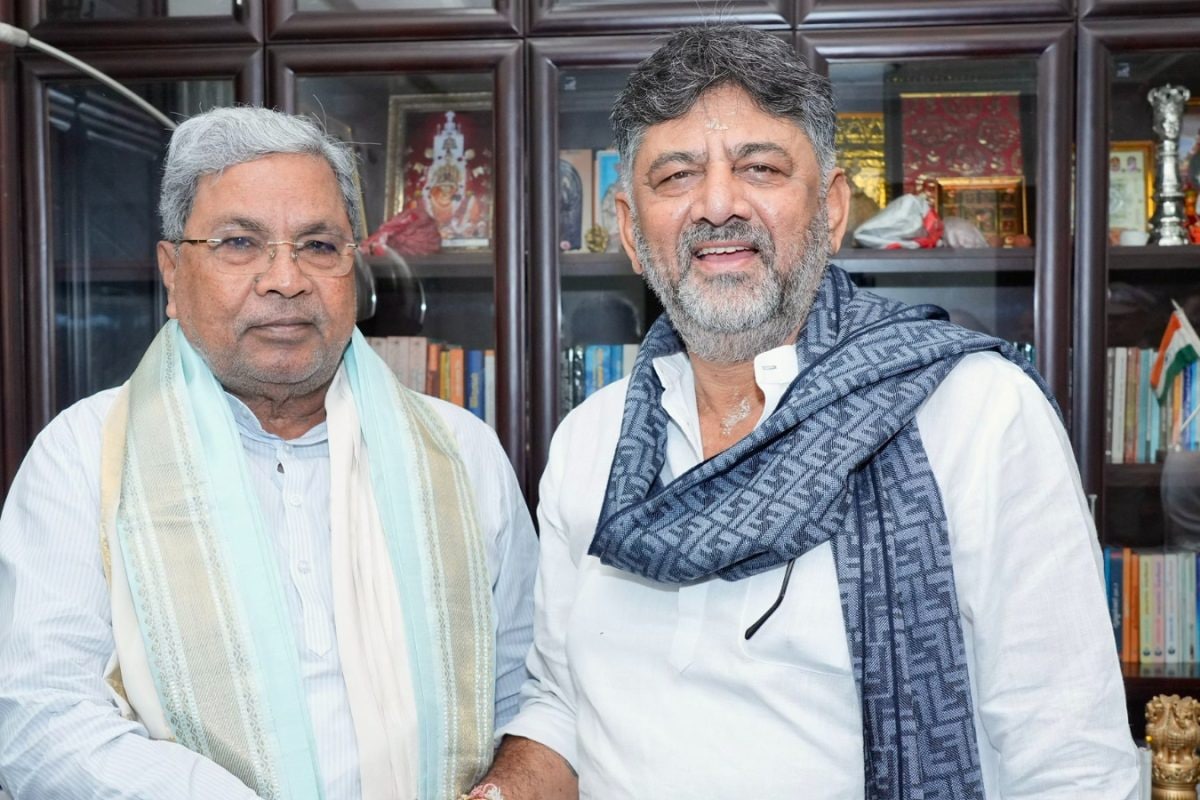
The allocation of public advertisement funds in Karnataka has ignited a political firestorm following revelations that the Congress-affiliated newspaper, National Herald, received a substantial portion of the state’s ad spending. According to documents obtained by CNN-NEWS18, National Herald emerged as the largest beneficiary of Karnataka’s advertisement budget for the financial years 2023-24 and 2024-25. This has raised questions regarding the government’s spending priorities, particularly as the newspaper reportedly has minimal readership and circulation both within the state and nationally.
In the financial year 2023-24, the Karnataka government allocated Rs 1.90 crore to National Herald. This amount decreased slightly to Rs 99 lakh in 2024-25. Intriguingly, this allocation accounted for a staggering 69 percent of Karnataka’s total spending on national newspapers, which amounted to Rs 1.42 crore in 2024-25. Critics of the government argue that this preference is unjustified, particularly given that more widely circulated publications received significantly less, and some did not receive any funding at all.
Political Backlash and Accusations of Misuse
The revelations have prompted sharp criticism from the opposition, particularly the Bharatiya Janata Party (BJP). Senior BJP leader and former Deputy Chief Minister Dr CN Ashwath Narayan condemned the allocations, labeling them as an “open loot of taxpayers’ money.” He questioned the rationale behind advertising in a newspaper with negligible circulation and highlighted that National Herald is currently under investigation by the Enforcement Directorate.
“Why should public money be given to a newspaper that has no circulation in Karnataka or anywhere else?” Narayan asked. The BJP has called for accountability from the Siddaramaiah-led government, demanding clarification on the criteria used for advertising fund allocations.
Congress Defends the Funding Choices
In response, Congress leaders have rallied to defend the government’s decision. Minister for Forest, Ecology and Environment Eshwar Khandre dismissed the criticism, accusing the BJP of politicizing the matter. He argued that questioning the allocation of funds to National Herald was “anti-national,” a statement that has stirred further controversy. Opposition leaders have seized on this remark, accusing the Congress of attempting to stifle legitimate inquiry by labeling it unpatriotic.
Adding to the party’s defense, Congress spokesperson Pawan Khera referred to National Herald as a “national heritage” and emphasized the responsibility of the country to support such historical institutions. “National Herald is a national heritage since Independence. What problem does the media have if funds are given to the media itself?” Khera stated during an interview with CNN-NEWS18.
As the political discourse continues to heat up, the controversy surrounding Karnataka’s advertisement spending highlights broader concerns about the allocation of public funds and the relationship between government and media. The ongoing debate raises crucial questions about transparency, accountability, and the potential implications of using taxpayer money to support politically aligned publications.

Albert Camus’ Insightful Quote on Human Identity Resurfaces

Drone Strikes and Missile Attacks Disrupt UAE Amid Rising Tensions

Japanese Yen Rises Sharply Against US Dollar Ahead of Key Decisions

Priyanka Chopra and Nick Jonas Avoid Near Miss en Route to Oscars

Gujarat Vaccinates Over 11 Lakh Infants in Major Health Drive

Alexandre Singh Wins Oscar, Celebrates Immigrant Heritage

Lok Sabha Speaker Issues Warning Over Placards in Parliament

Global Electrosurgical Devices Market Expands to $10.2 Billion by 2034

North Zone Dominates Cricket; SJAM-1 Shines in Table Tennis

SBI Announces QIP Floor Price at ₹811.05 Per Share

Cept Unveils ₹3.1 Crore Urban Mobility Plan for Sustainable Growth

New Blood Group Discovered in South Indian Woman at Rotary Centre

Konkani Cultural Organisation to Host Pearl Jubilee in Abu Dhabi

Torrential Rains Cause Flash Flooding in New York and New Jersey

Nothing Headphone 1 Review: A Bold Contender in Audio Design

Indian Stock Market Rebounds: Sensex and Nifty Rise After Four-Day Decline

Air India Crash Investigation Highlights Boeing Fuel Switch Concerns

Broad Advocates for Bowling Change Ahead of Final Test Against India
-
 World12 months ago
SBI Announces QIP Floor Price at ₹811.05 Per Share
-
 Lifestyle12 months ago
Cept Unveils ₹3.1 Crore Urban Mobility Plan for Sustainable Growth
-
 Science12 months ago
New Blood Group Discovered in South Indian Woman at Rotary Centre
-
 Top Stories12 months ago
Konkani Cultural Organisation to Host Pearl Jubilee in Abu Dhabi
-
 World12 months ago
Torrential Rains Cause Flash Flooding in New York and New Jersey
-
 Science12 months ago
Nothing Headphone 1 Review: A Bold Contender in Audio Design
-
 Business12 months ago
Indian Stock Market Rebounds: Sensex and Nifty Rise After Four-Day Decline
-
 Top Stories12 months ago
Air India Crash Investigation Highlights Boeing Fuel Switch Concerns
-
 Sports12 months ago
Broad Advocates for Bowling Change Ahead of Final Test Against India
-

 Sports12 months ago
Cristian Totti Retires at 19: Pressure of Fame Takes Toll
-

 Politics12 months ago
Abandoned Doberman Finds New Home After Journey to Prague
-
 Lifestyle12 months ago
Villagers Unite to Raise ₹45 Lakh for Water Solutions in Vadgam