
Top Stories
India Prepares for 2026 Elections: First-Time Voters Take Center Stage

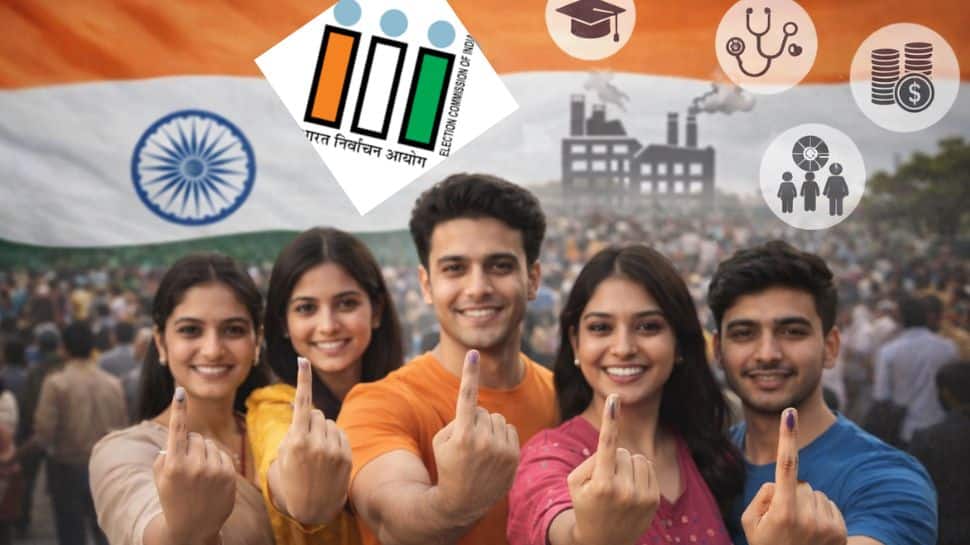
The Election Commission of India (ECI) has announced the schedule for the upcoming assembly elections, set to take place from April 9 to April 29, 2026, across four states and one Union Territory. Chief Election Commissioner Gyanesh Kumar revealed that approximately 17.4 crore voters will participate, casting their ballots in 824 constituencies. Counting of votes is scheduled for May 4, 2026.
With polling expected to occur at around 218,000 polling places, the elections will primarily target rural areas. Each booth will accommodate an average of 750 to 850 voters, a strategy aimed at enhancing accessibility and reducing crowding during the voting process.
First-Time Voters: A Significant Force
The ECI has focused considerable attention on first-time voters, particularly those aged 18 to 19. Following extensive revisions of the voter list and campaigns aimed at educating the electorate, this demographic is projected to influence the electoral landscape significantly. In Kerala, out of approximately 27 million total voters, an estimated 2.5 to 3 million are first-time voters. Similarly, Assam is expected to see between 2 to 2.5 million new young voters, representing around 10 to 12 percent of its electoral rolls.
Other states are also experiencing increases in young voters. In Tamil Nadu, there are roughly 5 to 6 million new urban youth voters, while West Bengal anticipates an addition of 6 to 7 million new voters. Puducherry is set to welcome about 8,000 to 10,000 first-time voters this election cycle.
These first-time voters are prioritizing issues such as employment, education, and local concerns, aligning with a national increase of 1.85 crore first-time voters expected in 2024. Gyanesh Kumar, during a press briefing, emphasized the importance of engaging this demographic in the electoral process. He stated, “The Commission also interacted with the young and first-time voters, and our SWEEP icons, who are engaged in voter awareness activities.”
The Implications of Young Voter Engagement
With a diverse cultural and linguistic background, the states participating in the elections represent a microcosm of India’s vast population. The decisions made by first-time voters are anticipated to have substantial implications on governance, welfare delivery, and socio-political dynamics. These voters are likely to shape discussions around employment, educational opportunities, and issues related to social justice and climate resilience.
Kumar highlighted that young voters are increasingly seen as a critical force within these elections. Their choices will not only impact state leadership but will also reflect the aspirations of a new generation regarding the future of India’s democracy. As they head to the polls, their participation underscores the evolving political landscape and the importance of addressing their priorities.
The upcoming elections, characterized by intense competition and significant youth involvement, will not only serve as a democratic exercise but will also celebrate the cultural richness that defines India. As the April polling window approaches, all eyes will be on how this pivotal group influences the electoral outcomes in these key regions.

Albert Camus’ Insightful Quote on Human Identity Resurfaces

Drone Strikes and Missile Attacks Disrupt UAE Amid Rising Tensions

Japanese Yen Rises Sharply Against US Dollar Ahead of Key Decisions

Priyanka Chopra and Nick Jonas Avoid Near Miss en Route to Oscars

Gujarat Vaccinates Over 11 Lakh Infants in Major Health Drive

Alexandre Singh Wins Oscar, Celebrates Immigrant Heritage

Lok Sabha Speaker Issues Warning Over Placards in Parliament

Global Electrosurgical Devices Market Expands to $10.2 Billion by 2034

North Zone Dominates Cricket; SJAM-1 Shines in Table Tennis

SBI Announces QIP Floor Price at ₹811.05 Per Share

Cept Unveils ₹3.1 Crore Urban Mobility Plan for Sustainable Growth

New Blood Group Discovered in South Indian Woman at Rotary Centre

Konkani Cultural Organisation to Host Pearl Jubilee in Abu Dhabi

Torrential Rains Cause Flash Flooding in New York and New Jersey

Nothing Headphone 1 Review: A Bold Contender in Audio Design

Indian Stock Market Rebounds: Sensex and Nifty Rise After Four-Day Decline

Air India Crash Investigation Highlights Boeing Fuel Switch Concerns

Broad Advocates for Bowling Change Ahead of Final Test Against India
-
 World9 months ago
SBI Announces QIP Floor Price at ₹811.05 Per Share
-
 Lifestyle9 months ago
Cept Unveils ₹3.1 Crore Urban Mobility Plan for Sustainable Growth
-
 Science8 months ago
New Blood Group Discovered in South Indian Woman at Rotary Centre
-
 Top Stories9 months ago
Konkani Cultural Organisation to Host Pearl Jubilee in Abu Dhabi
-
 World9 months ago
Torrential Rains Cause Flash Flooding in New York and New Jersey
-
 Science9 months ago
Nothing Headphone 1 Review: A Bold Contender in Audio Design
-
 Business9 months ago
Indian Stock Market Rebounds: Sensex and Nifty Rise After Four-Day Decline
-
 Top Stories9 months ago
Air India Crash Investigation Highlights Boeing Fuel Switch Concerns
-
 Sports8 months ago
Broad Advocates for Bowling Change Ahead of Final Test Against India
-

 Sports8 months ago
Cristian Totti Retires at 19: Pressure of Fame Takes Toll
-

 Politics9 months ago
Abandoned Doberman Finds New Home After Journey to Prague
-
 Top Stories9 months ago
Patna Bank Manager Abhishek Varun Found Dead in Well