
Science
Delays Threaten India’s Ambitious Gravitational Wave Observatory

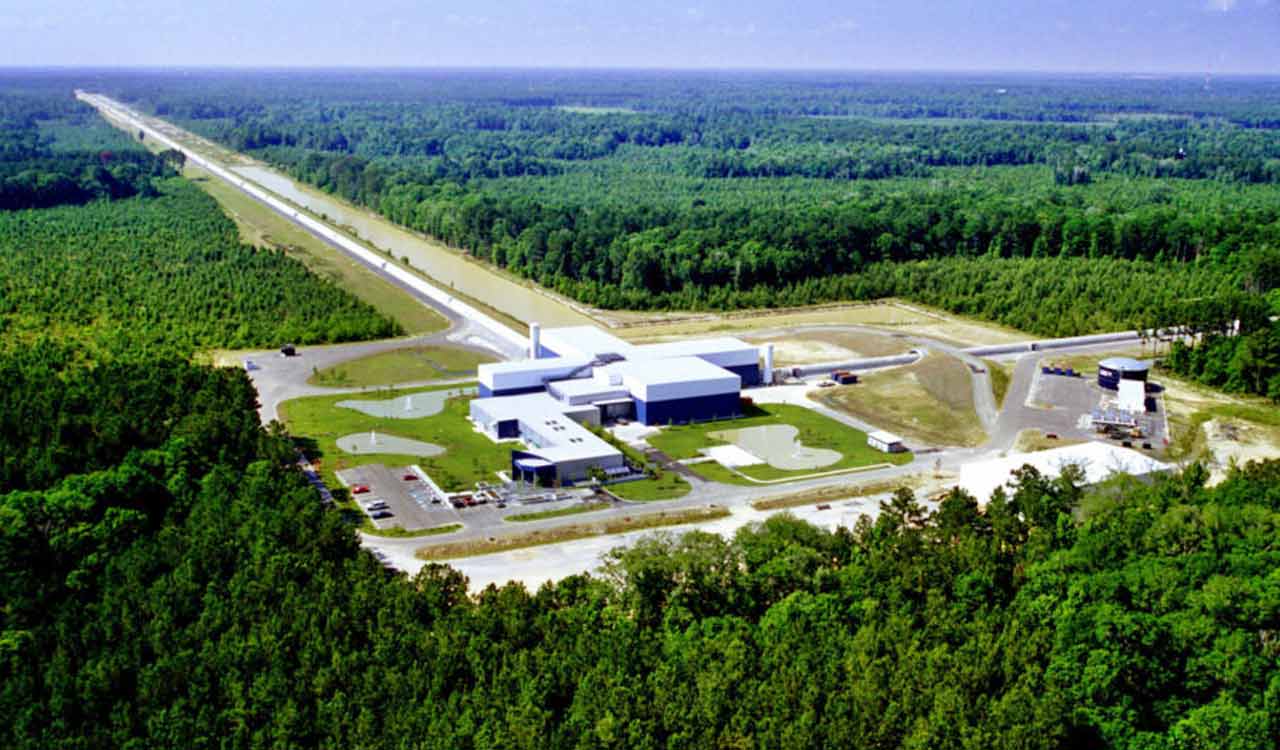
The construction of India’s significant scientific project, the Gravitational Wave Observatory, is facing delays that jeopardize its timeline and impact. Initially approved by the Union Cabinet nearly three years ago, the observatory is part of the global LIGO network, which aims to detect gravitational waves produced by the movement of massive celestial bodies such as stars and planets. Despite the excitement surrounding this initiative, various bureaucratic hurdles have stalled progress.
Reports indicate that the work tender, valued at Rs 1,600 crore, which was issued in April 2022, has yet to be awarded. This delay is particularly concerning given that the government had previously announced that construction would commence in the second half of 2025. The tender has seen multiple extensions, further pushing back the project timeline. In April 2023, the central government approved Rs 2,300 crore for LIGO-India, two years before the Engineering, Procurement and Construction (EPC) tender was released.
Scientific Significance of LIGO
The LIGO observatories play a crucial role in extending our understanding of the universe. They are equipped with two 4-km long arms positioned at 90-degree angles, functioning as vacuum chambers with mirrors at their ends. By reflecting laser beams off these mirrors, LIGO can detect the incredibly faint ripples in spacetime—gravitational waves—that were first predicted by Albert Einstein nearly a century ago.
The first detection of a gravitational wave occurred in 2015, resulting from the merger of two black holes approximately 1.3 billion years ago. The observatory’s ability to observe these events offers new insights into cosmic phenomena that conventional electromagnetic waves cannot capture.
Located in Maharashtra’s Hingoli district, about 450 km from Mumbai, the observatory is expected to commence scientific operations by 2030. India has not previously constructed a scientific facility of this magnitude, and the successful implementation of LIGO could yield substantial benefits for the nation’s science and technology sectors.
Collaboration and Global Standing
India’s involvement in the LIGO project underscores its growing role in international scientific collaboration. The country has previously contributed to major projects like the Large Hadron Collider and the International Thermonuclear Experimental Reactor (ITER), which aims to facilitate controlled nuclear fusion.
As India strives to establish itself as a key player in global scientific initiatives, the bureaucratic delays surrounding the Gravitational Wave Observatory raise concerns about its international reputation. The continued postponement of this project does not reflect well on India’s commitment to advancing its scientific capabilities.
The LIGO observatory represents a significant leap forward in research and technology for India, promising to enhance the nation’s standing in the global scientific community. The urgency of these delays highlights the need for streamlined processes to ensure that this groundbreaking project can move forward as planned.

Albert Camus’ Insightful Quote on Human Identity Resurfaces

Drone Strikes and Missile Attacks Disrupt UAE Amid Rising Tensions

Japanese Yen Rises Sharply Against US Dollar Ahead of Key Decisions

Priyanka Chopra and Nick Jonas Avoid Near Miss en Route to Oscars

Gujarat Vaccinates Over 11 Lakh Infants in Major Health Drive

Alexandre Singh Wins Oscar, Celebrates Immigrant Heritage

Lok Sabha Speaker Issues Warning Over Placards in Parliament

Global Electrosurgical Devices Market Expands to $10.2 Billion by 2034

North Zone Dominates Cricket; SJAM-1 Shines in Table Tennis

SBI Announces QIP Floor Price at ₹811.05 Per Share

Cept Unveils ₹3.1 Crore Urban Mobility Plan for Sustainable Growth

New Blood Group Discovered in South Indian Woman at Rotary Centre

Konkani Cultural Organisation to Host Pearl Jubilee in Abu Dhabi

Torrential Rains Cause Flash Flooding in New York and New Jersey

Nothing Headphone 1 Review: A Bold Contender in Audio Design

Air India Crash Investigation Highlights Boeing Fuel Switch Concerns

Indian Stock Market Rebounds: Sensex and Nifty Rise After Four-Day Decline

Broad Advocates for Bowling Change Ahead of Final Test Against India
-
 World1 year ago
SBI Announces QIP Floor Price at ₹811.05 Per Share
-
 Lifestyle1 year ago
Cept Unveils ₹3.1 Crore Urban Mobility Plan for Sustainable Growth
-
 Science12 months ago
New Blood Group Discovered in South Indian Woman at Rotary Centre
-
 Top Stories1 year ago
Konkani Cultural Organisation to Host Pearl Jubilee in Abu Dhabi
-
 World1 year ago
Torrential Rains Cause Flash Flooding in New York and New Jersey
-
 Science1 year ago
Nothing Headphone 1 Review: A Bold Contender in Audio Design
-
 Top Stories1 year ago
Air India Crash Investigation Highlights Boeing Fuel Switch Concerns
-
 Business1 year ago
Indian Stock Market Rebounds: Sensex and Nifty Rise After Four-Day Decline
-
 Sports12 months ago
Broad Advocates for Bowling Change Ahead of Final Test Against India
-

 Sports12 months ago
Cristian Totti Retires at 19: Pressure of Fame Takes Toll
-

 Politics1 year ago
Abandoned Doberman Finds New Home After Journey to Prague
-
 Lifestyle1 year ago
Villagers Unite to Raise ₹45 Lakh for Water Solutions in Vadgam