
Business
India’s Fiscal Discipline Boosts Global Confidence, Says S&P President

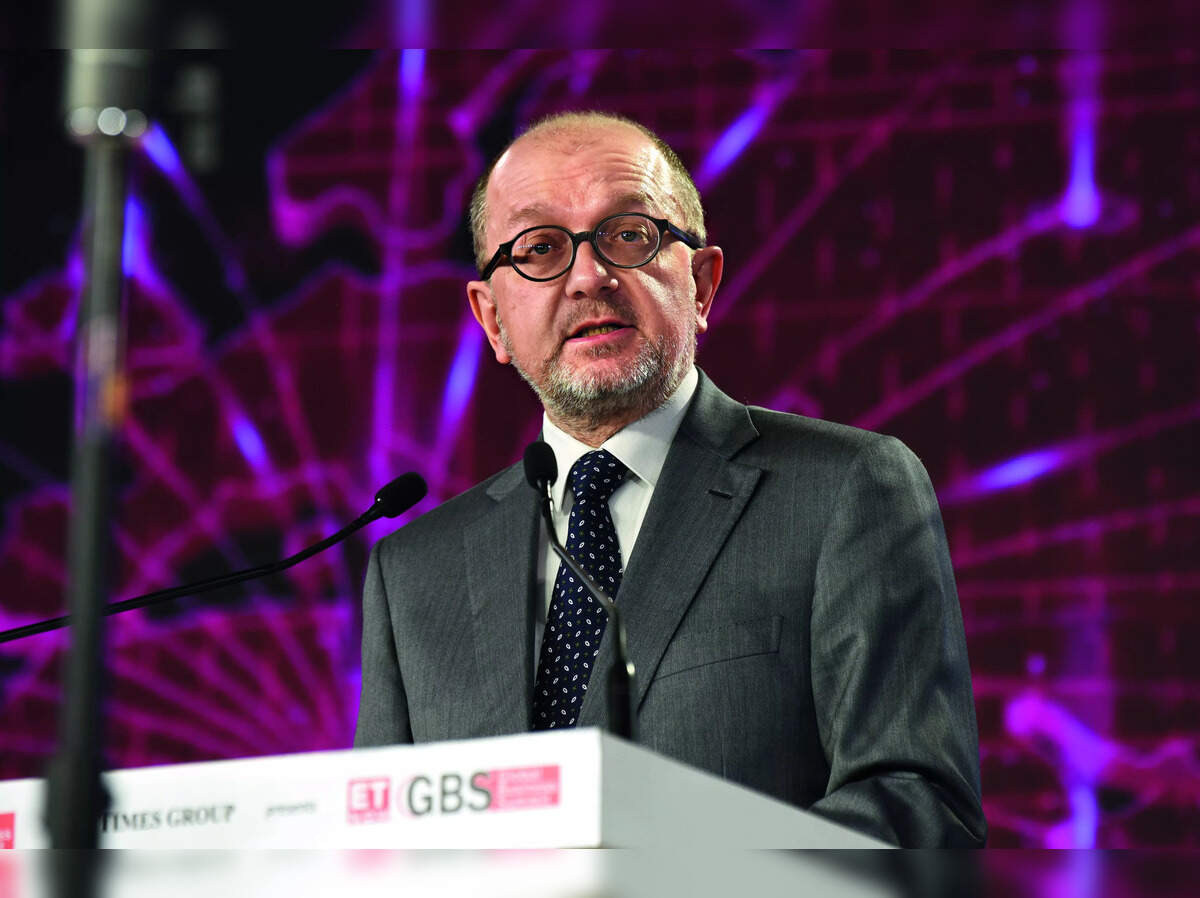
During the recent ET Now Global Business Summit in New Delhi, Yann Le Pallec, president of S&P Global Ratings and chair of the Crisil Board, emphasized India’s ongoing commitment to fiscal discipline and strategic public investment. He noted that these factors have significantly enhanced global confidence in India’s long-term economic growth trajectory.
Le Pallec highlighted that last August, S&P Global upgraded India’s sovereign credit rating from ‘BBB-‘ to ‘BBB’. He remarked, “That upgrade didn’t happen by chance,” indicating that India’s post-pandemic economic recovery has been one of the most consistent among major economies. He expressed optimism for the medium-term outlook, attributing this to ongoing structural reforms, a vibrant entrepreneurial spirit, and a forward-thinking approach to debt management and development.
India’s domestic bond market is gradually deepening, largely due to foreign index inclusions and a rise in private credit. As of 2023, foreign ownership of Indian government bonds was approximately 0.9%. Following the inclusion in the JP Morgan index in June 2024, this figure is expected to increase. Le Pallec suggested that broader index inclusion could raise foreign participation in India’s government bond market to 10%, significantly boosting available funds for corporate debt issuers in India, potentially tripling relative to nominal GDP by 2030.
Shifts in Global Economic Dynamics
Speaking on the theme of “The Price of Trust: How Credit Shapes the Global Economy,” Le Pallec noted a significant shift in the global economic landscape. He referenced data from the International Monetary Fund (IMF), projecting that the combined share of global GDP from India and China will nearly double from just under 12% in 2010 to 22% by 2030. He emphasized that emerging markets are anticipated to contribute about two-thirds of global growth this year, a trend supported by improved domestic policy predictability and transparency in various nations amidst rising global uncertainties.
Le Pallec discussed two crucial long-term implications for credit arising from these changes: the restructuring of supply chains and the potential for regulatory cooperation to become fractured. He warned that while some pressures in the economic landscape may be mitigated by current trends such as the AI and data centre investment boom, the reorganization of supply chains and increased tariffs could weigh on economic growth for established players.
“In the near term, some of those pressures may be masked by tailwinds,” he stated. “But this shake-up can also create opportunities for emerging players.” Le Pallec highlighted that while building resilience in supply chains may incur upfront costs, it can also be viewed as a long-term investment for stability during turbulent periods.
The Evolving Nature of Trust
Le Pallec also addressed the implications of declining trust in global economic relationships. He explained that as trust diminishes, policymakers face challenging trade-offs among strategic autonomy, financial stability, and economic growth. “If trust is scarce, strategic autonomy often dominates, sometimes at a real economic or credit cost, even when such policies are justified,” he stated.
As a result, investors and governments might respond by reducing their exposure to certain relationships, diversifying away from riskier engagements, or hedging against potential losses. This dynamic can lead to increased capital costs and friction within the economic system.
Interestingly, Le Pallec pointed out that the decline of trust is not merely a negative phenomenon; it is evolving. “Declining trust in some relationships increases the incentive to build trust elsewhere,” he noted, suggesting that global trade is not only surviving but adapting continuously. He concluded that as the landscape of trust shifts, global capital markets and capital flows may follow suit, reinforcing the necessity for diversification in times of uncertainty.
Through these insights, Le Pallec’s address at the summit underscored a pivotal moment for India and the broader global economy, highlighting the importance of strategic policy frameworks and international cooperation in navigating future challenges.

Albert Camus’ Insightful Quote on Human Identity Resurfaces

Drone Strikes and Missile Attacks Disrupt UAE Amid Rising Tensions

Japanese Yen Rises Sharply Against US Dollar Ahead of Key Decisions

Priyanka Chopra and Nick Jonas Avoid Near Miss en Route to Oscars

Gujarat Vaccinates Over 11 Lakh Infants in Major Health Drive

Alexandre Singh Wins Oscar, Celebrates Immigrant Heritage

Lok Sabha Speaker Issues Warning Over Placards in Parliament

Global Electrosurgical Devices Market Expands to $10.2 Billion by 2034

North Zone Dominates Cricket; SJAM-1 Shines in Table Tennis

SBI Announces QIP Floor Price at ₹811.05 Per Share

Cept Unveils ₹3.1 Crore Urban Mobility Plan for Sustainable Growth

New Blood Group Discovered in South Indian Woman at Rotary Centre

Konkani Cultural Organisation to Host Pearl Jubilee in Abu Dhabi

Torrential Rains Cause Flash Flooding in New York and New Jersey

Nothing Headphone 1 Review: A Bold Contender in Audio Design

Indian Stock Market Rebounds: Sensex and Nifty Rise After Four-Day Decline

Air India Crash Investigation Highlights Boeing Fuel Switch Concerns

Broad Advocates for Bowling Change Ahead of Final Test Against India
-
 World12 months ago
SBI Announces QIP Floor Price at ₹811.05 Per Share
-
 Lifestyle12 months ago
Cept Unveils ₹3.1 Crore Urban Mobility Plan for Sustainable Growth
-
 Science12 months ago
New Blood Group Discovered in South Indian Woman at Rotary Centre
-
 Top Stories12 months ago
Konkani Cultural Organisation to Host Pearl Jubilee in Abu Dhabi
-
 World12 months ago
Torrential Rains Cause Flash Flooding in New York and New Jersey
-
 Science12 months ago
Nothing Headphone 1 Review: A Bold Contender in Audio Design
-
 Business12 months ago
Indian Stock Market Rebounds: Sensex and Nifty Rise After Four-Day Decline
-
 Top Stories12 months ago
Air India Crash Investigation Highlights Boeing Fuel Switch Concerns
-
 Sports12 months ago
Broad Advocates for Bowling Change Ahead of Final Test Against India
-

 Sports12 months ago
Cristian Totti Retires at 19: Pressure of Fame Takes Toll
-

 Politics12 months ago
Abandoned Doberman Finds New Home After Journey to Prague
-
 Lifestyle12 months ago
Villagers Unite to Raise ₹45 Lakh for Water Solutions in Vadgam