
Top Stories
Zaima Rahman Campaigns in Dhaka’s Streets Ahead of Elections

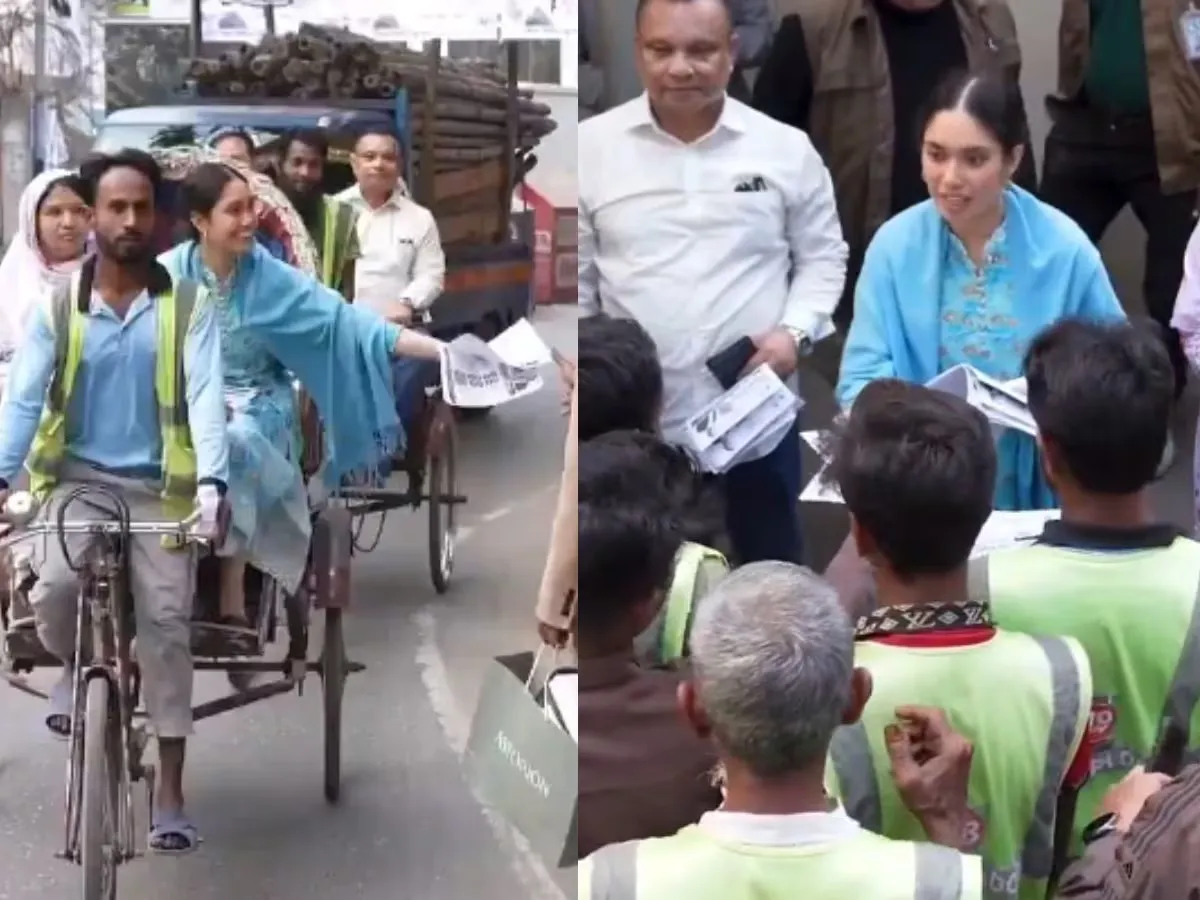
Zaima Rahman, the daughter of Bangladesh Nationalist Party (BNP) leader Tarique Rahman, is actively campaigning across the bustling streets of Dhaka as the country approaches its general elections scheduled for February 12, 2026. Her grassroots efforts, which include riding a rickshaw and distributing pamphlets, aim to engage voters directly in their neighborhoods.
The campaign kicked off at Gulshan Police Plaza, where Zaima navigated through crowded streets, shops, and cafes. She interacted with a diverse array of people, including pedestrians, rickshaw pullers, vendors, and office workers. During her outreach, she emphasized support for her father, who is contesting in the Dhaka-17 constituency, stating, “My father, Tarique Rahman, is the ‘Sheaf of Paddy’ candidate in Dhaka-17. I am asking for your votes in his favor.”
Tarique Rahman’s Political Landscape
Tarique Rahman, now aged 60, has emerged as a prominent figure in Bangladesh’s political scene, particularly as the nation prepares for its first general election since the removal of long-time Prime Minister Sheikh Hasina in 2024. He faces significant competition from Dr. SM Khalekuzzaman, the candidate representing Jamaat-e-Islami in the Dhaka-17 constituency. Recently, Rahman declined an invitation to form a unity government with Jamaat-e-Islami, expressing his confidence in the BNP’s electoral prospects.
Rahman made headlines with his return to Bangladesh in December after nearly two decades of exile, coinciding with his mother Khaleda Zia’s declining health. Zia, the country’s first female Prime Minister, passed away on December 30, 2025, leaving a significant void in the political landscape.
Overview of the Upcoming Elections
The elections on February 12, 2026, will determine the 300 members of the Jatiya Sangsad (National Parliament). Approximately 127 million voters are eligible to participate, marking this as one of the largest democratic exercises in Bangladesh’s history. A total of 1,981 candidates from various parties are vying for election, reflecting a competitive political environment.
These elections are occurring under an interim government led by Muhammad Yunus, which was established following Sheikh Hasina’s ousting after a significant student-led movement in 2024. Hasina, currently in exile in India, was sentenced to death in absentia by a Bangladeshi tribunal for her actions during times of unrest.
The political environment is notably different this election cycle, as the Awami League, previously dominant under Hasina, is not contesting. This has allowed the BNP and the 11-Party Alliance, which includes Jamaat-e-Islami and the National Citizen Party (NCP), to take center stage. The BNP has nominated candidates for 288 seats, while the 11-Party Alliance is contesting 298 seats.
Key issues dominating the electoral discourse include unemployment, corruption, and the representation of youth and minority voters. Significant changes to the electoral process include the introduction of postal voting and the reinstatement of the “No Vote” option. While opinion polls indicate a potential advantage for the BNP, Jamaat-e-Islami is expected to perform well, suggesting a pivotal moment for Bangladesh’s political future.
As the campaign intensifies, the focus will remain on how these dynamics shape the electoral outcomes and the broader implications for governance in Bangladesh.

Albert Camus’ Insightful Quote on Human Identity Resurfaces

Drone Strikes and Missile Attacks Disrupt UAE Amid Rising Tensions

Japanese Yen Rises Sharply Against US Dollar Ahead of Key Decisions

Priyanka Chopra and Nick Jonas Avoid Near Miss en Route to Oscars

Gujarat Vaccinates Over 11 Lakh Infants in Major Health Drive

Alexandre Singh Wins Oscar, Celebrates Immigrant Heritage

Lok Sabha Speaker Issues Warning Over Placards in Parliament

Global Electrosurgical Devices Market Expands to $10.2 Billion by 2034

North Zone Dominates Cricket; SJAM-1 Shines in Table Tennis

SBI Announces QIP Floor Price at ₹811.05 Per Share

Cept Unveils ₹3.1 Crore Urban Mobility Plan for Sustainable Growth

Comparing Subscription Prices: Spotify, Apple Music, and YouTube Music in India

New Blood Group Discovered in South Indian Woman at Rotary Centre

Konkani Cultural Organisation to Host Pearl Jubilee in Abu Dhabi

Torrential Rains Cause Flash Flooding in New York and New Jersey

Nothing Headphone 1 Review: A Bold Contender in Audio Design

Air India Crash Investigation Highlights Boeing Fuel Switch Concerns

Indian Stock Market Rebounds: Sensex and Nifty Rise After Four-Day Decline
-
 World1 year ago
SBI Announces QIP Floor Price at ₹811.05 Per Share
-
 Lifestyle1 year ago
Cept Unveils ₹3.1 Crore Urban Mobility Plan for Sustainable Growth
-
 Science12 months ago
Comparing Subscription Prices: Spotify, Apple Music, and YouTube Music in India
-
 Science12 months ago
New Blood Group Discovered in South Indian Woman at Rotary Centre
-
 Top Stories1 year ago
Konkani Cultural Organisation to Host Pearl Jubilee in Abu Dhabi
-
 World1 year ago
Torrential Rains Cause Flash Flooding in New York and New Jersey
-
 Science1 year ago
Nothing Headphone 1 Review: A Bold Contender in Audio Design
-
 Top Stories1 year ago
Air India Crash Investigation Highlights Boeing Fuel Switch Concerns
-
 Business1 year ago
Indian Stock Market Rebounds: Sensex and Nifty Rise After Four-Day Decline
-

 Sports12 months ago
Broad Advocates for Bowling Change Ahead of Final Test Against India
-

 Sports12 months ago
Cristian Totti Retires at 19: Pressure of Fame Takes Toll
-

 Politics1 year ago
Abandoned Doberman Finds New Home After Journey to Prague