
Sports
Top Players Protest Ban on Wearable Fitness Trackers at Australian Open

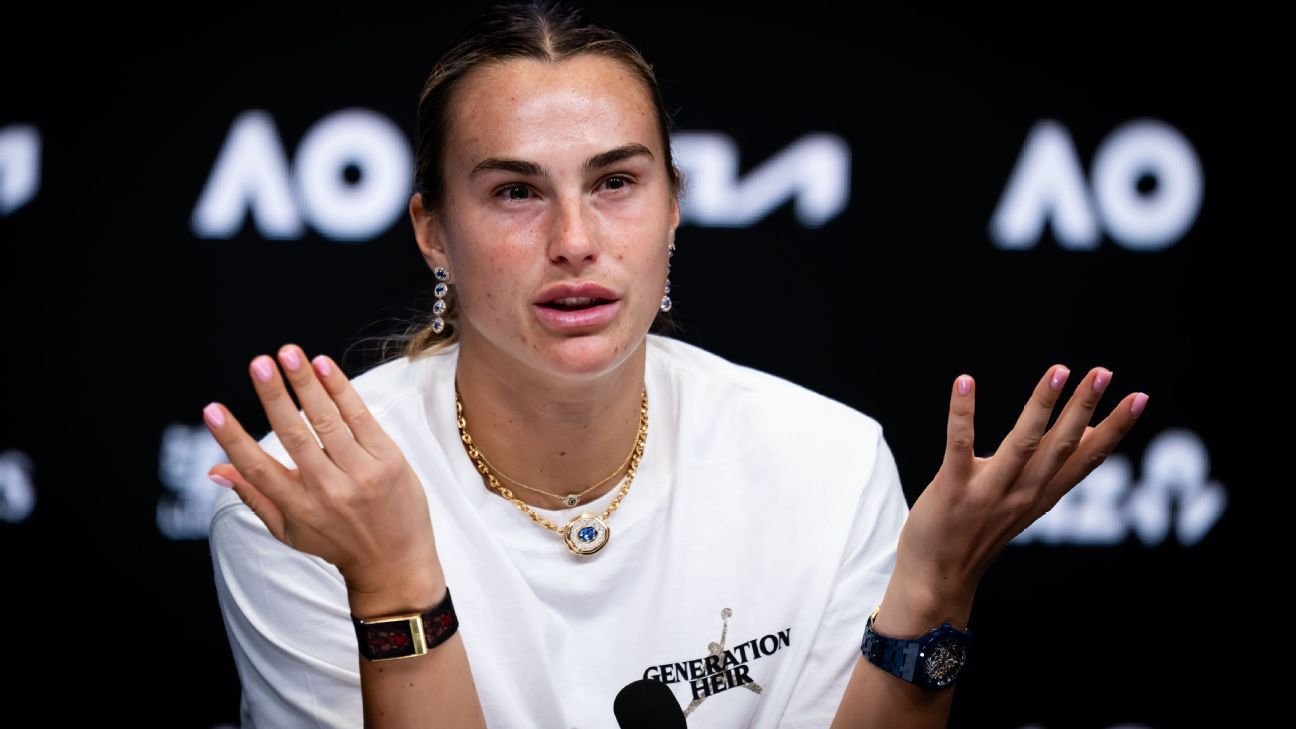
Wearable fitness trackers have become a point of contention at the 2024 Australian Open, as top players including Carlos Alcaraz, Jannik Sinner, and Aryna Sabalenka have been asked to remove their devices during matches. These devices, popular in elite sports for their ability to gather physiological data, are approved for use by the International Tennis Federation (ITF) and professional tours. However, their use is not permitted at the four Grand Slam tournaments, including the Australian Open.
Tournament organizers revealed that discussions are ongoing regarding the potential future acceptance of wearables at Grand Slams. According to a statement from Tennis Australia, “Wearables are currently not permitted at Grand Slams. The Australian Open is involved in ongoing discussions on how this situation could change.” Sabalenka, the world’s top-ranked female player, expressed her frustration regarding the ban, asserting that it places the Grand Slams out of alignment with the rest of the tennis circuit.
After her quarterfinal victory, Sabalenka stated that she received communication indicating the devices were approved by the ITF. “I didn’t know that the Grand Slams didn’t come to the same conclusion,” she remarked, highlighting the inconsistency in regulations. “I really hope that they will reconsider the decision and let their players track their health monitor.”
The ban has impacted players like Alcaraz and Sinner, both of whom have dominated recent major tournaments. During the fourth round, match officials instructed them to remove their wrist trackers, which they typically rely on for health insights. Tennis Australia noted that while some devices gauge internal metrics like heart rate, players are still provided with data regarding key external performance measures, such as distance covered and shot speed.
Sinner, a two-time Australian Open champion, emphasized the importance of data collected during matches for recovery and performance assessment. “There is certain data we would like to track a little bit on court. It’s more about what you can see after the match,” he explained. He also mentioned that the insights gained from wearables are useful for practice sessions, assisting athletes in managing their training loads effectively.
Despite accepting the umpire’s instructions, Sinner expressed his preference for the device. “There are other things we could use – [like] the vest,” he acknowledged, although he admitted wearing it felt uncomfortable. “But rules are rules. I understand. I won’t use it again.”
The technology provided by companies like WHOOP promotes the use of wearables as essential tools for enhancing athletic performance. The company describes its product as a “24/7 wearable coach designed to help you improve your health, fitness, and longevity.” In a recent social media post, WHOOP stated that the technology is “performance-enhancing – by design,” arguing that removing such insights from athletes is akin to asking them to perform without crucial information.
As the Australian Open progresses, the conversation around the use of wearable fitness technology continues to evolve. The players’ push for change reflects a growing demand for more integrated health monitoring solutions in competitive sports, as they seek to optimize their performance while maintaining their health.

Albert Camus’ Insightful Quote on Human Identity Resurfaces

Drone Strikes and Missile Attacks Disrupt UAE Amid Rising Tensions

Japanese Yen Rises Sharply Against US Dollar Ahead of Key Decisions

Priyanka Chopra and Nick Jonas Avoid Near Miss en Route to Oscars

Gujarat Vaccinates Over 11 Lakh Infants in Major Health Drive

Alexandre Singh Wins Oscar, Celebrates Immigrant Heritage

Lok Sabha Speaker Issues Warning Over Placards in Parliament

Global Electrosurgical Devices Market Expands to $10.2 Billion by 2034

North Zone Dominates Cricket; SJAM-1 Shines in Table Tennis

SBI Announces QIP Floor Price at ₹811.05 Per Share

Cept Unveils ₹3.1 Crore Urban Mobility Plan for Sustainable Growth

New Blood Group Discovered in South Indian Woman at Rotary Centre

Konkani Cultural Organisation to Host Pearl Jubilee in Abu Dhabi

Torrential Rains Cause Flash Flooding in New York and New Jersey

Nothing Headphone 1 Review: A Bold Contender in Audio Design

Air India Crash Investigation Highlights Boeing Fuel Switch Concerns

Indian Stock Market Rebounds: Sensex and Nifty Rise After Four-Day Decline

Broad Advocates for Bowling Change Ahead of Final Test Against India
-
 World1 year ago
SBI Announces QIP Floor Price at ₹811.05 Per Share
-
 Lifestyle1 year ago
Cept Unveils ₹3.1 Crore Urban Mobility Plan for Sustainable Growth
-
 Science12 months ago
New Blood Group Discovered in South Indian Woman at Rotary Centre
-
 Top Stories1 year ago
Konkani Cultural Organisation to Host Pearl Jubilee in Abu Dhabi
-
 World1 year ago
Torrential Rains Cause Flash Flooding in New York and New Jersey
-
 Science1 year ago
Nothing Headphone 1 Review: A Bold Contender in Audio Design
-
 Top Stories1 year ago
Air India Crash Investigation Highlights Boeing Fuel Switch Concerns
-
 Business1 year ago
Indian Stock Market Rebounds: Sensex and Nifty Rise After Four-Day Decline
-
 Sports12 months ago
Broad Advocates for Bowling Change Ahead of Final Test Against India
-

 Sports12 months ago
Cristian Totti Retires at 19: Pressure of Fame Takes Toll
-

 Politics1 year ago
Abandoned Doberman Finds New Home After Journey to Prague
-

 Lifestyle1 year ago
Villagers Unite to Raise ₹45 Lakh for Water Solutions in Vadgam