
Health
India Responds Swiftly to Nipah Virus Outbreak in West Bengal

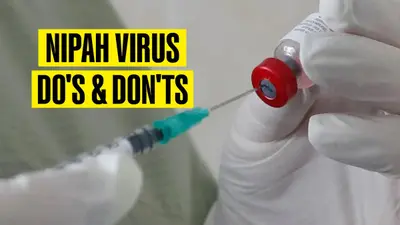
Indian health authorities are urgently addressing a Nipah virus outbreak in West Bengal, where five individuals have tested positive. The outbreak, confirmed on January 23, 2026, has raised alarm in the region, particularly in Barasat, located near Kolkata. This resurgence of the virus has prompted officials to implement precautionary measures to contain its spread.
In response to the confirmed cases, approximately 100 people have been placed under home quarantine as a precaution. Among the initial patients are two nurses from a private facility in Barasat, who are currently receiving intensive care. Three additional cases involving a doctor, another nurse, and a healthcare worker have also emerged, leading to their transfer to the Beleghata Infectious Diseases Hospital for specialized treatment.
Government Response and Guidelines
West Bengal’s Governor, CV Ananda Bose, emphasized the need for immediate containment of the virus, stating, “It has to be contained first, and eradication should be the priority of the government.” His comments reflect a unified approach aimed at safeguarding public health.
The Union Minister of Health and Family Welfare, JP Nadda, announced that a National Joint Outbreak Response Team has been deployed to assist state officials in curbing the virus’s spread. The Ministry of Health has issued guidelines to bolster the response, sharing protocols regarding the Nipah virus with the state’s Integrated Disease Surveillance Unit.
To help the public navigate this health crisis, health authorities have outlined essential do’s and don’ts for preventing transmission of the Nipah virus.
Preventive Measures Against Nipah Virus
Public health officials have provided specific recommendations to minimize the risk of infection.
Do’s for Nipah virus prevention:
– **Wash Fruits Thoroughly**: It is crucial to wash and peel fruits before consumption. Preference should be given to fruits without visible damage.
– **Practice Hand Hygiene**: Regular handwashing with soap and water is essential, particularly after visiting public spaces or healthcare facilities.
– **Follow Local Authority Guidance**: Adhering to the 21-day quarantine protocols and health advisories is vital for rapid containment.
– **Secure Animal Feed**: Store animal feed in airtight containers to prevent contamination from bat saliva or droppings.
– **Wear Protective Equipment**: Healthcare workers or caregivers should use Personal Protective Equipment (PPE) when caring for symptomatic individuals.
– **Boil Date Palm Sap**: If consuming date palm juice, ensure it is boiled to eliminate the virus.
– **Report Symptoms Early**: Immediate contact with healthcare providers is necessary if experiencing symptoms such as high fever or respiratory distress.
Don’ts to Avoid:
– **Avoid Raw Date Palm Sap**: Consumption of unprocessed “Khejur Rash” (raw date palm sap) should be strictly avoided due to potential contamination.
– **Do Not Eat Damaged Fruits**: Fruits that show signs of animal bites or are found on the ground should not be consumed.
– **Avoid Sharing Personal Items**: Sharing utensils or personal items with individuals exhibiting flu-like symptoms increases transmission risk.
– **Do Not Touch Sick Animals**: Contact with sick pigs or bats, particularly in areas known for bat populations, should be avoided.
– **Stay Calm**: Although the Nipah virus has a high fatality rate, it does not transmit as easily as airborne viruses. Maintaining a safe distance from infected individuals is crucial.
Nipah virus symptoms typically start with flu-like indications, including fever, headache, and cough, emerging within 4 to 14 days post-infection. Serious cases can lead to neurological complications, necessitating early detection and treatment.
The Nipah virus poses a significant public health threat, as recognized by the World Health Organization. It is classified as a zoonotic disease, primarily transmitted from animals to humans. With no approved vaccine or specific treatment available, management relies heavily on rapid detection and isolation measures.
Health experts in India caution that the recurring cases of the Nipah virus are linked to fruit bats, which serve as the virus’s natural reservoir. The situation underscores the ongoing need for heightened awareness and preventive measures to safeguard public health against this dangerous pathogen.

Albert Camus’ Insightful Quote on Human Identity Resurfaces

Drone Strikes and Missile Attacks Disrupt UAE Amid Rising Tensions

Japanese Yen Rises Sharply Against US Dollar Ahead of Key Decisions

Priyanka Chopra and Nick Jonas Avoid Near Miss en Route to Oscars

Gujarat Vaccinates Over 11 Lakh Infants in Major Health Drive

Alexandre Singh Wins Oscar, Celebrates Immigrant Heritage

Lok Sabha Speaker Issues Warning Over Placards in Parliament

Global Electrosurgical Devices Market Expands to $10.2 Billion by 2034

North Zone Dominates Cricket; SJAM-1 Shines in Table Tennis

SBI Announces QIP Floor Price at ₹811.05 Per Share

Cept Unveils ₹3.1 Crore Urban Mobility Plan for Sustainable Growth

New Blood Group Discovered in South Indian Woman at Rotary Centre

Konkani Cultural Organisation to Host Pearl Jubilee in Abu Dhabi

Torrential Rains Cause Flash Flooding in New York and New Jersey

Nothing Headphone 1 Review: A Bold Contender in Audio Design

Indian Stock Market Rebounds: Sensex and Nifty Rise After Four-Day Decline

Air India Crash Investigation Highlights Boeing Fuel Switch Concerns

Broad Advocates for Bowling Change Ahead of Final Test Against India
-
 World12 months ago
SBI Announces QIP Floor Price at ₹811.05 Per Share
-
 Lifestyle12 months ago
Cept Unveils ₹3.1 Crore Urban Mobility Plan for Sustainable Growth
-
 Science12 months ago
New Blood Group Discovered in South Indian Woman at Rotary Centre
-
 Top Stories12 months ago
Konkani Cultural Organisation to Host Pearl Jubilee in Abu Dhabi
-
 World12 months ago
Torrential Rains Cause Flash Flooding in New York and New Jersey
-
 Science12 months ago
Nothing Headphone 1 Review: A Bold Contender in Audio Design
-
 Business12 months ago
Indian Stock Market Rebounds: Sensex and Nifty Rise After Four-Day Decline
-
 Top Stories12 months ago
Air India Crash Investigation Highlights Boeing Fuel Switch Concerns
-
 Sports12 months ago
Broad Advocates for Bowling Change Ahead of Final Test Against India
-

 Sports12 months ago
Cristian Totti Retires at 19: Pressure of Fame Takes Toll
-

 Politics12 months ago
Abandoned Doberman Finds New Home After Journey to Prague
-
 Lifestyle12 months ago
Villagers Unite to Raise ₹45 Lakh for Water Solutions in Vadgam