
Health
New Research Aims to Combat Kidney Disease in Uddanam Region

The Government of India has sanctioned the **Srikakulam Kidney Research Project**, a significant initiative aimed at the early detection and treatment of **Chronic Kidney Disease of Unknown Etiology (CKDu)**, which is notably prevalent in the **Uddanam** region. This project, backed by the **Department of Health Research (DHR)** and executed through the **Indian Council of Medical Research (ICMR)**, seeks to address a critical public health challenge identified by medical professionals over the last few decades.
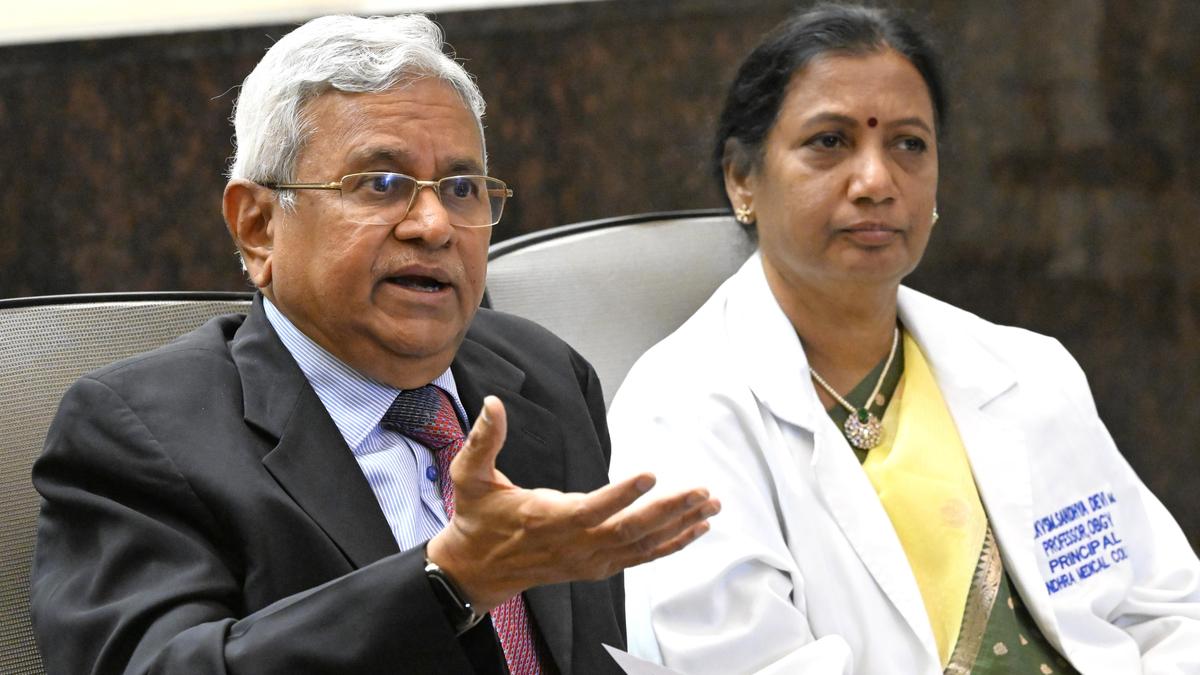
T. Ravi Raju, a prominent nephrologist and former Vice-Chancellor of **NTR University of Health Sciences**, has been instrumental in recognizing the alarming rates of CKDu in the **Srikakulam district** since the early 1990s. Alongside his team from **Andhra Medical College (AMC)**, he conducted extensive field research that confirmed the disease’s prevalence. During a media conference on **November 21, 2023**, Dr. Raju outlined the project’s objectives and anticipated outcomes.
The research will incorporate novel biomarkers for the early detection of CKDu, enabling healthcare providers to initiate new treatment modalities, including a **quadruple therapy** approach. This innovative treatment is designed to halt the progression of CKD, which could significantly reduce the necessity for dialysis or kidney transplantation among affected individuals.
Dr. Raju emphasized the importance of comprehensive epidemiological studies aimed at identifying the root causes of CKDu in the Uddanam region. These investigations will also include **RNA sequencing** and genetic studies to explore potential genetic predispositions among the local population.
The DHR’s support will be crucial in establishing a dedicated research laboratory at AMC, which will facilitate various studies, including epidemiological, biochemical, and novel biomarker analyses, as well as personnel training. Dr. Raju reflected on the early observations of CKD cases at the **King George Hospital (KGH)**, where patients began presenting in significant numbers during the early 1990s. Medical camps in Srikakulam revealed a concerning prevalence of CKD, with systematic surveys indicating that approximately **18%** of the local population suffers from the condition, and in **75%** of these cases, the cause remains unknown.
Notably, the affected individuals in Uddanam are primarily agricultural workers, with both men, women, and children among those impacted. A distinctive aspect of this situation is that many of these patients do not have the common risk factors for CKD, such as diabetes or hypertension.
Dr. Raju expressed optimism regarding the potential outcomes of the current research efforts, stating that they could lead to better identification of the disease’s causes, facilitate early detection, and improve public health measures in the affected areas.
Present at the conference were other key figures, including **G. Prasad**, the principal investigator and head of the nephrology department at AMC, along with **KVSM Sandhya Devi**, principal of AMC, and **A. Krishnaveni**, vice-principal. The collective aim of these professionals is to advance understanding and treatment of CKDu, ultimately enhancing health outcomes in Uddanam and beyond.

Albert Camus’ Insightful Quote on Human Identity Resurfaces

Drone Strikes and Missile Attacks Disrupt UAE Amid Rising Tensions

Japanese Yen Rises Sharply Against US Dollar Ahead of Key Decisions

Priyanka Chopra and Nick Jonas Avoid Near Miss en Route to Oscars

Gujarat Vaccinates Over 11 Lakh Infants in Major Health Drive

Alexandre Singh Wins Oscar, Celebrates Immigrant Heritage

Lok Sabha Speaker Issues Warning Over Placards in Parliament

Global Electrosurgical Devices Market Expands to $10.2 Billion by 2034

North Zone Dominates Cricket; SJAM-1 Shines in Table Tennis

SBI Announces QIP Floor Price at ₹811.05 Per Share

Cept Unveils ₹3.1 Crore Urban Mobility Plan for Sustainable Growth

New Blood Group Discovered in South Indian Woman at Rotary Centre

Konkani Cultural Organisation to Host Pearl Jubilee in Abu Dhabi

Torrential Rains Cause Flash Flooding in New York and New Jersey

Nothing Headphone 1 Review: A Bold Contender in Audio Design

Indian Stock Market Rebounds: Sensex and Nifty Rise After Four-Day Decline

Air India Crash Investigation Highlights Boeing Fuel Switch Concerns

Broad Advocates for Bowling Change Ahead of Final Test Against India
-
 World12 months ago
SBI Announces QIP Floor Price at ₹811.05 Per Share
-
 Lifestyle12 months ago
Cept Unveils ₹3.1 Crore Urban Mobility Plan for Sustainable Growth
-
 Science12 months ago
New Blood Group Discovered in South Indian Woman at Rotary Centre
-
 Top Stories12 months ago
Konkani Cultural Organisation to Host Pearl Jubilee in Abu Dhabi
-
 World12 months ago
Torrential Rains Cause Flash Flooding in New York and New Jersey
-
 Science12 months ago
Nothing Headphone 1 Review: A Bold Contender in Audio Design
-
 Business12 months ago
Indian Stock Market Rebounds: Sensex and Nifty Rise After Four-Day Decline
-
 Top Stories12 months ago
Air India Crash Investigation Highlights Boeing Fuel Switch Concerns
-
 Sports12 months ago
Broad Advocates for Bowling Change Ahead of Final Test Against India
-

 Sports12 months ago
Cristian Totti Retires at 19: Pressure of Fame Takes Toll
-

 Politics12 months ago
Abandoned Doberman Finds New Home After Journey to Prague
-
 Lifestyle12 months ago
Villagers Unite to Raise ₹45 Lakh for Water Solutions in Vadgam