
Top Stories
Indian Government Rejects Opposition’s Demands Ahead of Budget Session

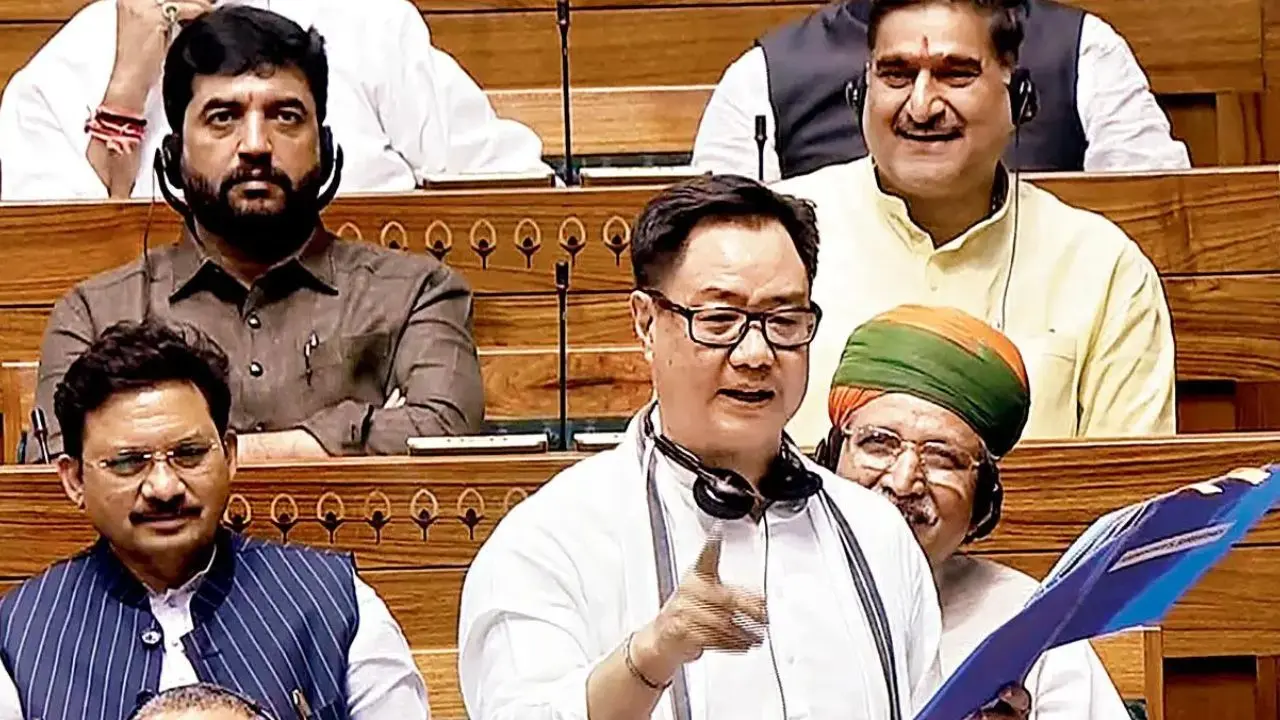
The Indian government has dismissed demands from the Opposition for discussions regarding the VB-G RAM G Act and the Special Intensive Revision (SIR) of electoral rolls ahead of the upcoming Union Budget session, set to commence on February 1, 2026. This decision was confirmed by Parliamentary Affairs Minister Kiren Rijiju, who stated that both matters have already been extensively debated in previous sessions.
During an all-party meeting held prior to the budget session, Rijiju emphasized that the government would not entertain requests to revisit these issues. “Once a law is before the nation, we have to follow it. We cannot reverse the gear and go back,” he remarked, referring to the VB-G RAM G Act, which was enacted during the Winter Session of Parliament. According to reports from the Press Trust of India (PTI), Rijiju’s comments came after members of the Opposition, including Jairam Ramesh from the Congress Party and John Brittas from the CPI(M), voiced concerns regarding the lack of circulation of government business for the session.
Opposition members raised several topics they wished to discuss, including the SIR, the VB-G RAM G Act, U.S. tariffs on Indian goods, foreign policy issues, air pollution, economic conditions, and restrictions on social media access for young teens. Rijiju responded to these demands by reiterating that many of the issues could be brought up during debates on the President’s address and the budget, rather than necessitating separate discussions.
The Union Minister also addressed concerns regarding the sharing of government business for the session. He noted that this is typically released after the President’s address, but he is willing to provide the information sooner. “This is the first session of the year. Normally, the list of government business is shared after the president’s address. However, I am prepared to share the list,” he stated.
Rijiju urged members to express their concerns but emphasized the importance of maintaining order in the House. He appealed to all parliamentary members, stating, “In our parliamentary democracy, we have been elected to represent the people and to speak for the people. While exercising our right to speak, we must also have the duty to listen to the members of other political parties.”
As the Union Budget session approaches, the government’s firm stance on these matters indicates a potential for heightened tension between the ruling party and the Opposition, particularly concerning significant reforms and policies that could impact the electorate.

Israel Moves to Expand Control Over West Bank Settlements

Zaima Rahman Campaigns in Dhaka’s Streets Ahead of Elections

India Confident in $500 Billion US Goods Purchase Over Five Years

New Gameplay Trailer Unveiled for Atre: Dominance Wars

SDH Banihal Maintains Low Referral Rate Despite Staff Shortages

Guinness Declares Japan’s Kinmemai Premium As Most Expensive Rice

Election Spending Surges in Karimnagar and Warangal Municipal Polls

Indian Satellite AFR Captures Images of International Space Station

India U19 Cricket Team Celebrated After World Cup Victory

SBI Announces QIP Floor Price at ₹811.05 Per Share

Cept Unveils ₹3.1 Crore Urban Mobility Plan for Sustainable Growth

New Blood Group Discovered in South Indian Woman at Rotary Centre

Torrential Rains Cause Flash Flooding in New York and New Jersey

Konkani Cultural Organisation to Host Pearl Jubilee in Abu Dhabi

Nothing Headphone 1 Review: A Bold Contender in Audio Design

Broad Advocates for Bowling Change Ahead of Final Test Against India

Air India Crash Investigation Highlights Boeing Fuel Switch Concerns

Indian Stock Market Rebounds: Sensex and Nifty Rise After Four-Day Decline
-
 World7 months ago
SBI Announces QIP Floor Price at ₹811.05 Per Share
-
 Lifestyle7 months ago
Cept Unveils ₹3.1 Crore Urban Mobility Plan for Sustainable Growth
-
 Science6 months ago
New Blood Group Discovered in South Indian Woman at Rotary Centre
-
 World7 months ago
Torrential Rains Cause Flash Flooding in New York and New Jersey
-
 Top Stories7 months ago
Konkani Cultural Organisation to Host Pearl Jubilee in Abu Dhabi
-
 Science7 months ago
Nothing Headphone 1 Review: A Bold Contender in Audio Design
-
 Sports6 months ago
Broad Advocates for Bowling Change Ahead of Final Test Against India
-
 Top Stories7 months ago
Air India Crash Investigation Highlights Boeing Fuel Switch Concerns
-
 Business7 months ago
Indian Stock Market Rebounds: Sensex and Nifty Rise After Four-Day Decline
-

 Sports6 months ago
Cristian Totti Retires at 19: Pressure of Fame Takes Toll
-

 Politics7 months ago
Abandoned Doberman Finds New Home After Journey to Prague
-
 Top Stories7 months ago
Patna Bank Manager Abhishek Varun Found Dead in Well