
Science
US Research Funding Cuts Create Uncertainty for Indian Scholars

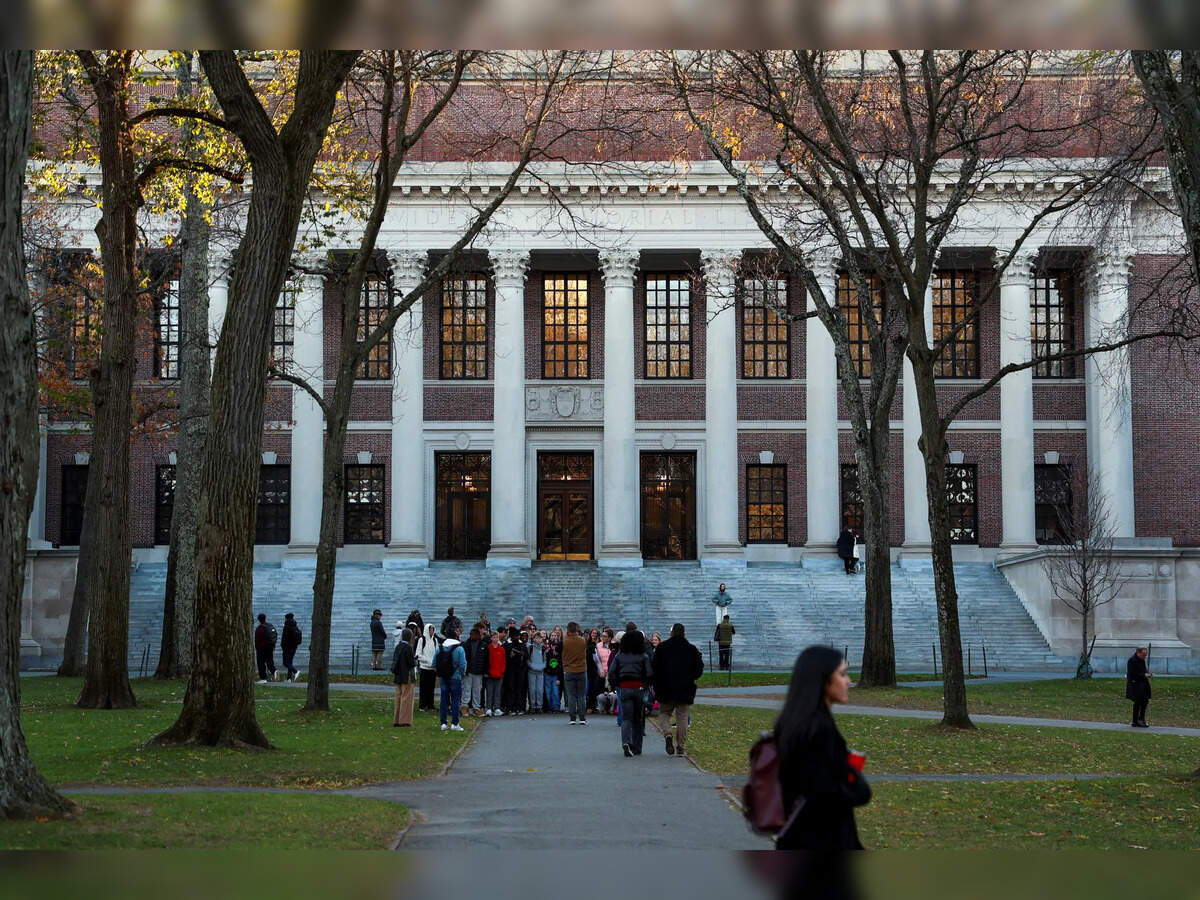
As India prepares for its upcoming budget, concerns are rising over proposed cuts to science and research funding in the United States. This ongoing debate is unsettling for federally-funded universities and impacting Indian researchers, who play a crucial role in the US STEM (Science, Technology, Engineering, and Mathematics) pipeline.
The Trump administration has suggested slashing funding for the National Science Foundation (NSF) by more than half, reducing NASA’s science funding by 47%, and cutting the National Institute of Health (NIH) budget by approximately 40%. If implemented, these proposed reductions could amount to nearly $30 billion.
“The real damage isn’t waiting for March 30, 2024—it’s already happening,” stated Nikhil Jain, founder of ForeignAdmits. He pointed out that principal investigators are beginning to freeze hiring and delay PhD offers, which leaves many Indian applicants “on indefinite waitlists while they wait for budget clarity.” Even if funding stabilizes eventually, the current hesitation has already altered admissions behavior in significant ways.
Not all experts agree that the risks are widespread. Praneet Singh, head of university relations at upGrad Study Abroad, noted that the impact is “selective, not systemic.” He emphasized that the majority of the 177,000-180,000 Indian students heading to the US annually pursue master’s and PhD programmes, with around 18,000-20,000 specifically focused on doctoral studies. “The sensitivity is concentrated within research-led PhD pathways,” Singh explained.
This distinction is echoed by Sanjay Laul, founder of MSM Unify, who asserted that Indian students typically seek funded research pathways rather than pursuing unfunded prestige. Even a modest 2-5% contraction in federal research funding can lead universities to quietly freeze PhD intakes, delay assistantship decisions, or trim lab hiring. These actions disproportionately affect international researchers.
Consultants are broadly aligned on the demographics most at risk. PhD candidates, postdoctoral researchers, and early-career scientists—especially those in biological sciences, climate studies, energy, and material sciences—face the highest level of uncertainty. Their stipends, tuition waivers, and salaries often depend directly on grants.
While estimates vary, the direction of potential funding reductions is evident. Jain projected a 10-15% drop in fully funded offers to Indian students if the current uncertainty persists, drawing parallels with the 2013 budget sequestration which resulted in a significant decline in new research assistantships. Laul anticipates a 15-20% decrease in funded PhD and research assistant positions for international students in the 2025-26 cycle, particularly affecting first-year PhD candidates and incoming postdocs. Singh, on the other hand, expects “single-digit to early double-digit” reductions in assistantships rather than a complete collapse in admissions.
In response to these uncertainties, Indian applicants are adapting their strategies. Jain observed that students are becoming more cautious, often applying to universities in Germany, the Netherlands, or the UK as alternatives while delaying commitments until funding clarity emerges. Laul noted a shift towards coursework-heavy or industry-facing programmes, while Singh reported an approximate 9.5% decline in demand for research assistant or teaching assistant-linked PhD opportunities.
As prospects shift, Canada, Australia, and Japan emerge as potential alternatives, bolstered by targeted research funding and favorable visa policies. However, these countries struggle to match the depth of funding available within the US’s R1 research ecosystem. Jain cautioned that the greater risk lies in top talent opting out of academic research entirely due to these challenges.
Amid the concerns, some voices urge a balanced perspective. Piyush Kumar, regional director for South Asia at IDP Education, described the near-term risk as “moderate rather than acute,” highlighting Congress’s historical role as a stabilizing force and the ability of well-endowed universities to mitigate the effects of federal cuts. Manisha Zaveri, joint managing director at Career Mosaic, added that while prolonged instability could diminish the US’s appeal for research-focused Indian scholars, the country’s strong industry links and private capital could still provide resilience in the face of budgetary challenges.
As the situation develops, the outcome of the proposed funding cuts will likely have lasting implications for both Indian researchers and the broader landscape of scientific inquiry in the United States.

VHP Demands Title Change for Manoj Bajpayee’s Film Amid Controversy

Delhi-NCR Faces Influenza A (H3N2) Surge: Health Alert Issued

India Dominates BOXAM Elite 2026 with Nine Gold Medals

Assam SIT Investigates Gaurav Gogoi’s Alleged Pakistan Links

NASA Unveils Dramatic Changes in Interstellar Comet 3I/ATLAS

New Zealand Triumphs Over Afghanistan in T20 World Cup Opener

Search Intensifies for Nancy Guthrie as Law Enforcement Visits Tucson Home

Andhra Police Enhance Crackdown on Drugs with Surprise Inspection

Understanding ‘Rife’: A Look at Its Meaning and Usage

SBI Announces QIP Floor Price at ₹811.05 Per Share

Cept Unveils ₹3.1 Crore Urban Mobility Plan for Sustainable Growth

New Blood Group Discovered in South Indian Woman at Rotary Centre

Torrential Rains Cause Flash Flooding in New York and New Jersey

Konkani Cultural Organisation to Host Pearl Jubilee in Abu Dhabi

Nothing Headphone 1 Review: A Bold Contender in Audio Design

Broad Advocates for Bowling Change Ahead of Final Test Against India

Air India Crash Investigation Highlights Boeing Fuel Switch Concerns

Indian Stock Market Rebounds: Sensex and Nifty Rise After Four-Day Decline
-
 World7 months ago
SBI Announces QIP Floor Price at ₹811.05 Per Share
-
 Lifestyle7 months ago
Cept Unveils ₹3.1 Crore Urban Mobility Plan for Sustainable Growth
-
 Science6 months ago
New Blood Group Discovered in South Indian Woman at Rotary Centre
-
 World7 months ago
Torrential Rains Cause Flash Flooding in New York and New Jersey
-
 Top Stories7 months ago
Konkani Cultural Organisation to Host Pearl Jubilee in Abu Dhabi
-
 Science7 months ago
Nothing Headphone 1 Review: A Bold Contender in Audio Design
-
 Sports6 months ago
Broad Advocates for Bowling Change Ahead of Final Test Against India
-
 Top Stories7 months ago
Air India Crash Investigation Highlights Boeing Fuel Switch Concerns
-
 Business7 months ago
Indian Stock Market Rebounds: Sensex and Nifty Rise After Four-Day Decline
-

 Sports6 months ago
Cristian Totti Retires at 19: Pressure of Fame Takes Toll
-

 Politics7 months ago
Abandoned Doberman Finds New Home After Journey to Prague
-
 Top Stories7 months ago
Patna Bank Manager Abhishek Varun Found Dead in Well