
Health
India’s Union Budget 2026-27 Focuses on Growth and Infrastructure

The Indian government has unveiled its Union Budget for 2026-27, emphasizing long-term growth strategies over immediate consumption incentives. This budget reflects a mature economy’s priorities, focusing on strengthening vital sectors such as health care, education, manufacturing, and infrastructure. Prime Minister Narendra Modi aims to position India as a developed economy by 2047, marking a significant shift from crisis management to nation-building.
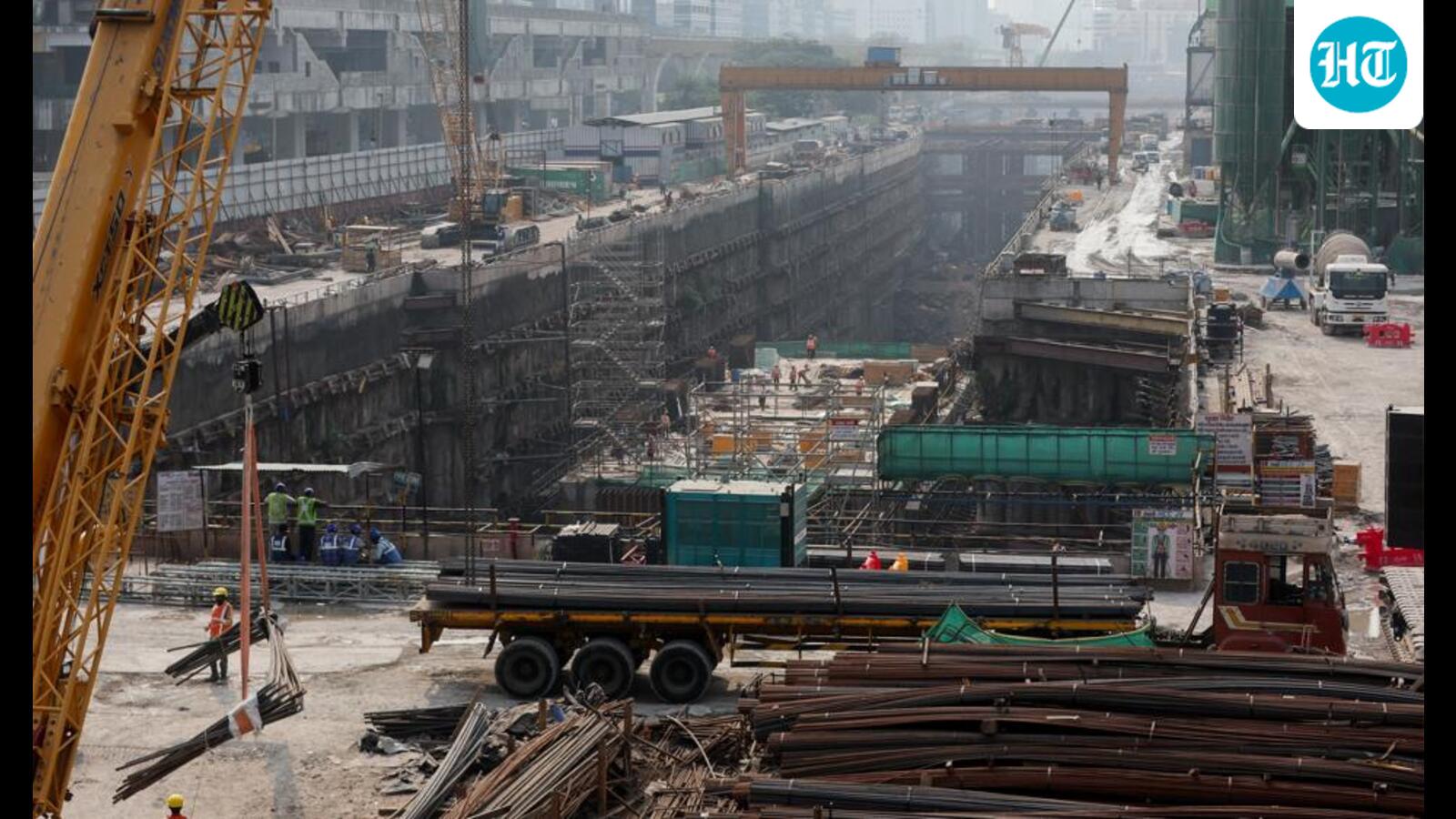
Infrastructure remains central to this budget, with over ₹12 lakh crore allocated for capital expenditure. This substantial investment aims to bolster the economy, especially at a time when private investment remains cautious. The government is stepping in as the primary growth engine, which could enhance productivity through improved roads, housing, and urban systems. Notably, the introduction of seven high-speed rail corridors is expected to facilitate faster connectivity between major economic centers, supporting the government’s broader vision of agglomeration economics.
The government has also sharpened its manufacturing policy, launching initiatives like Semiconductor Mission 2.0 and Biopharma SHAKTI. These programs aim to rebuild India’s industrial base and reduce reliance on critical imports. Through targeted tax reforms, the government aims to support sectors such as aircraft manufacturing, seafood exports, and textiles. This comprehensive approach is designed to boost manufacturing’s share of GDP and enhance export competitiveness.
Micro, small, and medium enterprises (MSMEs) are prominently featured in the budget, receiving a tailored support system. The establishment of a ₹10,000 crore growth fund, liquidity assistance through the Reserve Bank of India’s Trade Receivables Discounting System (TReDS), and professional guidance via “corporate mitras” aim to bolster these essential businesses. MSMEs are vital for employment and entrepreneurship, making this focus critical for India’s economic landscape.
Finance Minister Nirmala Sitharaman has adopted a balanced fiscal policy, maintaining a fiscal deficit target of 4.3% of GDP while committing to a debt-to-GDP target of around 50% by 2030. This disciplined approach signals a shift towards comprehensive debt management, moving beyond a mere focus on annual deficit targets. The emphasis on sustainable fiscal practices reflects a mature approach to public finance.
Job creation is a priority, with plans to develop five medical value tourism hubs and expand biopharma facilities, among other initiatives. Programs such as caregiver training and new Ayurveda institutes are expected to create diverse employment opportunities. Additionally, university townships near industrial corridors and AVGC (animation, visual effects, gaming, comics) creator labs in schools promise to stimulate economic activity beyond traditional educational settings.
For households, the budget maintains a supportive stance while avoiding large consumption incentives. Following last year’s tax relief, the government is now focused on job creation, income stability, and overall ease of living. Measures include lowering tax collection at source (TCS) on education and overseas travel, simplifying compliance, and extending return timelines.
The services sector will receive renewed investment, with reforms in IT safe harbours and tax incentives for cloud data centers extending until 2047. Strategic priorities have also been identified in sectors such as space technology, bio-pharma, semiconductors, and artificial intelligence (AI). India aims to advance up the global value chain, moving beyond its historical reliance on low-cost labor.
Rural development remains integral to the government’s vision, with a shift towards enhancing productivity in agriculture and allied sectors. Initiatives focusing on horticulture, fisheries, and agro-processing aim to increase rural incomes while addressing migration pressures on urban areas. This comprehensive approach to rural development is designed to build an economic backbone in these regions.
Energy security features prominently in the budget, with a focus on carbon capture technologies, lithium-ion batteries, and biogas incentives. The strategy includes reducing dependence on critical imports, aligning with the broader vision of sustainable economic growth.
Overall, the Union Budget 2026-27 clearly illustrates Prime Minister Narendra Modi‘s commitment to transforming India into a strong and developed economy by 2047. The comprehensive initiatives outlined in this budget reflect a forward-thinking approach aimed at fostering growth, stability, and resilience across various sectors of the economy.

Jack Lang Resigns from Cultural Role Amid Epstein Tax Probe

Piyush Goyal Confident in India-US Trade Deal Amid Opposition Criticism

Piyush Goyal Defends India’s Agricultural Stance in Trade Talks

VHP Demands Title Change for Manoj Bajpayee’s Film Amid Controversy

Delhi-NCR Faces Influenza A (H3N2) Surge: Health Alert Issued

India Dominates BOXAM Elite 2026 with Nine Gold Medals

Assam SIT Investigates Gaurav Gogoi’s Alleged Pakistan Links

NASA Unveils Dramatic Changes in Interstellar Comet 3I/ATLAS

New Zealand Triumphs Over Afghanistan in T20 World Cup Opener

SBI Announces QIP Floor Price at ₹811.05 Per Share

Cept Unveils ₹3.1 Crore Urban Mobility Plan for Sustainable Growth

New Blood Group Discovered in South Indian Woman at Rotary Centre

Torrential Rains Cause Flash Flooding in New York and New Jersey

Konkani Cultural Organisation to Host Pearl Jubilee in Abu Dhabi

Nothing Headphone 1 Review: A Bold Contender in Audio Design

Broad Advocates for Bowling Change Ahead of Final Test Against India

Air India Crash Investigation Highlights Boeing Fuel Switch Concerns

Indian Stock Market Rebounds: Sensex and Nifty Rise After Four-Day Decline
-
 World7 months ago
SBI Announces QIP Floor Price at ₹811.05 Per Share
-
 Lifestyle7 months ago
Cept Unveils ₹3.1 Crore Urban Mobility Plan for Sustainable Growth
-
 Science6 months ago
New Blood Group Discovered in South Indian Woman at Rotary Centre
-
 World7 months ago
Torrential Rains Cause Flash Flooding in New York and New Jersey
-
 Top Stories7 months ago
Konkani Cultural Organisation to Host Pearl Jubilee in Abu Dhabi
-
 Science7 months ago
Nothing Headphone 1 Review: A Bold Contender in Audio Design
-
 Sports6 months ago
Broad Advocates for Bowling Change Ahead of Final Test Against India
-
 Top Stories7 months ago
Air India Crash Investigation Highlights Boeing Fuel Switch Concerns
-
 Business7 months ago
Indian Stock Market Rebounds: Sensex and Nifty Rise After Four-Day Decline
-

 Sports6 months ago
Cristian Totti Retires at 19: Pressure of Fame Takes Toll
-

 Politics7 months ago
Abandoned Doberman Finds New Home After Journey to Prague
-

 Top Stories7 months ago
Patna Bank Manager Abhishek Varun Found Dead in Well