
Science
India’s Union Budget 2026-27 Emphasizes AI-Driven Reforms

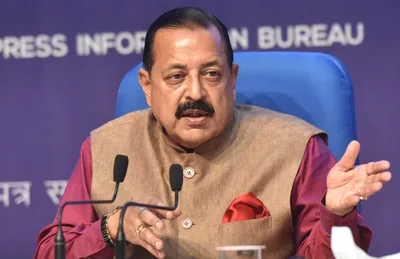
The Union Budget for 2026–27, presented by Dr. Jitendra Singh, the Union Minister of State (Independent Charge) for Science & Technology, aims to drive technology-oriented reforms, particularly those integrating artificial intelligence (AI) to shape India’s future. Singh emphasized that while the Budget’s benefits may take time to fully materialize, it outlines a clear vision focused on long-term structural reforms powered by cutting-edge technologies.
Singh highlighted the Budget’s potential to provide lasting relief from escalating healthcare and living costs, moving beyond immediate financial calculations. A significant aspect of this Budget is the proposed large-scale investment in biopharma, diagnostics, vaccines, and gene-based therapies. This initiative aims to alleviate the financial strain on families grappling with chronic diseases such as cancer, diabetes, and metabolic disorders.
In addressing India’s pressing health challenges, Singh noted the alarming statistics: the country has approximately 11 to 12 crore diabetics and nearly 14 crore pre-diabetics. Furthermore, cancer incidence is projected to reach two million cases annually by 2030. He asserted that affordable drugs, vaccines, and diagnostics, bolstered by domestic biomanufacturing, will offer vital support to the middle class and vulnerable populations.
The Minister referenced the Rs 10,000 crore Biopharma Shakti initiative, stating that India has established itself as a global hub for bio-manufacturing and currently ranks among the top bio-economies worldwide. This new funding is set to enhance capabilities in biologics, biosimilars, vaccines, medical devices, and gene-based technologies, further solidifying India’s position in the global market.
Investments in Nuclear and Clean Energy
Singh also announced an extension of customs duty exemptions on imported components for nuclear power plants until 2035. This move is expected to improve project efficiency and attract both domestic and international investments, aligning with the SHAKTI Act aimed at increasing private sector involvement in the nuclear ecosystem.
Additionally, he pointed to the development of rare earth corridors and initiatives focused on critical minerals. These efforts are designed to support clean energy technologies, electronics manufacturing, and strategic industries while reducing import reliance.
In discussing the National Geospatial Mission, Singh described it as a foundational reform that will significantly influence urban planning, infrastructure design, and land management, especially given India’s rapid rural-to-urban migration. Implemented via the PM Gati Shakti platform, this mission will facilitate evidence-based planning through the use of satellites, drones, and advanced mapping technologies.
Advancements in Scientific Research
During the announcement, Prof. Abhay Karandikar, Secretary of the Department of Science & Technology, revealed plans for two major research and development infrastructure facilities: a 30-metre National Large Optical Telescope and a National Large Solar Telescope near Pangong Lake. These facilities are expected to complement India’s space and solar missions while fostering global scientific collaboration.
Meanwhile, Dr. N. Kalaiselvi, Director General of the CSIR and Secretary of the Department of Scientific and Industrial Research (DSIR), stated that CSIR will play a pivotal role across various Budget initiatives, including carbon capture, utilization and storage (CCUS), semiconductors, critical minerals, rare earth magnets, clean energy, and advanced manufacturing. CSIR laboratories are designated as centres of excellence for critical metals and minerals, aligning national research capabilities with industrial and strategic needs.
The comprehensive approach of the Union Budget 2026–27 underlines a commitment to positioning India as a leader in technological innovation and healthcare, ensuring sustainable growth and development over the next quarter century.

Assam SIT Investigates Gaurav Gogoi’s Alleged Pakistan Links

NASA Unveils Dramatic Changes in Interstellar Comet 3I/ATLAS

New Zealand Triumphs Over Afghanistan in T20 World Cup Opener

Search Intensifies for Nancy Guthrie as Law Enforcement Visits Tucson Home

Andhra Police Enhance Crackdown on Drugs with Surprise Inspection

Understanding ‘Rife’: A Look at Its Meaning and Usage

Aneet Padda’s ‘Shakti Shalini’ Starts Filming in March 2024

Lancet Editor Warns of Imminent Pandemic Threats

PM Modi Honored with Ceremony in Malaysia Amid Strategic Talks

SBI Announces QIP Floor Price at ₹811.05 Per Share

Cept Unveils ₹3.1 Crore Urban Mobility Plan for Sustainable Growth

New Blood Group Discovered in South Indian Woman at Rotary Centre

Torrential Rains Cause Flash Flooding in New York and New Jersey

Konkani Cultural Organisation to Host Pearl Jubilee in Abu Dhabi

Nothing Headphone 1 Review: A Bold Contender in Audio Design

Broad Advocates for Bowling Change Ahead of Final Test Against India

Air India Crash Investigation Highlights Boeing Fuel Switch Concerns

Indian Stock Market Rebounds: Sensex and Nifty Rise After Four-Day Decline
-
 World7 months ago
SBI Announces QIP Floor Price at ₹811.05 Per Share
-
 Lifestyle7 months ago
Cept Unveils ₹3.1 Crore Urban Mobility Plan for Sustainable Growth
-
 Science6 months ago
New Blood Group Discovered in South Indian Woman at Rotary Centre
-
 World7 months ago
Torrential Rains Cause Flash Flooding in New York and New Jersey
-
 Top Stories7 months ago
Konkani Cultural Organisation to Host Pearl Jubilee in Abu Dhabi
-
 Science7 months ago
Nothing Headphone 1 Review: A Bold Contender in Audio Design
-
 Sports6 months ago
Broad Advocates for Bowling Change Ahead of Final Test Against India
-
 Top Stories7 months ago
Air India Crash Investigation Highlights Boeing Fuel Switch Concerns
-
 Business7 months ago
Indian Stock Market Rebounds: Sensex and Nifty Rise After Four-Day Decline
-

 Sports6 months ago
Cristian Totti Retires at 19: Pressure of Fame Takes Toll
-

 Politics7 months ago
Abandoned Doberman Finds New Home After Journey to Prague
-
 Top Stories7 months ago
Patna Bank Manager Abhishek Varun Found Dead in Well