
Science
ISRO Set to Launch PSLV-C62 with Strategic EOS-N1 Satellite

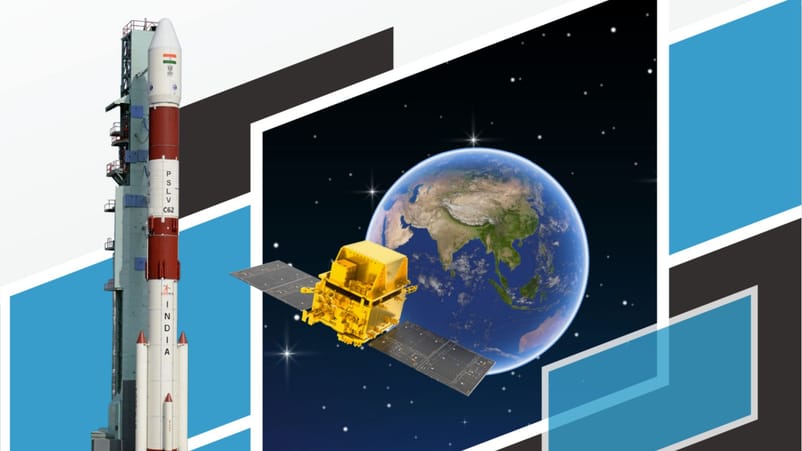
The Indian Space Research Organisation (ISRO) is preparing for the launch of the PSLV-C62 mission, scheduled for 10:17 IST on January 12, 2025, from its First Launch Pad at the Sriharikota spaceport. This mission marks ISRO’s first rocket launch of the year and features the hyperspectral Earth imaging satellite EOS-N1, developed for the Defence Research and Development Organisation (DRDO).
The primary purpose of EOS-N1 is to enhance surveillance capabilities, specifically by detecting camouflaged vehicles and buildings based on their material properties. This satellite will play a critical role in monitoring border regions, contributing to national security. The satellite, referred to as Anvesha, complements a trio of strategic satellites operated by the DRDO, joining its predecessors, Kautilya and Sindu-Netra, already in orbit.
Live Coverage and Mission Details
ISRO will provide live coverage of the PSLV-C62 mission, which will also be broadcast on Doordarshan. Pre-launch programming is set to begin at 09:48 IST, allowing viewers to tune in for detailed insights ahead of the launch.
A total of 16 satellites will be deployed during this mission, with EOS-N1 being the primary payload. The additional satellites include 15 co-passengers, featuring a variety of innovative technologies. Among them is the Mira Space Telescope, developed by Hyderabad-based Eon Space Labs in collaboration with TakeMe2Space, which incorporates artificial intelligence capabilities in its MOI-1 CubeSat.
Another notable payload is a satellite servicing demonstrator by OrbitAid, designed to validate its Standard Interface for Docking and Refueling Port (SIDRP). This technology aims to facilitate the transfer of fuel, power, and data between satellites, representing a significant advancement in satellite servicing capabilities.
Additionally, the mission will include a collaborative artwork project called Orbital Temple and the Munal student satellite from Nepal. The remaining satellites are primarily academic in nature or intended for the amateur radio community.
Payload Deployment and Future Plans
The deployment of the satellites will commence approximately 1,074 seconds after liftoff, with the first payload being DRDO’s Anvesha. Subsequent payloads will follow, culminating in the deployment of the Kestrel Initial Demonstrator (KID) cargo capsule, developed by the Spanish New Space startup Orbital Paradigm. This capsule will carry payloads for the UK, Germany, and France, although it is not classified as a satellite.
Orbital Paradigm intends to collect data during the capsule’s re-entry, although recovery operations are not planned as the capsule is not expected to reach the surface. Notably, the PSLV-C62 mission will not carry a Payload Orbital Experiment Module (POEM), and the upper stage is scheduled to deorbit and incinerate upon re-entering the atmosphere after mission completion.
As ISRO continues to expand its capabilities in satellite technology and space exploration, the PSLV-C62 mission stands out as a significant step towards enhancing national security and international collaboration in space initiatives.

US Conducts Retaliatory Strikes Against ISIS in Syria

Marathon Promotes Drug Awareness During LIFEATHON 2026 Event

Manush Shah and Ryu Hanna Triumph at WTT Feeder Series in Vadodara

Protests Erupt in Minneapolis Following Deadly ICE Shooting

Bekem Infra Secures ₹2,342 Crore Contract for New Elevated Corridor

Bekem Infra Secures ₹2,342 Crore Contract for Elevated Corridor

Jammu and Kashmir Teachers Forum Highlights Urgent Educational Issues

X Acknowledges Mistake, Commits to Compliance with Indian Laws

Kohli Leads India to Victory in Series Opener Against New Zealand

SBI Announces QIP Floor Price at ₹811.05 Per Share

Cept Unveils ₹3.1 Crore Urban Mobility Plan for Sustainable Growth

New Blood Group Discovered in South Indian Woman at Rotary Centre

Torrential Rains Cause Flash Flooding in New York and New Jersey

Konkani Cultural Organisation to Host Pearl Jubilee in Abu Dhabi

Nothing Headphone 1 Review: A Bold Contender in Audio Design

Broad Advocates for Bowling Change Ahead of Final Test Against India

Air India Crash Investigation Highlights Boeing Fuel Switch Concerns

Indian Stock Market Rebounds: Sensex and Nifty Rise After Four-Day Decline
-
 World6 months ago
SBI Announces QIP Floor Price at ₹811.05 Per Share
-
 Lifestyle6 months ago
Cept Unveils ₹3.1 Crore Urban Mobility Plan for Sustainable Growth
-
 Science6 months ago
New Blood Group Discovered in South Indian Woman at Rotary Centre
-
 World6 months ago
Torrential Rains Cause Flash Flooding in New York and New Jersey
-
 Top Stories6 months ago
Konkani Cultural Organisation to Host Pearl Jubilee in Abu Dhabi
-
 Science6 months ago
Nothing Headphone 1 Review: A Bold Contender in Audio Design
-
 Sports6 months ago
Broad Advocates for Bowling Change Ahead of Final Test Against India
-
 Top Stories6 months ago
Air India Crash Investigation Highlights Boeing Fuel Switch Concerns
-
 Business6 months ago
Indian Stock Market Rebounds: Sensex and Nifty Rise After Four-Day Decline
-

 Sports6 months ago
Cristian Totti Retires at 19: Pressure of Fame Takes Toll
-

 Politics6 months ago
Abandoned Doberman Finds New Home After Journey to Prague
-

 Top Stories6 months ago
Patna Bank Manager Abhishek Varun Found Dead in Well