
Politics
India Boosts Defence Budget to ₹7.85 Lakh Crore Amid Military Shift

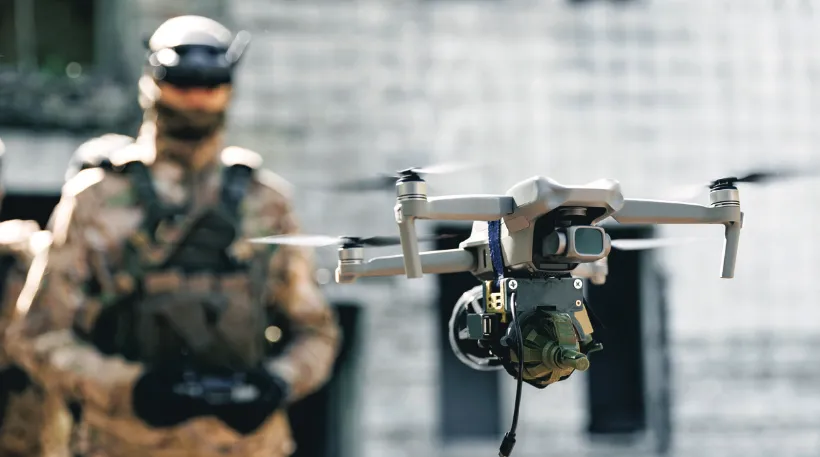
Last week, Indian armed forces convened at the Manekshaw Centre in New Delhi to initiate training focused on drone warfare, cyber operations, and logistical vulnerabilities. This gathering coincided with the release of India’s Union Budget for 2026–27, which allocated a record ₹7.85 lakh crore for defence—marking one of the most significant funding boosts in decades. These developments indicate a strategic pivot; India is not merely responding to border threats but is actively restructuring its military framework to address the complexities of modern warfare.
The third edition of the Future Warfare Course is designed to move beyond traditional military exercises. Its emphasis on drones, cyber capabilities, and resilient logistics draws lessons from recent global conflicts, including those in Ukraine and West Asia. The presence of senior officers, ranging from Majors to Major Generals, alongside representatives from various sectors, underscores a broader understanding that future conflicts will involve not just soldiers but also technology and supply chains.
As the China-Pakistan axis tightens, the need for rapid technological advancement has become more pressing. Reports indicate that China is investing heavily in infrastructure and missile capabilities along the Line of Actual Control, while Pakistan continues to modernize with Chinese support. This two-front challenge highlights the necessity for speed, intelligence dominance, and precision in military operations. The integration of advanced technologies, including drones and cyber resilience, is considered essential in this evolving landscape.
The urgency of this shift is mirrored in the global environment, where large-scale wars have re-emerged as significant geopolitical concerns. The ongoing conflict in Ukraine and tensions in West Asia, particularly the Israel-Hamas conflict, illustrate how modern military engagements are influenced by technology and industrial capacity. As India navigates these uncertainties, the focus on developing a technologically adept military is not merely strategic but essential for national security.
Significantly, the recent budget reflects a serious commitment to enhancing military readiness and capacity. The allocation of ₹2.19 lakh crore for capital spending, with ₹1.85 lakh crore earmarked for new equipment, signals a shift towards faster modernization. This represents a nearly 24% increase compared to the previous year, indicating a proactive approach to military upgrades.
Crucially, the budget emphasizes indigenous production, with 75% of the capital purchase budget set aside for Indian companies. This marks a decisive move away from reliance on foreign imports, recognizing the strategic necessity of developing domestic defence capabilities amid global supply chain uncertainties.
The aftermath of Operation Sindoor further underscores the need for rapid procurement processes and sustained operational readiness. The increased allocation of over ₹1.58 lakh crore for operational readiness aims to address gaps identified in previous military engagements. As many defence experts note, in modern warfare, sustaining operations is as critical as initiating them.
Moreover, the budget includes a 45% increase in funding for the Ex-Servicemen Contributory Health Scheme, raising it to ₹12,100 crore. This investment not only serves as a welfare measure but also strengthens the relationship between the state and its military personnel. Enhanced health services and pension allocations indicate a recognition of the importance of a motivated and professional armed force.
The allocation for the Defence Research and Development Organisation (DRDO) also saw significant increases, exceeding ₹29,100 crore. This funding is designed to foster innovation across various domains, including unmanned systems and electronic warfare. The objective is to advance India’s capabilities beyond existing systems and address the challenges of future conflicts.
India’s geopolitical position allows it to serve as a potential training hub for countries in the Global South. Many nations face budgetary constraints and complex security challenges, making India’s experience in indigenous defence production and joint operations particularly valuable. The collaboration between military and private sectors can enhance defence cooperation and training opportunities.
Challenges remain, however. Successful implementation of procurement reforms and achieving real jointness among the armed services will be critical. Institutional inertia and bureaucratic hurdles could impede progress, but the direction is clear. By aligning training initiatives with robust funding and industrial policy, India is taking significant steps toward establishing a military posture suited for the 21st century.
This comprehensive approach sends a strong message to both adversaries and allies: India is committed to enhancing its deterrent capabilities while shouldering greater responsibilities in the global security landscape. As regional dynamics evolve, India’s strategic recalibration may provide a crucial advantage in navigating the complexities of modern warfare.

Owaisi Challenges Government After Supreme Court Stays UGC Regulations

Canada’s Stephen Gogolev Shines with Olympic Debut in Milan

Punjab Governor Hosts First Samaadhaan Shivir for Residents

Delhi Police Arrest 82 for Brandishing Weapons Online

Rajiv Swagruha Corporation Secures ₹56 Crore from Plot Auction

Hania Aamir and Asim Azhar Spark Wedding Rumours for 2026

Saquon Barkley Offers Nerve-Handling Tips Ahead of Super Bowl 2026

Awareness Programme Tackles PCOD Among Young Women in Hyderabad

India Boosts Defence Budget to ₹7.85 Lakh Crore Amid Military Shift

SBI Announces QIP Floor Price at ₹811.05 Per Share

Cept Unveils ₹3.1 Crore Urban Mobility Plan for Sustainable Growth

New Blood Group Discovered in South Indian Woman at Rotary Centre

Torrential Rains Cause Flash Flooding in New York and New Jersey

Konkani Cultural Organisation to Host Pearl Jubilee in Abu Dhabi

Nothing Headphone 1 Review: A Bold Contender in Audio Design

Broad Advocates for Bowling Change Ahead of Final Test Against India

Air India Crash Investigation Highlights Boeing Fuel Switch Concerns

Indian Stock Market Rebounds: Sensex and Nifty Rise After Four-Day Decline
-
 World7 months ago
SBI Announces QIP Floor Price at ₹811.05 Per Share
-
 Lifestyle7 months ago
Cept Unveils ₹3.1 Crore Urban Mobility Plan for Sustainable Growth
-
 Science6 months ago
New Blood Group Discovered in South Indian Woman at Rotary Centre
-
 World7 months ago
Torrential Rains Cause Flash Flooding in New York and New Jersey
-
 Top Stories7 months ago
Konkani Cultural Organisation to Host Pearl Jubilee in Abu Dhabi
-
 Science7 months ago
Nothing Headphone 1 Review: A Bold Contender in Audio Design
-
 Sports6 months ago
Broad Advocates for Bowling Change Ahead of Final Test Against India
-
 Top Stories7 months ago
Air India Crash Investigation Highlights Boeing Fuel Switch Concerns
-
 Business7 months ago
Indian Stock Market Rebounds: Sensex and Nifty Rise After Four-Day Decline
-

 Sports6 months ago
Cristian Totti Retires at 19: Pressure of Fame Takes Toll
-

 Politics7 months ago
Abandoned Doberman Finds New Home After Journey to Prague
-

 Top Stories7 months ago
Patna Bank Manager Abhishek Varun Found Dead in Well