
Top Stories
Uttar Pradesh’s New Act Aims to Combat Corruption in Rural Employment

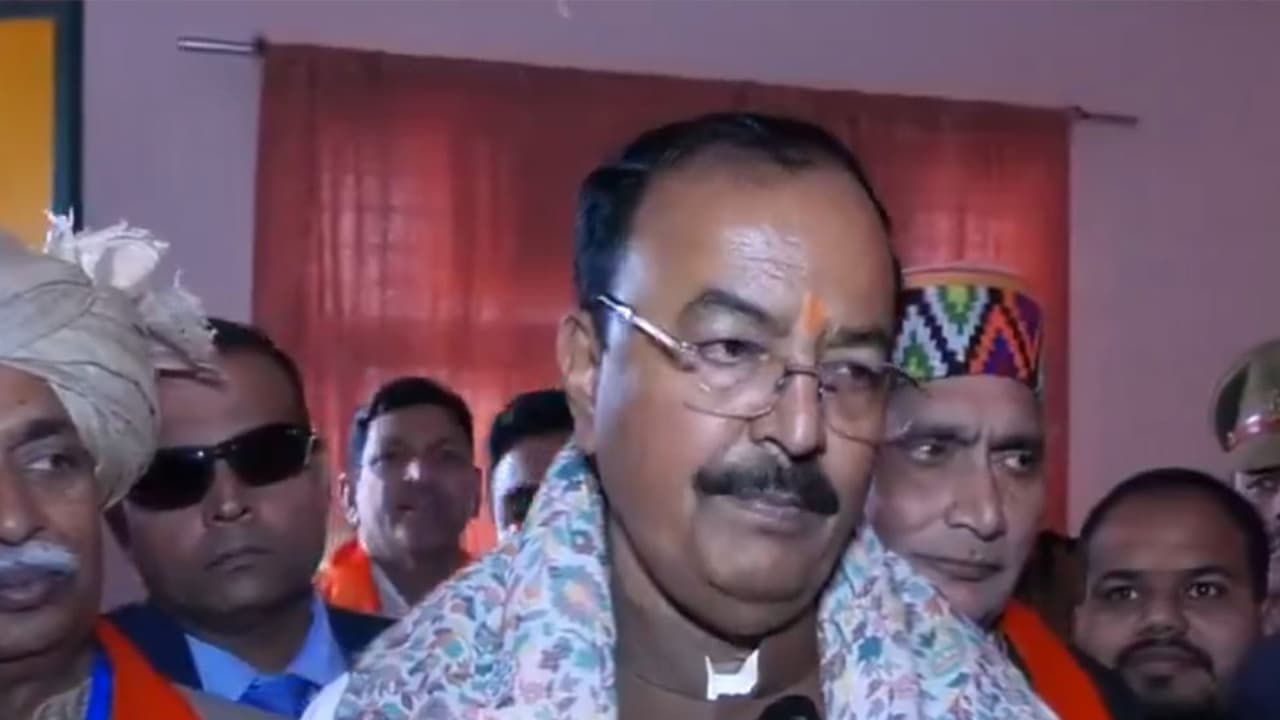
The Uttar Pradesh government has introduced the Viksit Bharat-Guarantee for Rozgar and Ajeevika Mission (Gramin) Act, commonly referred to as the VB G RAM-G Act, which aims to enhance rural employment while addressing issues of corruption. This legislation, which replaces the Mahatma Gandhi National Rural Employment Guarantee Act (MGNREGA), has received presidential assent and increases the number of guaranteed workdays for rural households from 100 to 125 days per financial year.
Uttar Pradesh Deputy Chief Minister Keshav Prasad Maurya praised the new act, describing it as a significant step towards creating a corruption-free environment in villages. During a recent statement, Maurya criticized the opposition Congress party, accusing them of supporting corrupt practices and opposing the legislation for political gain. He stated that the act is a vital component of the government’s vision to create self-reliant rural communities across the nation.
Opposition Campaign Against the Act
The Congress party has expressed strong opposition to the VB G RAM-G Act, particularly in its renaming of MGNREGA. In response, Congress President Mallikarjun Kharge announced plans to initiate a nationwide campaign called “Save MNREGA,” set to launch on January 5, 2025. The campaign aims to mobilize public support around the original principles of MGNREGA, which has been a cornerstone of rural employment policy in India since its inception.
Kharge emphasized that the Congress party remains committed to safeguarding the rights of rural workers and criticized the government for what they perceive as a detrimental shift in employment policy. The act’s proponents, however, argue that it modernizes the framework for rural employment and aligns it with the national vision for a developed India by 2047.
Key Features of the VB G RAM-G Act
The VB G RAM-G Act introduces several key features designed to enhance livelihood security for rural households. By guaranteeing 125 days of wage employment annually, the act seeks to empower rural communities and promote inclusive economic growth. It emphasizes the importance of converging various development initiatives to ensure comprehensive delivery of services.
President Droupadi Murmu provided assent to the legislation on December 21, 2023, marking a significant milestone in the government’s efforts to reform rural employment policies. The introduction of this act is seen as a pivotal move towards achieving a prosperous and resilient rural India.
As the political landscape continues to evolve, the impact of the VB G RAM-G Act on rural employment and governance will be closely monitored, particularly in light of the forthcoming campaign by the Congress party. The debates surrounding this legislation highlight the broader struggle over the future of rural policies in India and the ongoing challenges of ensuring transparency and accountability in government initiatives.

Khaleda Zia Faces Critical Health Challenges in Dhaka Hospital

Uttar Pradesh’s New Act Aims to Combat Corruption in Rural Employment

MoCA Establishes 24/7 Control Room in Delhi to Enhance Passenger Support

Akshaye Khanna’s Dance in ‘Shararat’ Was Spontaneous, Not Choreographed

Starlink’s India Launch Delayed as Security Compliance Required

Inez Baranay’s ‘Soul Climate’ Connects Muslim Women with History

ANRF Launches JC Bose Grant for Senior Scientists in India

Navjot Singh Sidhu Calls for Virat Kohli’s Test Cricket Return

Thais and Cambodians Hesitant to Return Home After Ceasefire

SBI Announces QIP Floor Price at ₹811.05 Per Share

Cept Unveils ₹3.1 Crore Urban Mobility Plan for Sustainable Growth

New Blood Group Discovered in South Indian Woman at Rotary Centre

Torrential Rains Cause Flash Flooding in New York and New Jersey

Konkani Cultural Organisation to Host Pearl Jubilee in Abu Dhabi

Nothing Headphone 1 Review: A Bold Contender in Audio Design

Broad Advocates for Bowling Change Ahead of Final Test Against India

Air India Crash Investigation Highlights Boeing Fuel Switch Concerns

Indian Stock Market Rebounds: Sensex and Nifty Rise After Four-Day Decline
-
 World6 months ago
SBI Announces QIP Floor Price at ₹811.05 Per Share
-
 Lifestyle6 months ago
Cept Unveils ₹3.1 Crore Urban Mobility Plan for Sustainable Growth
-
 Science5 months ago
New Blood Group Discovered in South Indian Woman at Rotary Centre
-
 World6 months ago
Torrential Rains Cause Flash Flooding in New York and New Jersey
-
 Top Stories6 months ago
Konkani Cultural Organisation to Host Pearl Jubilee in Abu Dhabi
-
 Science6 months ago
Nothing Headphone 1 Review: A Bold Contender in Audio Design
-
 Sports5 months ago
Broad Advocates for Bowling Change Ahead of Final Test Against India
-
 Top Stories6 months ago
Air India Crash Investigation Highlights Boeing Fuel Switch Concerns
-
 Business6 months ago
Indian Stock Market Rebounds: Sensex and Nifty Rise After Four-Day Decline
-

 Sports5 months ago
Cristian Totti Retires at 19: Pressure of Fame Takes Toll
-

 Politics5 months ago
Abandoned Doberman Finds New Home After Journey to Prague
-
 Top Stories6 months ago
Patna Bank Manager Abhishek Varun Found Dead in Well