
Science
Contamination Threatens Fish Supply Along Cauvery River

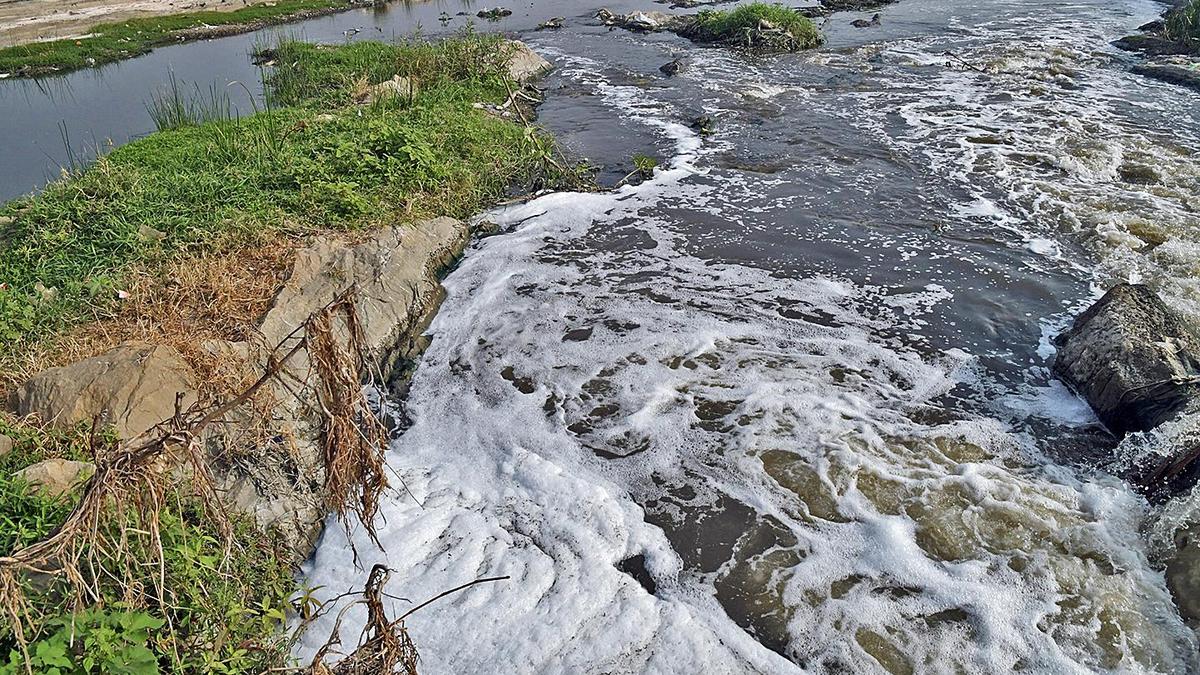
Concerns are rising over the safety of freshwater fish from the Cauvery River, a vital resource for many communities in Tamil Nadu and Karnataka. Recent research indicates significant contamination levels in the river, potentially impacting the health of families who rely on fish as a primary source of protein.
Heavy Metals Found in Fish Samples
Scientists from Bharathidasan University conducted a study published in Environmental Earth Sciences that revealed alarming concentrations of heavy metals in fish from various stretches of the Cauvery. The researchers analyzed sediments from 18 sites and fish samples from 10 locations between August 2023 and February 2024.
Their findings showed that certain fish contained levels of metals such as chromium, cadmium, copper, lead, and zinc that exceeded internationally recognized health thresholds, particularly for cadmium and lead. While occasional fish consumption may not pose immediate health risks, prolonged exposure to these metals could lead to serious health consequences, particularly for children and vulnerable populations.
The study highlights that lower-income families often consume fish multiple times a week, making the risk of cumulative exposure more significant.
Broader Implications for Public Health
The contamination of fish not only threatens individual health but also contributes to broader nutrition insecurity. Many families in the region already struggle to obtain sufficient protein, and the reliance on river fish means that pollution directly impacts dietary quality.
Experts like Bhuvaneshwari Shankar, a nutritionist at Apollo Hospitals in Chennai, emphasize the importance of diversifying diets. She suggests considering alternatives such as eggs, dairy products, and pulses, but acknowledges that for many families, affordability dictates food choices.
There are currently no targeted public advisories for communities dependent on river fish. This lack of guidance raises concerns about the need for immediate action to protect vulnerable populations.
The health risks associated with heavy metals are well-documented. Sai Krishna Chaitanya, a consultant endocrinologist at Naruvi Hospitals, explains that metals like lead can adversely affect children’s development and cause kidney problems in adults. Cadmium, mercury, arsenic, and chromium also pose significant health risks, further complicating the public health landscape.
According to development economist Dipa Sinha, many households cannot afford a diet that meets national nutrition guidelines. The rising costs of protein-rich foods like fish and meat exacerbate the issue, highlighting the need for accessible, safe alternatives to meet nutritional needs.
To address these challenges, experts recommend implementing regular water quality checks and ensuring that industrial effluent treatment plants operate effectively. This will help minimize the release of untreated wastewater into the Cauvery River, safeguarding both the environment and community health.
As the situation develops, addressing the contamination of the Cauvery River is critical for the health and well-being of communities that depend on its resources. Ensuring the safety of river fish is not just an environmental issue, but a pressing public health concern that requires immediate attention and action.

Protesters Disrupt Sikh Parade in South Auckland with Haka

Agnikul Cosmos Successfully Tests 3D Printed Agnilet Engines

India Debuts Vaishnavi Sharma in First T20I Against Sri Lanka

Bangladesh Unrest Sparks Concerns Over Rohingya Infiltration into India

Northern Saudi Arabia Experiencing Rare Snowfall, Captivates Locals

President Murmu Approves VB-G RAM G Bill to Enhance Rural Employment

Priyanka Gandhi Vadra Pays Tribute to Sreenivasan, Remembering His Legacy

Stephen Hawking’s Legacy: Redefining Existence and Consciousness

Mandaviya Celebrates First Anniversary of Fit India Cycling Initiative

SBI Announces QIP Floor Price at ₹811.05 Per Share

Cept Unveils ₹3.1 Crore Urban Mobility Plan for Sustainable Growth

New Blood Group Discovered in South Indian Woman at Rotary Centre

Torrential Rains Cause Flash Flooding in New York and New Jersey

Konkani Cultural Organisation to Host Pearl Jubilee in Abu Dhabi

Nothing Headphone 1 Review: A Bold Contender in Audio Design

Broad Advocates for Bowling Change Ahead of Final Test Against India

Air India Crash Investigation Highlights Boeing Fuel Switch Concerns

Indian Stock Market Rebounds: Sensex and Nifty Rise After Four-Day Decline
-
 World5 months ago
SBI Announces QIP Floor Price at ₹811.05 Per Share
-
 Lifestyle5 months ago
Cept Unveils ₹3.1 Crore Urban Mobility Plan for Sustainable Growth
-
 Science5 months ago
New Blood Group Discovered in South Indian Woman at Rotary Centre
-
 World5 months ago
Torrential Rains Cause Flash Flooding in New York and New Jersey
-
 Top Stories5 months ago
Konkani Cultural Organisation to Host Pearl Jubilee in Abu Dhabi
-
 Science5 months ago
Nothing Headphone 1 Review: A Bold Contender in Audio Design
-
 Sports5 months ago
Broad Advocates for Bowling Change Ahead of Final Test Against India
-
 Top Stories5 months ago
Air India Crash Investigation Highlights Boeing Fuel Switch Concerns
-
 Business5 months ago
Indian Stock Market Rebounds: Sensex and Nifty Rise After Four-Day Decline
-

 Sports5 months ago
Cristian Totti Retires at 19: Pressure of Fame Takes Toll
-

 Politics5 months ago
Abandoned Doberman Finds New Home After Journey to Prague
-
 Top Stories5 months ago
Patna Bank Manager Abhishek Varun Found Dead in Well