
Science
Antibody Therapy Shows Promise in Eradicating Multiple Myeloma

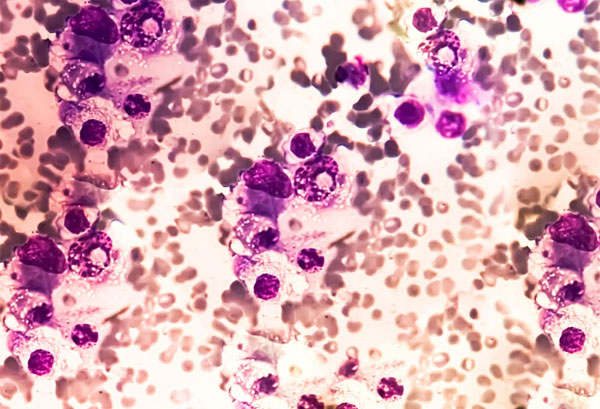
A novel antibody-based therapy has demonstrated the potential to eliminate residual traces of multiple myeloma, a serious form of blood cancer, according to interim results from a clinical trial. The study, which involved 18 patients, focused on the bispecific antibody linvoseltamab, which targets both immune and cancer cells. Notably, all participants showed no detectable signs of the disease following treatment, as reported by researchers at the American Society of Hematology (ASH) annual meeting held in Orlando, USA, on December 8, 2023.
Dr. Dickran Kazandjian, the lead investigator from the University of Miami’s Miller School of Medicine, highlighted the significance of these findings. “These patients received modern and effective, up-front treatment that eliminated 90 percent of their tumor,” he stated. Traditionally, patients in similar situations would undergo high-dose chemotherapy followed by a bone marrow transplant, procedures that carry considerable risks. Instead, the trial participants received treatment with linvoseltamab, which may offer a safer alternative.
Encouraging Results and Future Implications
The results from the trial are seen as “extremely impressive” by researchers, who noted that the disappearance of lingering myeloma cells suggests a robust immune response. This development raises hopes that linvoseltamab could enable eligible patients to avoid the complications associated with bone marrow transplants, potentially leading to long-lasting disease control. While the early findings are promising, researchers caution that the possibility of relapse remains.
Multiple myeloma originates from plasma cells, which are immune cells responsible for producing antibodies. When these cells become cancerous, they proliferate in the bone marrow, disrupting normal blood cell production and causing damage to various organs. Although advancements in treatment have improved patient outcomes, a definitive cure for this cancer has yet to be established.
Linvoseltamab operates by binding to two specific proteins: CD3, a marker on tumor-killing T cells, and BCMA, found on myeloma cells. This dual targeting facilitates a direct immune attack on the cancer cells, enhancing the body’s ability to fight the disease.
Some participants in the trial did report side effects, including neutropenia, characterized by low white blood cell levels, and upper respiratory infections. Nevertheless, Dr. Kazandjian noted that all adverse events remained within an acceptable safety range. Given its encouraging performance in the trial, linvoseltamab may eventually represent a significant advancement in the management of multiple myeloma, potentially leading to what researchers describe as a “functional cure.”
The ongoing research into this therapy highlights the need for continued innovation in cancer treatment, particularly for diseases like multiple myeloma, where traditional therapies may not provide adequate solutions.

Rajnath Singh Criticizes Congress for Marginalizing Vande Mataram

Antibody Therapy Shows Promise in Eradicating Multiple Myeloma

UConn Maintains Top Spot as AP Women’s Basketball Rankings Update

Akal Takht Denounces FIR Over Missing Guru Granth Sahib Copies

Owners of Goa Nightclub Flee to Phuket After Fatal Fire

Uttar Pradesh Cracks Down on Illegal Mineral Transport, 400 Vehicles Penalized

Karnataka’s D K Shivakumar Advocates Bengaluru-Hyderabad Collaboration

Scientists Reveal How Cells Coordinate Defense and Self-Destruction

Gautam Gambhir Urged to Protect Varun Chakaravarthy’s Mystery

SBI Announces QIP Floor Price at ₹811.05 Per Share

Cept Unveils ₹3.1 Crore Urban Mobility Plan for Sustainable Growth

New Blood Group Discovered in South Indian Woman at Rotary Centre

Torrential Rains Cause Flash Flooding in New York and New Jersey

Konkani Cultural Organisation to Host Pearl Jubilee in Abu Dhabi

Broad Advocates for Bowling Change Ahead of Final Test Against India

Nothing Headphone 1 Review: A Bold Contender in Audio Design

Air India Crash Investigation Highlights Boeing Fuel Switch Concerns

Indian Stock Market Rebounds: Sensex and Nifty Rise After Four-Day Decline
-
 World5 months ago
SBI Announces QIP Floor Price at ₹811.05 Per Share
-
 Lifestyle5 months ago
Cept Unveils ₹3.1 Crore Urban Mobility Plan for Sustainable Growth
-
 Science4 months ago
New Blood Group Discovered in South Indian Woman at Rotary Centre
-
 World5 months ago
Torrential Rains Cause Flash Flooding in New York and New Jersey
-
 Top Stories5 months ago
Konkani Cultural Organisation to Host Pearl Jubilee in Abu Dhabi
-
 Sports4 months ago
Broad Advocates for Bowling Change Ahead of Final Test Against India
-
 Science5 months ago
Nothing Headphone 1 Review: A Bold Contender in Audio Design
-
 Top Stories5 months ago
Air India Crash Investigation Highlights Boeing Fuel Switch Concerns
-
 Business5 months ago
Indian Stock Market Rebounds: Sensex and Nifty Rise After Four-Day Decline
-

 Sports4 months ago
Cristian Totti Retires at 19: Pressure of Fame Takes Toll
-

 Politics5 months ago
Abandoned Doberman Finds New Home After Journey to Prague
-

 Top Stories5 months ago
Patna Bank Manager Abhishek Varun Found Dead in Well