
Science
Agnikul Cosmos Successfully Tests 3D Printed Agnilet Engines

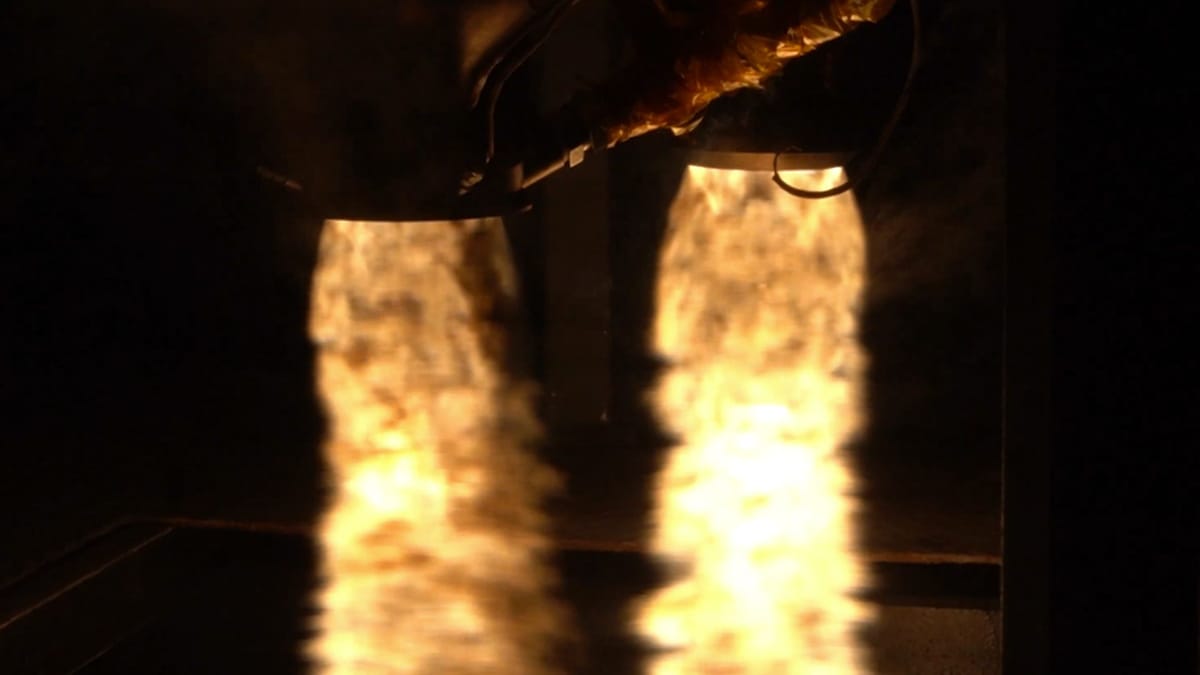
Agnikul Cosmos, a Chennai-based New Space startup, has successfully test-fired a pair of its innovative Agnilet engines. This achievement marks a significant step towards the company’s goal of executing its first orbital flight in 2026. The test, conducted recently, showcased the engines’ capability to reach thermal steady state, exhibiting consistent performance over a duration of 49 seconds.
The Agnilet engines are notable for being the world’s first single-piece 3D printed semi-cryogenic engines. They are powered by electric motors developed in-house by Agnikul and are pump-fed. The test utilized a total of four pumps, each driven by independent electric motors, with most components produced domestically through advanced 3D printing techniques. The innovative approach to speed control is managed by software also developed by Agnikul.
Collaboration with ISRO and Future Plans
Agnikul Cosmos is receiving valuable support from the Indian Space Research Organisation (ISRO), which is providing mentoring and access to its test facilities. The startup had previously conducted a successful test of similar engines in October 2023. The Agnilet engines utilize a refined blend of kerosene and liquid oxygen to propel rockets, employing turbopumps to inject fuel at high pressure. This method echoes the technology used in Rocket Lab’s Rutherford Engine, which powers its Electron rocket.
In addition to its engine development, Agnikul Cosmos has established the largest dedicated 3D printing facility for rocket engines in Chennai. This facility aims to streamline production and enhance the capabilities of the company’s engines.
Plans for Complete Reusability and Launch Facilities
The company is pivoting towards complete reusability for its launch systems. The design includes a first-stage booster that can return to either a launch pad or an ocean platform, while the upper stage is engineered to convert into a satellite capable of hosting payloads. This innovative approach aims to ensure that no components are wasted after payload deployment.
Agnikul Cosmos also plans to set up a second launch pad at ISRO’s upcoming spaceport in Kulasekharapatnam, which is specifically designed for small launchers. This development follows Agnikul’s distinction as the first private company to establish its own launch pad at ISRO’s primary spaceport in Sriharikota.
Agnikul Cosmos has previously demonstrated its technological capabilities with a successful suborbital flight test on 30 May 2024. The company is poised to make significant strides in the aerospace sector, with a vision that could reshape the landscape of space launches in India and beyond.

Protesters Disrupt Sikh Parade in South Auckland with Haka

Agnikul Cosmos Successfully Tests 3D Printed Agnilet Engines

India Debuts Vaishnavi Sharma in First T20I Against Sri Lanka

Bangladesh Unrest Sparks Concerns Over Rohingya Infiltration into India

Northern Saudi Arabia Experiencing Rare Snowfall, Captivates Locals

President Murmu Approves VB-G RAM G Bill to Enhance Rural Employment

Priyanka Gandhi Vadra Pays Tribute to Sreenivasan, Remembering His Legacy

Stephen Hawking’s Legacy: Redefining Existence and Consciousness

Mandaviya Celebrates First Anniversary of Fit India Cycling Initiative

SBI Announces QIP Floor Price at ₹811.05 Per Share

Cept Unveils ₹3.1 Crore Urban Mobility Plan for Sustainable Growth

New Blood Group Discovered in South Indian Woman at Rotary Centre

Torrential Rains Cause Flash Flooding in New York and New Jersey

Konkani Cultural Organisation to Host Pearl Jubilee in Abu Dhabi

Broad Advocates for Bowling Change Ahead of Final Test Against India

Nothing Headphone 1 Review: A Bold Contender in Audio Design

Air India Crash Investigation Highlights Boeing Fuel Switch Concerns

Indian Stock Market Rebounds: Sensex and Nifty Rise After Four-Day Decline
-
 World5 months ago
SBI Announces QIP Floor Price at ₹811.05 Per Share
-
 Lifestyle5 months ago
Cept Unveils ₹3.1 Crore Urban Mobility Plan for Sustainable Growth
-
 Science5 months ago
New Blood Group Discovered in South Indian Woman at Rotary Centre
-
 World5 months ago
Torrential Rains Cause Flash Flooding in New York and New Jersey
-
 Top Stories5 months ago
Konkani Cultural Organisation to Host Pearl Jubilee in Abu Dhabi
-
 Sports5 months ago
Broad Advocates for Bowling Change Ahead of Final Test Against India
-
 Science5 months ago
Nothing Headphone 1 Review: A Bold Contender in Audio Design
-
 Top Stories5 months ago
Air India Crash Investigation Highlights Boeing Fuel Switch Concerns
-
 Business5 months ago
Indian Stock Market Rebounds: Sensex and Nifty Rise After Four-Day Decline
-

 Sports5 months ago
Cristian Totti Retires at 19: Pressure of Fame Takes Toll
-

 Politics5 months ago
Abandoned Doberman Finds New Home After Journey to Prague
-

 Top Stories5 months ago
Patna Bank Manager Abhishek Varun Found Dead in Well