
Politics
Leavitt Responds to Ramaphosa’s Critique of Trump’s G20 Boycott

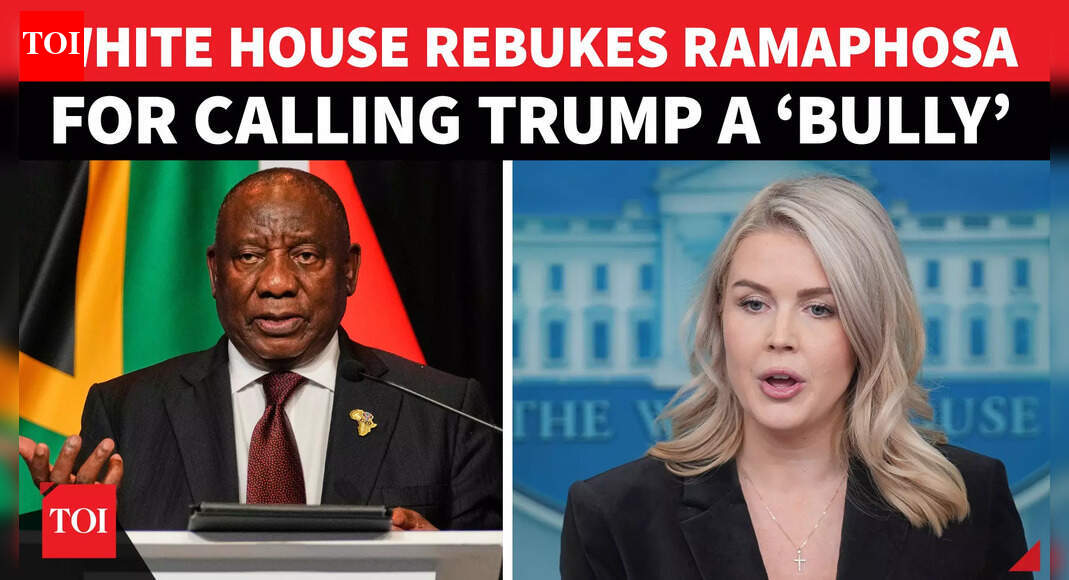
Tensions escalated between the United States and South Africa as White House Press Secretary Karoline Leavitt expressed her frustration following comments made by South African President Cyril Ramaphosa. Ramaphosa criticized former President Donald Trump for his decision to boycott the G20 Summit scheduled for Johannesburg, accusing the U.S. of “bullying” and mocking what he termed a last-minute scramble by the Trump administration to attend.
In a statement responding to Ramaphosa’s remarks, Leavitt stated, “I saw the South African President running his mouth a little bit against the United States and the President earlier today, and that language is not appreciated by the President or his team.” Her comments reflect a strong defense of U.S. interests as tensions surrounding international summits continue to rise.
The G20 Summit, an important platform for global economic discussions, is set to take place from August 30 to September 1, 2023. Despite the ongoing criticisms, Leavitt confirmed that the United States will not be participating in this year’s meeting. This decision marks a notable shift in U.S. foreign policy, particularly under the leadership of Trump, who has previously engaged in international summits.
Ramaphosa’s remarks came in the context of increasing scrutiny of the Trump administration’s foreign policy strategies. His comments implied that the U.S. was failing to uphold its commitments to international cooperation and dialogue. The South African leader’s critical tone suggests a growing frustration among some world leaders regarding U.S. participation in global affairs.
This incident not only highlights the strained diplomatic relations between the U.S. and South Africa but also raises questions about the future of international collaboration in addressing pressing global issues. As the G20 Summit approaches, the absence of U.S. leadership may have implications for discussions on economic recovery, climate change, and global health.
The response from Leavitt underscores the ongoing polarization in U.S. politics and its impact on international relations. While Ramaphosa’s comments may resonate with leaders advocating for a more equitable global order, the U.S. administration appears steadfast in its approach, emphasizing national priorities over international engagements.
As the world looks toward the upcoming summit, the dynamics between major global players like the U.S. and South Africa will be critical in shaping the discussions that follow. The ramifications of this diplomatic spat may extend beyond the G20 meeting, influencing future interactions on the global stage.

Swiss Voters Reject Hefty Inheritance Tax Amid Public Opposition

Archaeologists Uncover 2,000-Year-Old Papyrus in Egyptian Coffin

Bijan Robinson Dominates Week 13, Davante Adams Sets New Record

Stockton Mass Shooting Claims Four Lives; Mayor Issues Stark Warning

Health Insights for December 1, 2025: Wellness Predictions for All Signs

Indian Government Supports Air Passengers in ₹50,000 Crore Suit

Shehbaz Badesha Eliminated from Bigg Boss 19; Amaal Mallik Reacts

India to Introduce New Cess on Tobacco and Pan Masala Products

Ram Kamal Mukherjee Celebrates Cinema at IFFI 2025

SBI Announces QIP Floor Price at ₹811.05 Per Share

Cept Unveils ₹3.1 Crore Urban Mobility Plan for Sustainable Growth

New Blood Group Discovered in South Indian Woman at Rotary Centre

Torrential Rains Cause Flash Flooding in New York and New Jersey

Konkani Cultural Organisation to Host Pearl Jubilee in Abu Dhabi

Broad Advocates for Bowling Change Ahead of Final Test Against India

Nothing Headphone 1 Review: A Bold Contender in Audio Design

Air India Crash Investigation Highlights Boeing Fuel Switch Concerns

Indian Stock Market Rebounds: Sensex and Nifty Rise After Four-Day Decline
-
 World5 months ago
SBI Announces QIP Floor Price at ₹811.05 Per Share
-
 Lifestyle5 months ago
Cept Unveils ₹3.1 Crore Urban Mobility Plan for Sustainable Growth
-
 Science4 months ago
New Blood Group Discovered in South Indian Woman at Rotary Centre
-
 World5 months ago
Torrential Rains Cause Flash Flooding in New York and New Jersey
-
 Top Stories5 months ago
Konkani Cultural Organisation to Host Pearl Jubilee in Abu Dhabi
-
 Sports4 months ago
Broad Advocates for Bowling Change Ahead of Final Test Against India
-
 Science5 months ago
Nothing Headphone 1 Review: A Bold Contender in Audio Design
-
 Top Stories5 months ago
Air India Crash Investigation Highlights Boeing Fuel Switch Concerns
-
 Business5 months ago
Indian Stock Market Rebounds: Sensex and Nifty Rise After Four-Day Decline
-

 Sports4 months ago
Cristian Totti Retires at 19: Pressure of Fame Takes Toll
-

 Politics5 months ago
Abandoned Doberman Finds New Home After Journey to Prague
-
 Top Stories5 months ago
Patna Bank Manager Abhishek Varun Found Dead in Well