
Entertainment
Zeno of Citium’s Timeless Wisdom on the Value of Time

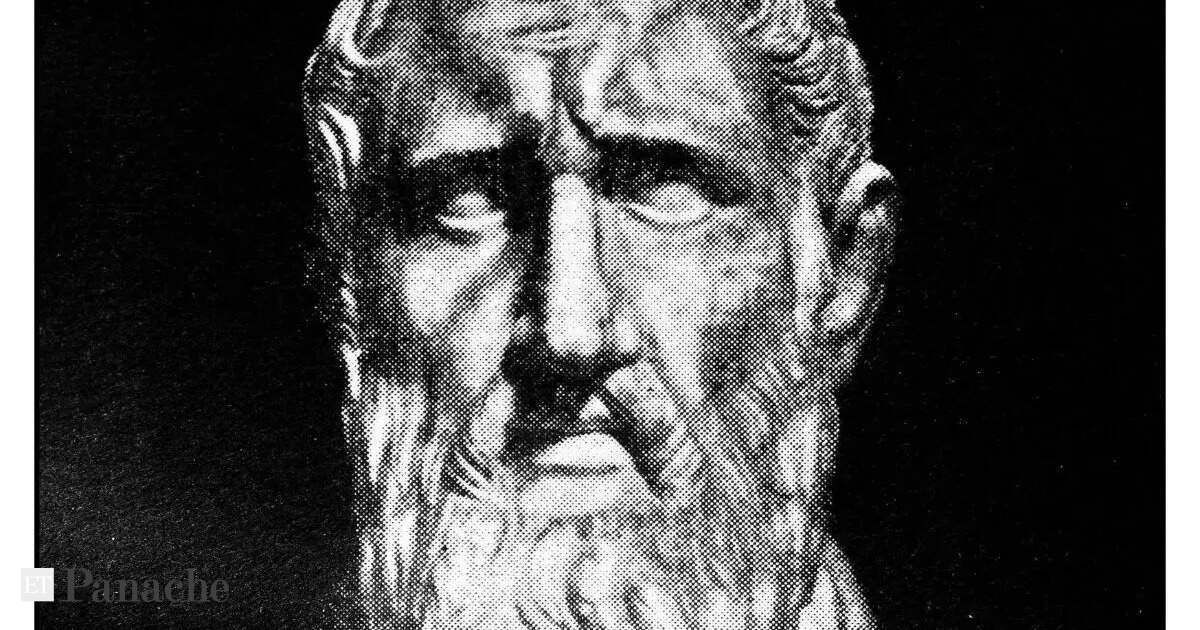
Philosophical insights from ancient thinkers continue to influence modern perspectives on life and priorities. Today, the wisdom of Zeno of Citium, the founder of Stoicism, resonates through his poignant assertion: “No loss should be more regrettable to us than losing our time, for it is irretrievable.” This quote emphasizes a fundamental Stoic belief: that time is more precious than any material possession, as it is a resource that cannot be reclaimed once spent.
Zeno’s thoughts challenge conventional views on loss, often associated with financial decline or missed opportunities. He argues that while tangible losses can stir regret, the casual squandering of hours and years goes largely unnoticed. From a Stoic perspective, wealth can be rebuilt, and reputations can change, but time flows in only one direction. This insight compels individuals to reconsider their daily activities, advocating for a life led with intention and purpose rather than relentless productivity.
Living in the Present: Zeno’s Philosophy
The essence of Zeno’s philosophy lies in its focus on the present moment. Losing time does not merely imply idleness; it can also signify a life lived without awareness, driven by impulse rather than thoughtful decision-making. Zeno encourages individuals to act with intention, as time is the medium in which character is developed and values are realized. In this framework, regret arises not from failure but from the neglect of opportunities to live wisely.
Born between the 4th and 3rd centuries BCE, Zeno of Citium began his life as a merchant. A pivotal moment came when a shipwreck destroyed his cargo, an event that unexpectedly redirected his path. Stranded in Athens, Zeno encountered the teachings of Socrates through the works of Xenophon and later studied under philosophers such as Crates of Thebes. This transformation from material loss to philosophical exploration marked the beginning of his journey.
Zeno’s experience cultivated his belief that external events carry less significance than individual responses. The loss of goods did not define him; his subsequent choices and how he allocated his time became paramount. This perspective laid the groundwork for Stoicism, which emphasizes the importance of self-control and virtue over fleeting pleasures.
Understanding Time Through Stoicism
According to the World History Encyclopedia, Zeno taught that aligning one’s life with reason and the universal order constitutes the highest good. He posited that suffering arises from the pursuit of pleasure or the fear of losing valued possessions. Within this philosophical framework, time becomes critical, serving as the means through which reason can inform life’s decisions.
Wasting time on unrestrained desires or distractions leads to dissatisfaction and regret. Historical accounts preserved by Diogenes Laertius depict Zeno as a philosopher who lived according to his principles. His teachings prioritized virtue over pleasure and self-discipline over excess, marking time not as a commodity to be filled but as a valuable entity to be respected and cherished.
Zeno’s insights challenge contemporary views on productivity and fulfillment. His emphasis on the value of time urges individuals to reflect on their daily choices and the quality of their lives. As society grapples with distractions and the relentless pace of modern life, Zeno’s message remains relevant: the most significant loss is not material, but the time we fail to live meaningfully.
Pakistan Acknowledges Damage from India’s Operation Sindoor

Elon Musk Criticizes Mayor Mamdani’s Fire Commissioner Choice

Discover the Best Single Malt Whiskies Available in India

Zeno of Citium’s Timeless Wisdom on the Value of Time

Doctor Warns Against Popular Charcoal Masks for Skin Health

Malaika Arora Dazzles in Bold Red Mini Dress for Christmas

Congress Responds Strongly to Digvijaya Singh’s Praise for BJP-RSS

Aravalli Hills: Understanding Their Ancient Formation and Impact

MCG Curator Takes Responsibility After Ashes Test Ends in Two Days

SBI Announces QIP Floor Price at ₹811.05 Per Share

Cept Unveils ₹3.1 Crore Urban Mobility Plan for Sustainable Growth

New Blood Group Discovered in South Indian Woman at Rotary Centre

Torrential Rains Cause Flash Flooding in New York and New Jersey

Konkani Cultural Organisation to Host Pearl Jubilee in Abu Dhabi

Nothing Headphone 1 Review: A Bold Contender in Audio Design

Broad Advocates for Bowling Change Ahead of Final Test Against India

Air India Crash Investigation Highlights Boeing Fuel Switch Concerns

Indian Stock Market Rebounds: Sensex and Nifty Rise After Four-Day Decline
-
 World5 months ago
SBI Announces QIP Floor Price at ₹811.05 Per Share
-
 Lifestyle6 months ago
Cept Unveils ₹3.1 Crore Urban Mobility Plan for Sustainable Growth
-
 Science5 months ago
New Blood Group Discovered in South Indian Woman at Rotary Centre
-
 World6 months ago
Torrential Rains Cause Flash Flooding in New York and New Jersey
-
 Top Stories6 months ago
Konkani Cultural Organisation to Host Pearl Jubilee in Abu Dhabi
-
 Science6 months ago
Nothing Headphone 1 Review: A Bold Contender in Audio Design
-
 Sports5 months ago
Broad Advocates for Bowling Change Ahead of Final Test Against India
-
 Top Stories6 months ago
Air India Crash Investigation Highlights Boeing Fuel Switch Concerns
-
 Business6 months ago
Indian Stock Market Rebounds: Sensex and Nifty Rise After Four-Day Decline
-

 Sports5 months ago
Cristian Totti Retires at 19: Pressure of Fame Takes Toll
-

 Politics5 months ago
Abandoned Doberman Finds New Home After Journey to Prague
-

 Top Stories6 months ago
Patna Bank Manager Abhishek Varun Found Dead in Well