
World
Bulgaria Faces Political Turmoil as Prime Minister Resigns Amid Protests

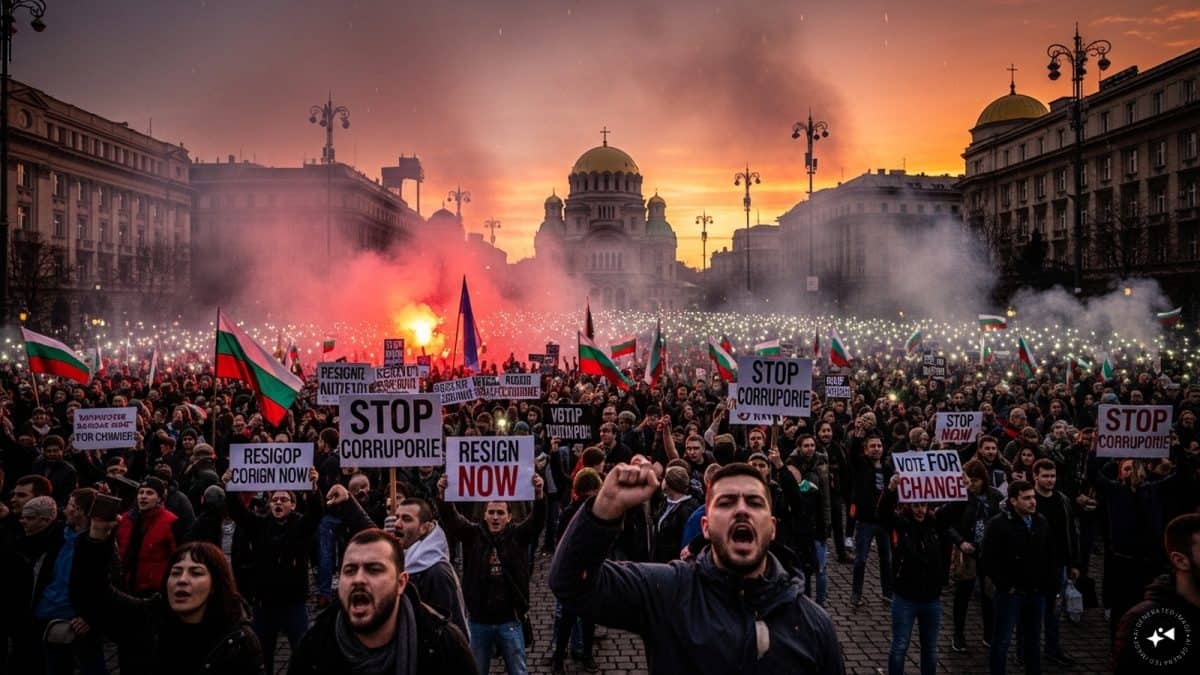
Bulgaria is experiencing a significant political upheaval following the resignation of its Prime Minister, prompted by extensive public protests. These demonstrations, which began in response to a controversial draft budget, have expanded into a broader movement addressing issues of corruption and declining democratic standards.
The Prime Minister’s resignation marks a pivotal moment in Bulgaria’s ongoing political instability, as he becomes the sixth individual to occupy the role in just five years. His departure highlights the deep divisions that have characterized the nation’s political landscape. The coalition government, already struggling to maintain cohesion, now faces the challenge of restoring public trust and stabilising the economy ahead of Bulgaria’s planned adoption of the euro on January 1, 2024.
The protests ignited after the government proposed a budget that aimed to increase both income taxes and social security contributions. The administration argued that these measures were necessary to fund improvements in critical sectors like healthcare, pensions, and education, which have been historically underfunded in one of the European Union’s poorest member states. Nevertheless, citizens and opposition groups swiftly denounced the budget as an unfair burden on working families.
Critics accused the government of failing to address rampant corruption and mismanagement while imposing higher costs on the populace. Demonstrations began in the capital, Sofia, and quickly spread to cities and towns across Bulgaria. Many protesters carried national flags and banners calling for transparency, economic accountability, and an end to political corruption.
What started as a reaction to tax policies evolved into an outcry against years of political instability and rising living costs. The protests reflect a growing crisis of confidence in Bulgaria’s political system, where corruption scandals have repeatedly shaken public trust. Allegations involving senior officials from various administrations have fueled public disillusionment, leading to declining voter participation.
Many demonstrators view the current unrest as part of a larger struggle for accountability and the restoration of democratic principles. Civil society organizations and independent journalists have pointed to a lack of progress in judicial reform and the persistence of patronage systems that hinder effective governance. These persistent issues have attracted the attention of the European Union, which continues to monitor Bulgaria’s governance reforms closely.
While the Prime Minister’s resignation has been welcomed by protest organizers, analysts caution that it does not guarantee immediate stability. Without substantial structural reforms, Bulgaria risks remaining caught in a cycle of short-lived governments that fail to tackle the underlying issues driving public discontent.
The political landscape is further complicated by the impending euro transition. The now-withdrawn budget proposal was intended to be the first calculated entirely in euros, signaling Bulgaria’s commitment to deeper integration within the European Union. Economists viewed this transition as both an opportunity for increased investor confidence and a test of the country’s fiscal discipline and political stability, both of which are now uncertain.
European officials have expressed concerns that ongoing domestic unrest may hinder Bulgaria’s readiness for adopting the euro. The protests have united a diverse segment of society, including public servants, students, small business owners, and pensioners, all calling for a government that prioritizes transparency over self-interest. Protesters have articulated their demands, which extend beyond taxation to include structural anti-corruption measures, stronger enforcement of the rule of law, and more accountable management of European Union development funds.
The demonstrators have also raised alarms about the perceived erosion of independent media, viewing it as another indicator of democratic decline. Leaders of the protest movement have pledged to continue their demonstrations until significant reforms are implemented or early elections are announced.
Early surveys indicate that public sentiment largely supports a new political direction for Bulgaria. Following the Prime Minister’s resignation, the fragile coalition government now faces internal disputes regarding interim leadership and the timing of potential new elections. Analysts predict that any successor administration will struggle to maintain unity without addressing the corruption allegations that have plagued previous governments.
International observers regard Bulgaria’s situation as a critical test for democratic resilience in Eastern Europe. The protests have drawn attention across the continent, resonating with broader European concerns about maintaining public trust in institutions amid rising social inequality and slow economic growth.
As Bulgaria stands at this crossroads, its citizens are calling for not only economic reform but also a transformation of the political culture that has led to repeated crises. Whether this wave of unrest will lead to lasting change or simply perpetuate instability remains uncertain. What is evident is that the voices of the Bulgarian people have once again played a crucial role in reshaping the trajectory of their nation’s politics.

Albert Camus’ Insightful Quote on Human Identity Resurfaces

Drone Strikes and Missile Attacks Disrupt UAE Amid Rising Tensions

Japanese Yen Rises Sharply Against US Dollar Ahead of Key Decisions

Priyanka Chopra and Nick Jonas Avoid Near Miss en Route to Oscars

Gujarat Vaccinates Over 11 Lakh Infants in Major Health Drive

Alexandre Singh Wins Oscar, Celebrates Immigrant Heritage

Lok Sabha Speaker Issues Warning Over Placards in Parliament

Global Electrosurgical Devices Market Expands to $10.2 Billion by 2034

North Zone Dominates Cricket; SJAM-1 Shines in Table Tennis

SBI Announces QIP Floor Price at ₹811.05 Per Share

Cept Unveils ₹3.1 Crore Urban Mobility Plan for Sustainable Growth

New Blood Group Discovered in South Indian Woman at Rotary Centre

Konkani Cultural Organisation to Host Pearl Jubilee in Abu Dhabi

Torrential Rains Cause Flash Flooding in New York and New Jersey

Nothing Headphone 1 Review: A Bold Contender in Audio Design

Indian Stock Market Rebounds: Sensex and Nifty Rise After Four-Day Decline

Air India Crash Investigation Highlights Boeing Fuel Switch Concerns

Broad Advocates for Bowling Change Ahead of Final Test Against India
-
 World12 months ago
SBI Announces QIP Floor Price at ₹811.05 Per Share
-
 Lifestyle12 months ago
Cept Unveils ₹3.1 Crore Urban Mobility Plan for Sustainable Growth
-
 Science12 months ago
New Blood Group Discovered in South Indian Woman at Rotary Centre
-
 Top Stories12 months ago
Konkani Cultural Organisation to Host Pearl Jubilee in Abu Dhabi
-
 World12 months ago
Torrential Rains Cause Flash Flooding in New York and New Jersey
-
 Science12 months ago
Nothing Headphone 1 Review: A Bold Contender in Audio Design
-
 Business12 months ago
Indian Stock Market Rebounds: Sensex and Nifty Rise After Four-Day Decline
-
 Top Stories12 months ago
Air India Crash Investigation Highlights Boeing Fuel Switch Concerns
-
 Sports12 months ago
Broad Advocates for Bowling Change Ahead of Final Test Against India
-

 Sports12 months ago
Cristian Totti Retires at 19: Pressure of Fame Takes Toll
-

 Politics12 months ago
Abandoned Doberman Finds New Home After Journey to Prague
-
 Lifestyle12 months ago
Villagers Unite to Raise ₹45 Lakh for Water Solutions in Vadgam