
Science
India Unveils Hansa-3 NG Trainer Aircraft, Plans for 19-Seater

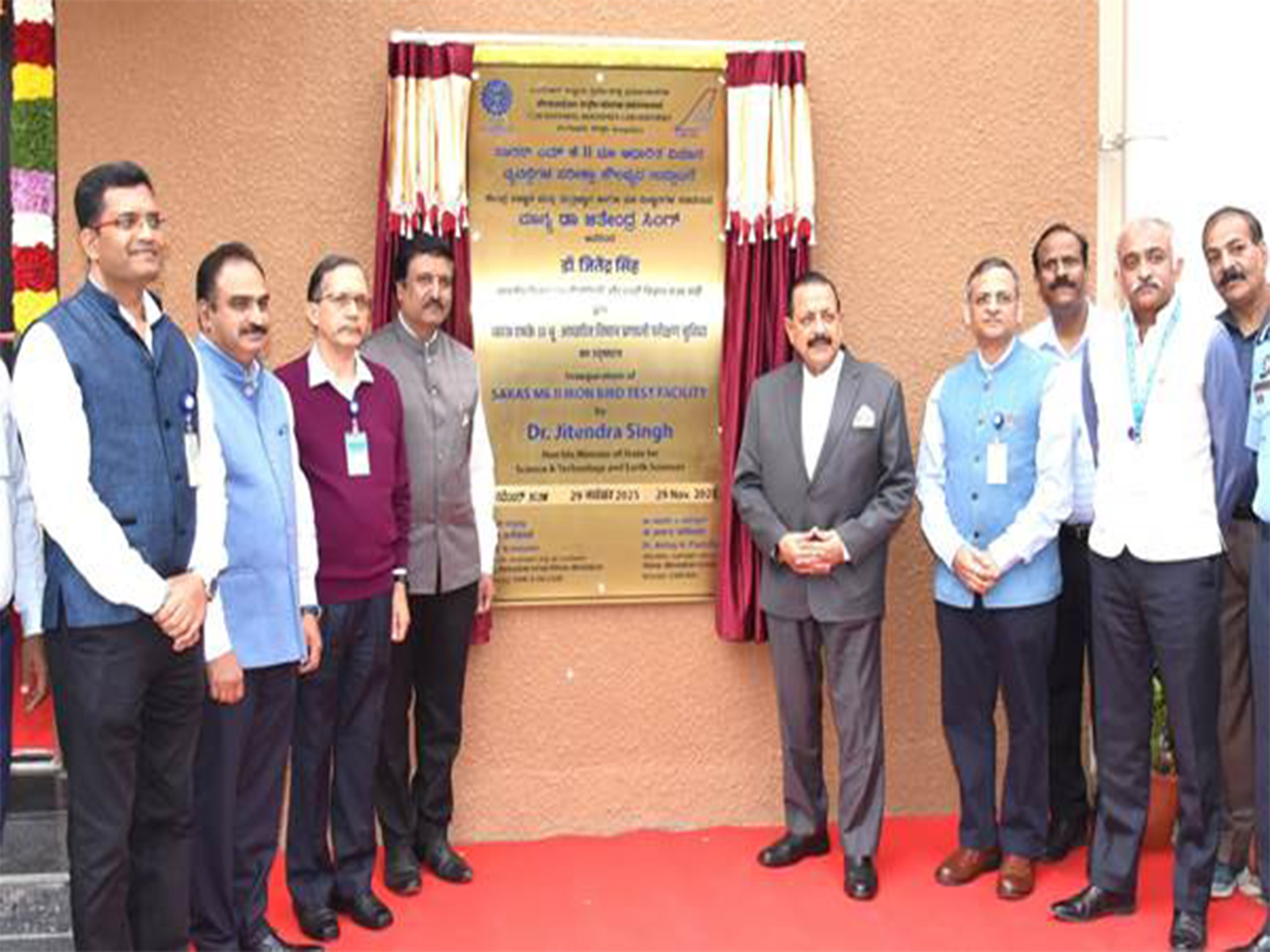
India has officially launched the production version of the indigenous Hansa-3 NG, marking a significant milestone in the country’s aviation sector. On October 7, 2023, Dr. Jitendra Singh, Union Minister of State for Science and Technology, announced the new trainer aircraft at the CSIR-National Aerospace Laboratories (NAL) in Bengaluru. This event underscores India’s commitment to enhancing its aerospace capabilities through indigenous technology and industry collaboration.
During his address, Dr. Singh emphasized that India is undergoing a remarkable transformation in its aerospace and aviation landscape. He referenced Prime Minister Narendra Modi’s vision of making air travel accessible to all, stating, “Hawai chappal wala bhi Hawai jahaj mein chalega” (Even those wearing flip-flops will fly in airplanes). The launch of the Hansa-3 NG is a significant step towards establishing India as a global aviation hub and a self-reliant aerospace manufacturing nation.
Details of the Hansa-3 NG Launch
The Hansa-3 NG is India’s first all-composite two-seater trainer aircraft, specifically designed to meet the growing demand for Private Pilot License (PPL) and Commercial Pilot License (CPL) training. Dr. Singh noted that following the Transfer of Technology ceremony held in Delhi earlier this year, the industry partner, M/s Pioneer Clean Amps, is making rapid progress. The company is establishing a manufacturing facility in Kuppam, Andhra Pradesh, with an investment of ₹150 crore, aiming to produce up to 100 aircraft annually.
As the country anticipates a need for nearly 30,000 pilots over the next 15 to 20 years, the Hansa-3 NG is seen as a vital component in addressing this requirement while reducing reliance on foreign trainer aircraft. Dr. Singh highlighted that this initiative will also foster new opportunities for livelihood and entrepreneurship in aviation.
Future Developments in Aviation
Dr. Singh also discussed the ongoing development of the SARAS Mk-2, a 19-seater light transport aircraft being designed for both civilian and military applications. The aircraft will feature a pressurized cabin, digital avionics, a glass cockpit, autopilot capabilities, and enhanced efficiency through significant weight and drag reduction. This project aims to support regional connectivity and fulfil India’s demand for indigenous short-haul passenger aircraft.
During the event, the Minister inaugurated the Iron Bird Facility for the SARAS Mk-2. This facility is essential for full-system integration, ground testing, and validation of aircraft subsystems. Dr. Singh noted that such advancements significantly mitigate flight-testing risks and expedite development timelines, allowing engineers to identify design and software issues early in the process.
Additionally, the Minister announced the establishment of a dedicated manufacturing facility for High Altitude Platforms (HAPs). This initiative aims to position India among the select few nations developing solar-powered unmanned aircraft capable of flying above 20 km for extended missions. Currently, CSIR-NAL’s subscale vehicle has successfully reached an altitude of 7.5 km with an endurance of over 10 hours. The first full-scale flight is anticipated to achieve 20 km by 2027.
Dr. Singh noted that HAPs provide a cost-effective alternative to satellites for various applications, including surveillance and environmental monitoring, thus expanding India’s presence in the aerospace sector.
Furthermore, he inaugurated the NAviMet system at HAL Airport, reinforcing CSIR-NAL’s contributions to aviation safety through previously deployed systems like DRISHTI and AWOS. With over 175 systems operational, NAviMet enhances real-time visibility and weather parameters crucial for safe landings and take-offs.
The Minister also witnessed the formalization of CSIR-NAL’s collaboration with M/s Solar Defence & Aerospace Ltd. for developing an indigenous 150-kg class Loitering Munition UAV. This UAV, powered by NAL’s certified Wankel engine, is expected to have a range of 900 km and an endurance of 6-9 hours, featuring advanced capabilities such as GPS-denied navigation and AI-enabled target identification.
In closing, Dr. Singh reaffirmed the importance of a collaborative approach between government laboratories and private industry to drive national growth. He urged CSIR-NAL to enhance its outreach to investors and aspiring entrepreneurs, ensuring that India’s scientific achievements inspire future generations. The Minister concluded by stating that the advancements showcased today are part of a broader national initiative aiming to position India as a global aviation hub by 2035 and a fully developed nation by 2047.

Swiss Voters Reject Hefty Inheritance Tax Amid Public Opposition

Archaeologists Uncover 2,000-Year-Old Papyrus in Egyptian Coffin

Bijan Robinson Dominates Week 13, Davante Adams Sets New Record

Stockton Mass Shooting Claims Four Lives; Mayor Issues Stark Warning

Health Insights for December 1, 2025: Wellness Predictions for All Signs

Indian Government Supports Air Passengers in ₹50,000 Crore Suit

Shehbaz Badesha Eliminated from Bigg Boss 19; Amaal Mallik Reacts

India to Introduce New Cess on Tobacco and Pan Masala Products

Ram Kamal Mukherjee Celebrates Cinema at IFFI 2025

SBI Announces QIP Floor Price at ₹811.05 Per Share

Cept Unveils ₹3.1 Crore Urban Mobility Plan for Sustainable Growth

New Blood Group Discovered in South Indian Woman at Rotary Centre

Torrential Rains Cause Flash Flooding in New York and New Jersey

Konkani Cultural Organisation to Host Pearl Jubilee in Abu Dhabi

Broad Advocates for Bowling Change Ahead of Final Test Against India

Nothing Headphone 1 Review: A Bold Contender in Audio Design

Air India Crash Investigation Highlights Boeing Fuel Switch Concerns

Indian Stock Market Rebounds: Sensex and Nifty Rise After Four-Day Decline
-
 World5 months ago
SBI Announces QIP Floor Price at ₹811.05 Per Share
-
 Lifestyle5 months ago
Cept Unveils ₹3.1 Crore Urban Mobility Plan for Sustainable Growth
-
 Science4 months ago
New Blood Group Discovered in South Indian Woman at Rotary Centre
-
 World5 months ago
Torrential Rains Cause Flash Flooding in New York and New Jersey
-
 Top Stories5 months ago
Konkani Cultural Organisation to Host Pearl Jubilee in Abu Dhabi
-
 Sports4 months ago
Broad Advocates for Bowling Change Ahead of Final Test Against India
-
 Science5 months ago
Nothing Headphone 1 Review: A Bold Contender in Audio Design
-
 Top Stories5 months ago
Air India Crash Investigation Highlights Boeing Fuel Switch Concerns
-
 Business5 months ago
Indian Stock Market Rebounds: Sensex and Nifty Rise After Four-Day Decline
-

 Sports4 months ago
Cristian Totti Retires at 19: Pressure of Fame Takes Toll
-

 Politics5 months ago
Abandoned Doberman Finds New Home After Journey to Prague
-

 Top Stories5 months ago
Patna Bank Manager Abhishek Varun Found Dead in Well