
Business
CAQM Bans Petrol and Diesel Vehicles in Delhi-NCR by 2026

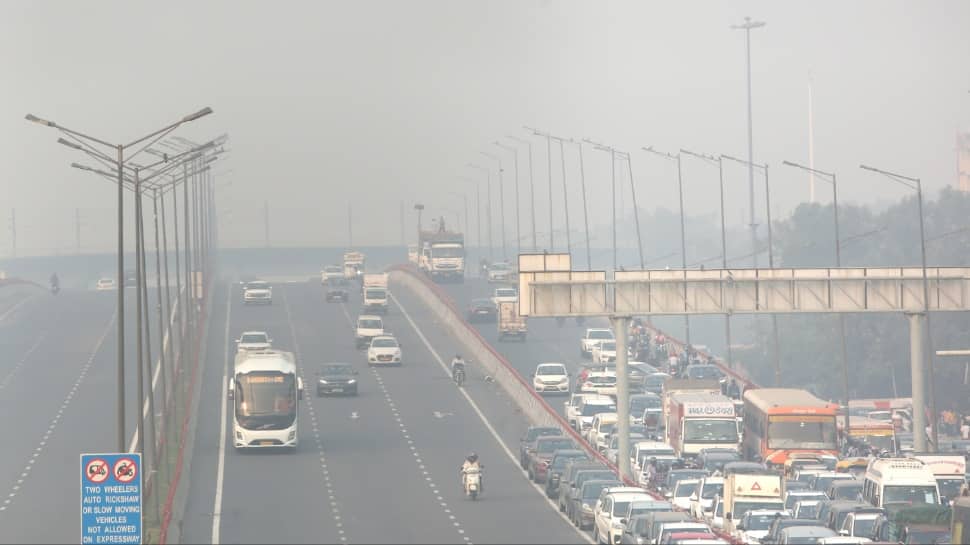
The Commission for Air Quality Management (CAQM) has announced a ban on the inclusion of petrol and diesel vehicles in the fleets of cab aggregators, e-commerce firms, and delivery companies across the Delhi-NCR region. This significant order, effective from January 1, 2026, aims to address the region’s persistent air quality crisis, where the Air Quality Index (AQI) has consistently remained above the 400 mark, indicating ‘Severe’ and hazardous conditions for public health.
The new regulation specifically targets commercial vehicles, which are identified as a major contributor to urban pollution due to their continual operation throughout the day. By mandating a transition to clean fuel, the CAQM hopes to reduce emissions significantly. Delivery fleets will be required to operate solely on compressed natural gas (CNG) or electric vehicles starting in 2026. The ban will only affect the induction of new petrol or diesel vehicles into these commercial fleets, allowing existing vehicles to remain operational until the end of their life cycles.
To ensure compliance, officials from the Assistant Regional Transport Office (ARTO) have engaged with leading e-commerce companies and made it clear that the January 2026 deadline is final and non-negotiable. This decision will impact thousands of delivery partners and major firms that rely on last-mile delivery services in the region.
Companies such as Swiggy, Zomato, Blinkit, Amazon, and Flipkart will need to quickly adapt their fleets to adhere to the new regulations. The approved vehicles for delivery operations will include CNG bikes and scooters, electric two-wheelers, electric and CNG three-wheelers, and small electric commercial vehicles.
Stricter Air Quality Measures Introduced
In conjunction with the vehicle ban, the CAQM has also revised the Graded Response Action Plan (GRAP) to implement stricter measures at lower pollution thresholds. Under this new framework, rules that were previously applicable under GRAP-2 will now be enforced under GRAP-1, while enhanced measures for GRAP-3 and GRAP-4 will apply at lower AQI levels.
A notable adjustment in this updated plan is the new trigger for mandatory work-from-home policies. Government, private, and municipal offices will now be required to operate at 50% capacity when the AQI reaches 401-450. This rule previously applied only to AQI levels above 450, indicating a reduced tolerance for hazardous air quality conditions. The central government is anticipated to adopt this model for its own employees as well.
The ongoing efforts by the CAQM represent a critical step toward improving air quality in the densely populated Delhi-NCR region, where pollution has become a pressing public health challenge.

Albert Camus’ Insightful Quote on Human Identity Resurfaces

Drone Strikes and Missile Attacks Disrupt UAE Amid Rising Tensions

Japanese Yen Rises Sharply Against US Dollar Ahead of Key Decisions

Priyanka Chopra and Nick Jonas Avoid Near Miss en Route to Oscars

Gujarat Vaccinates Over 11 Lakh Infants in Major Health Drive

Alexandre Singh Wins Oscar, Celebrates Immigrant Heritage

Lok Sabha Speaker Issues Warning Over Placards in Parliament

Global Electrosurgical Devices Market Expands to $10.2 Billion by 2034

North Zone Dominates Cricket; SJAM-1 Shines in Table Tennis

SBI Announces QIP Floor Price at ₹811.05 Per Share

Cept Unveils ₹3.1 Crore Urban Mobility Plan for Sustainable Growth

New Blood Group Discovered in South Indian Woman at Rotary Centre

Konkani Cultural Organisation to Host Pearl Jubilee in Abu Dhabi

Torrential Rains Cause Flash Flooding in New York and New Jersey

Nothing Headphone 1 Review: A Bold Contender in Audio Design

Indian Stock Market Rebounds: Sensex and Nifty Rise After Four-Day Decline

Air India Crash Investigation Highlights Boeing Fuel Switch Concerns

Broad Advocates for Bowling Change Ahead of Final Test Against India
-
 World12 months ago
SBI Announces QIP Floor Price at ₹811.05 Per Share
-
 Lifestyle12 months ago
Cept Unveils ₹3.1 Crore Urban Mobility Plan for Sustainable Growth
-
 Science12 months ago
New Blood Group Discovered in South Indian Woman at Rotary Centre
-
 Top Stories12 months ago
Konkani Cultural Organisation to Host Pearl Jubilee in Abu Dhabi
-
 World12 months ago
Torrential Rains Cause Flash Flooding in New York and New Jersey
-
 Science12 months ago
Nothing Headphone 1 Review: A Bold Contender in Audio Design
-
 Business12 months ago
Indian Stock Market Rebounds: Sensex and Nifty Rise After Four-Day Decline
-
 Top Stories12 months ago
Air India Crash Investigation Highlights Boeing Fuel Switch Concerns
-
 Sports12 months ago
Broad Advocates for Bowling Change Ahead of Final Test Against India
-

 Sports12 months ago
Cristian Totti Retires at 19: Pressure of Fame Takes Toll
-

 Politics12 months ago
Abandoned Doberman Finds New Home After Journey to Prague
-
 Lifestyle12 months ago
Villagers Unite to Raise ₹45 Lakh for Water Solutions in Vadgam