
World
Australian Senator Faces Backlash for Wearing Burqa in Parliament

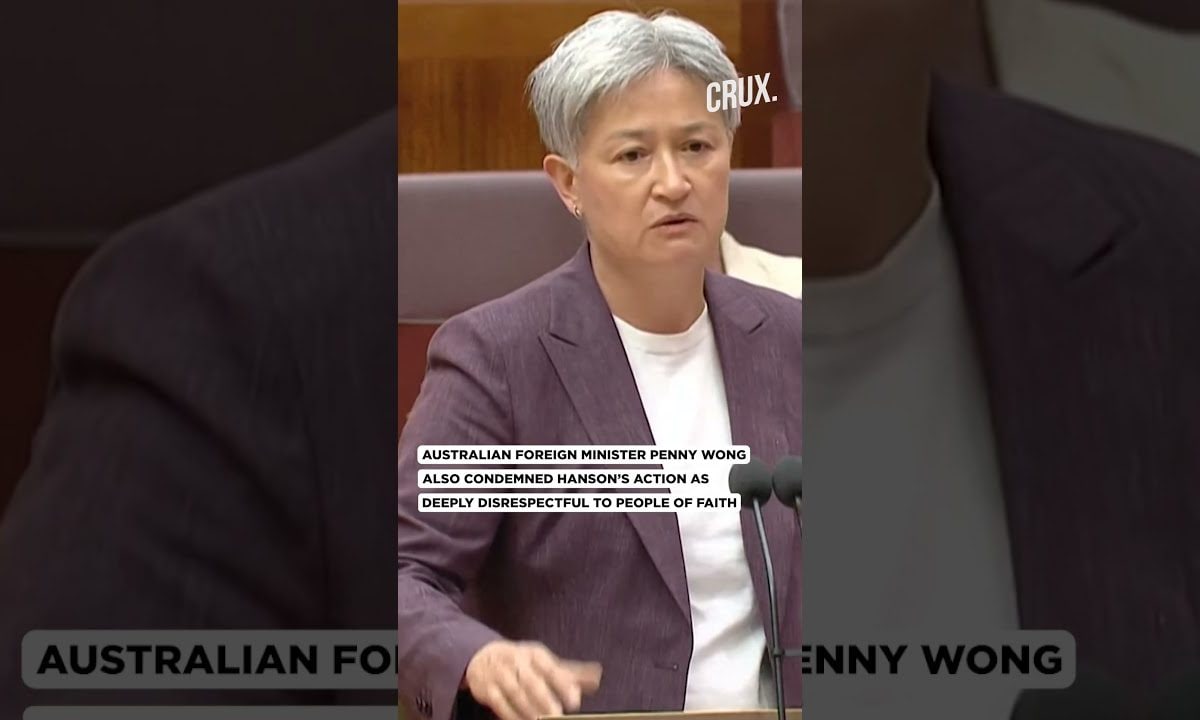
Controversy erupted in Australia on October 18, 2023, when Senator Pauline Hanson, leader of the One Nation Party, donned a burqa during a parliamentary session. The action, intended to raise awareness about issues related to Islamic attire, sparked immediate outrage among various communities and political groups across the nation.
Senator Hanson entered the chamber wearing the burqa, claiming it symbolized the “oppression of women” and was a direct challenge to Australian values. Her actions were met with both condemnation and support, illustrating the divisive nature of the debate surrounding religious dress codes in Australia. Many critics labeled her demonstration as overtly racist and Islamophobic, arguing that it trivialized the cultural significance of the garment for many Muslim women.
Opposition members within the Australian Parliament swiftly condemned Hanson’s actions. Senator Penny Wong, the leader of the opposition, stated, “This is not the way to engage in a constructive dialogue about multiculturalism. Such actions only serve to deepen divisions within our society.” Wong emphasized the need for understanding and respect among diverse communities, highlighting that the burqa is a choice for many women practicing Islam.
The incident has reignited discussions around the ongoing cultural tensions in Australia. Supporters of Hanson argue that her tactics are a form of free speech, expressing concerns over the growing influence of Islamic culture. Mark Latham, another prominent figure within the One Nation Party, defended Hanson’s actions, stating that the burqa symbolizes a rejection of Australian freedoms.
Public reaction has been swift and polarized. Social media platforms have been flooded with comments, both in support of and against the senator’s actions. A poll conducted by NewsCorp Australia indicated that around 60% of respondents disapproved of Hanson’s demonstration, while 30% supported her stance, reflecting the deeply rooted divisions on this issue.
In the wake of the incident, various advocacy groups have called for a more measured approach to discussions about cultural and religious attire. The Australian Human Rights Commission released a statement urging for dialogue rather than confrontation, emphasizing the importance of protecting individuals’ rights to express their cultural identity.
As the debate continues, the Australian government faces pressure to address broader issues surrounding multiculturalism and the integration of diverse communities. The incident may serve as a critical flashpoint in the ongoing conversation about Australia’s national identity and the challenges posed by its increasingly multicultural society.
Moving forward, it remains to be seen how this controversy will influence public opinion and policy regarding religious attire in Australia.

Airbus Discovers Quality Issue Affecting A320 Family Aircraft

Awami League Condemns Dhaka Court Ruling Against Sheikh Hasina

Supreme Court Denies Extension for Waqf Property Registration

Samantha Ruth Prabhu Weds Raj Nidimoru in Intimate Ceremony

Discover Engaging Ways to Stay Active Outside the Gym

Delhi High Court Sets Deadline for Government, CCI on Apple Fine

Charges Filed Against Sushil Kumar in IGP Bribery Case

BSF Foils Four Infiltration Attempts, Neutralizes Eight Terrorists

New Tax Bill Targets Pan Masala, Gutkha to Fund Health and Defence

SBI Announces QIP Floor Price at ₹811.05 Per Share

Cept Unveils ₹3.1 Crore Urban Mobility Plan for Sustainable Growth

New Blood Group Discovered in South Indian Woman at Rotary Centre

Torrential Rains Cause Flash Flooding in New York and New Jersey

Konkani Cultural Organisation to Host Pearl Jubilee in Abu Dhabi

Broad Advocates for Bowling Change Ahead of Final Test Against India

Nothing Headphone 1 Review: A Bold Contender in Audio Design

Air India Crash Investigation Highlights Boeing Fuel Switch Concerns

Indian Stock Market Rebounds: Sensex and Nifty Rise After Four-Day Decline
-
 World5 months ago
SBI Announces QIP Floor Price at ₹811.05 Per Share
-
 Lifestyle5 months ago
Cept Unveils ₹3.1 Crore Urban Mobility Plan for Sustainable Growth
-
 Science4 months ago
New Blood Group Discovered in South Indian Woman at Rotary Centre
-
 World5 months ago
Torrential Rains Cause Flash Flooding in New York and New Jersey
-
 Top Stories5 months ago
Konkani Cultural Organisation to Host Pearl Jubilee in Abu Dhabi
-
 Sports4 months ago
Broad Advocates for Bowling Change Ahead of Final Test Against India
-
 Science5 months ago
Nothing Headphone 1 Review: A Bold Contender in Audio Design
-
 Top Stories5 months ago
Air India Crash Investigation Highlights Boeing Fuel Switch Concerns
-
 Business5 months ago
Indian Stock Market Rebounds: Sensex and Nifty Rise After Four-Day Decline
-

 Sports4 months ago
Cristian Totti Retires at 19: Pressure of Fame Takes Toll
-

 Politics5 months ago
Abandoned Doberman Finds New Home After Journey to Prague
-

 Top Stories5 months ago
Patna Bank Manager Abhishek Varun Found Dead in Well