
Health
IV Bars Spark Controversy at Indian Weddings with Luxury Wellness Trend

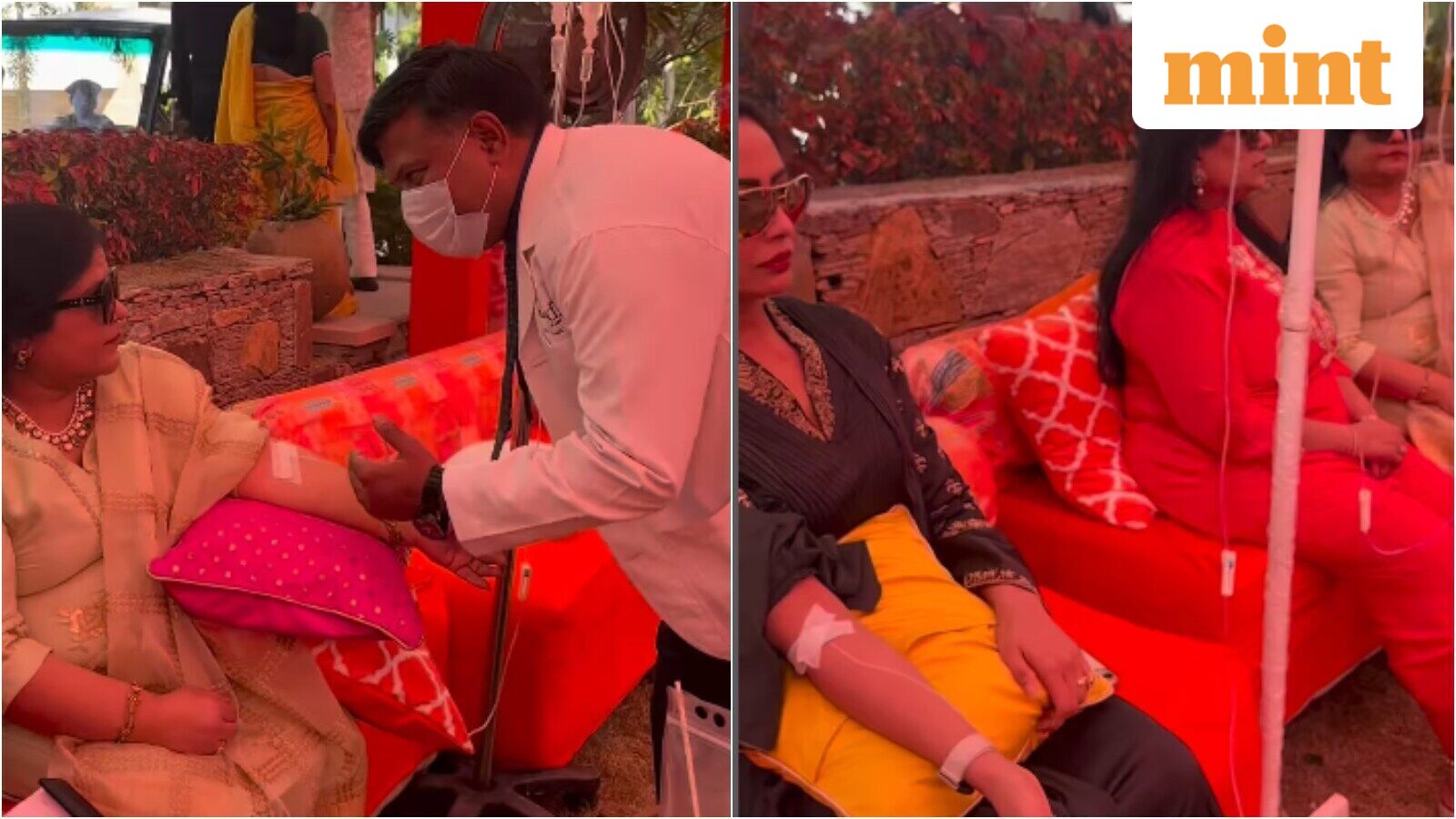
A viral video showcasing guests at a destination wedding in India receiving vitamin-infused IV drips has ignited a debate about the appropriateness of this burgeoning luxury health trend. The footage, shared by the wellness clinic Skulpted by Kan, depicts attendees relaxing by the pool while hooked up to IV lines, leading to discussions about the implications of introducing such practices into wedding celebrations.
Understanding the Trend and Its Origins
The concept of an IV bar, once limited to wellness clinics, has transitioned into high-end weddings. The video from Skulpted by Kan describes the experience as a “massive upgrade” to traditional wedding festivities. This trend is not entirely new; IV drips have previously appeared in “detox bars” at upscale events, often alongside fruit-infused waters and wellness shots. The aim is to assist guests in recovering from late-night celebrations, blending health with luxury.
According to industry reports, the IV bar setup at weddings allows guests to receive treatments designed to alleviate dehydration and fatigue. Pricing for these infusions can be steep, ranging from ₹2,200 to ₹4,000, contingent upon the specific packages offered by the clinic.
Medical Oversight and Expert Opinions
The clinic has asserted that the IV bar is operated under strict medical supervision. Each guest undergoes a pre-infusion assessment, with medical professionals present throughout the event. Options for IV therapy include hydration solutions with electrolytes and Vitamin C, with glutathione offered only when deemed medically appropriate.
Despite this medical oversight, the trend has faced criticism from healthcare professionals. Dr. Brunda M. S, an internal medicine consultant at Aster CMI Hospital in Bengaluru, cautions that IV drips should primarily serve medical purposes, such as treating dehydration or illness. She highlights several potential risks, including:
1. Infection at the infusion site
2. Vein irritation or damage
3. Electrolyte imbalances
Dr. Poonam Tiwari, head of dietetics at a hospital in Lucknow, further advises that simple hydration and rest are often sufficient to combat fatigue, urging against the use of IV therapy as a lifestyle enhancement.
As the trend continues to grow, the presence of IV drip services at luxury weddings is becoming increasingly common in India’s metropolitan areas. The introduction of these services by clinics like Skulpted by Kan suggests a shift in how high-end celebrations are approached.
While some view IV bars as an innovative hospitality feature, critics argue that they represent an alarming trend in which medical practices are trivialized for entertainment purposes. This phenomenon raises significant questions about wellness culture and the standards of health and safety in celebratory settings.
Globally, similar IV lounges have emerged in countries like the United States, the United Arab Emirates, and various parts of Europe. However, health authorities across many nations have consistently warned against the unnecessary use of such therapies.
The IV bar trend at Indian weddings encapsulates a fusion of wellness and luxury, appealing to those seeking a unique experience while simultaneously drawing criticism from medical professionals. As this practice gains traction, it remains imperative for guests and organizers alike to weigh the potential risks against the allure of this modern trend.

Teaser Released for Upcoming Telugu Film ‘Not All Movies Are The Same: Dual’

Adilabad Reports Declining HIV Cases with Increased Awareness Efforts

Devotees Prepare for Bhaum Pradosh Vrat on December 2, 2025

Zelensky and Macron Discuss Ukraine Ceasefire Amid U.S. Efforts

India Enhances Naval Capabilities with Underwater Drone Development

BTS Star Taehyung’s Rope-Climbing Clip Sparks Viral Frenzy

Shalini’s Journey in ‘The Far Field’ Exposes Privilege’s Cost

Hindustan Unilever Appoints Vandana Suri as New Home Care Executive Director

Virat Kohli Sets New ODI Record, Surpasses Sachin Tendulkar

SBI Announces QIP Floor Price at ₹811.05 Per Share

Cept Unveils ₹3.1 Crore Urban Mobility Plan for Sustainable Growth

New Blood Group Discovered in South Indian Woman at Rotary Centre

Torrential Rains Cause Flash Flooding in New York and New Jersey

Konkani Cultural Organisation to Host Pearl Jubilee in Abu Dhabi

Broad Advocates for Bowling Change Ahead of Final Test Against India

Nothing Headphone 1 Review: A Bold Contender in Audio Design

Air India Crash Investigation Highlights Boeing Fuel Switch Concerns

Indian Stock Market Rebounds: Sensex and Nifty Rise After Four-Day Decline
-
 World5 months ago
SBI Announces QIP Floor Price at ₹811.05 Per Share
-
 Lifestyle5 months ago
Cept Unveils ₹3.1 Crore Urban Mobility Plan for Sustainable Growth
-
 Science4 months ago
New Blood Group Discovered in South Indian Woman at Rotary Centre
-
 World5 months ago
Torrential Rains Cause Flash Flooding in New York and New Jersey
-
 Top Stories5 months ago
Konkani Cultural Organisation to Host Pearl Jubilee in Abu Dhabi
-
 Sports4 months ago
Broad Advocates for Bowling Change Ahead of Final Test Against India
-
 Science5 months ago
Nothing Headphone 1 Review: A Bold Contender in Audio Design
-
 Top Stories5 months ago
Air India Crash Investigation Highlights Boeing Fuel Switch Concerns
-
 Business5 months ago
Indian Stock Market Rebounds: Sensex and Nifty Rise After Four-Day Decline
-

 Sports4 months ago
Cristian Totti Retires at 19: Pressure of Fame Takes Toll
-

 Politics5 months ago
Abandoned Doberman Finds New Home After Journey to Prague
-
 Top Stories5 months ago
Patna Bank Manager Abhishek Varun Found Dead in Well