
Sports
Zak Crawley Struggles with Pair of Ducks in Ashes Test

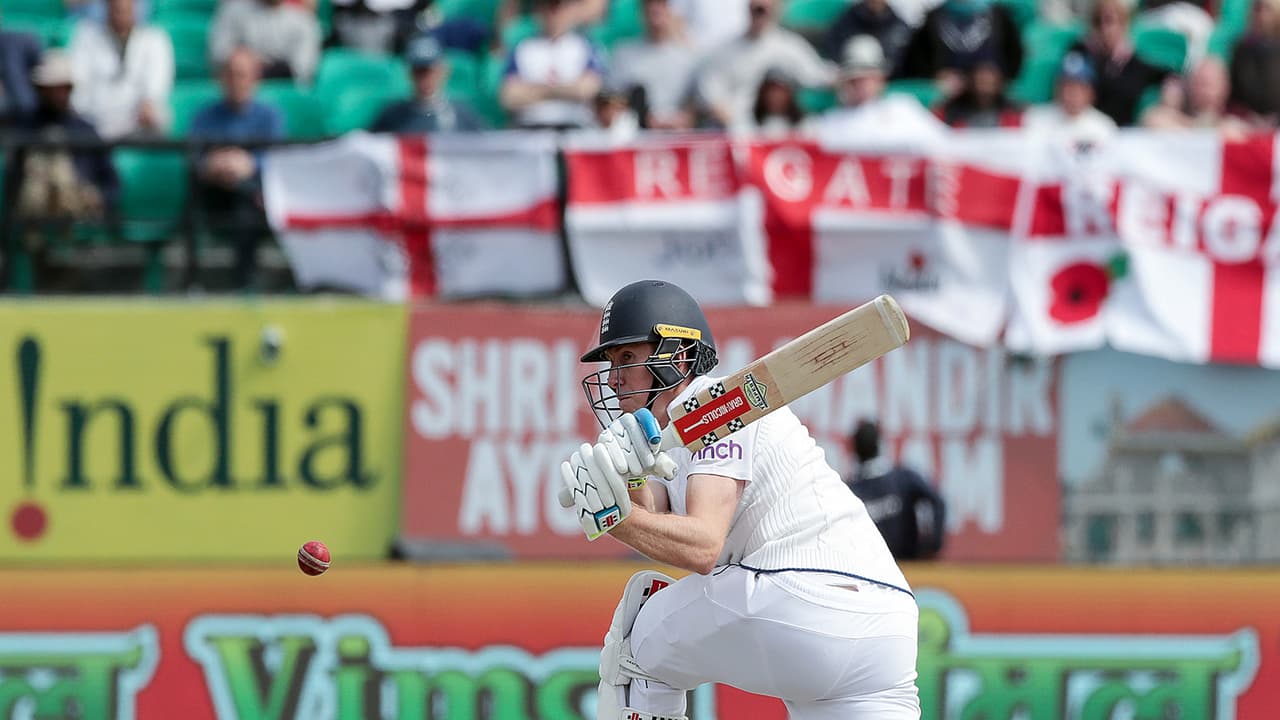
Zak Crawley faced significant challenges during the first Ashes Test at Perth’s Optus Stadium on March 16, 2024, as he became the fourth English opener to record a pair of ducks. His second dismissal came in the first over of England’s second innings, falling to Australian pacer Mitchell Starc, who made a remarkable one-handed catch. This unfortunate performance places Crawley alongside notable names such as Trevor Bailey, Dennis Amiss, and Michael Atherton, who also recorded pairs in past Ashes matches.
Crawley had previously been dismissed in the first innings after nicking a delivery to slips, where Usman Khawaja made the catch. His back-to-back failures mark a rare occurrence in the Ashes, with Crawley now being part of a record where three consecutive innings saw wickets fall before any runs were scored. The situation highlights the intense pressure faced by openers in such pivotal matches.
In seven Tests this year, Crawley has accumulated 414 runs across 12 innings, averaging 34.50 with a strike rate exceeding 63. His performance included a century, three fifties, and a top score of 124. Despite his recent struggles, Crawley has demonstrated his potential in previous matches.
Australia’s first innings concluded at 132 runs, trailing England’s first total of 172. A significant partnership between Ollie Pope and Ben Duckett helped England build a lead of 99 runs by the end of the first session on day two. At that point, England was sitting comfortably at 59/1, with Duckett on 28* and Pope on 24*.
Crawley’s dismissal set a challenging tone as England aimed to extend their lead. Earlier, Australia resumed day two at 123/9, with Brendan Doggett and Nathan Lyon at the crease. England’s bowling attack, led by captain Ben Stokes with figures of 5/23, managed to restrict Australia effectively, claiming crucial wickets early on.
Stokes’s efforts were complemented by Brydon Carse and Jofra Archer, who added pressure, leading to the quick dismissals of key players like Marnus Labuschagne and Steve Smith. The Australian innings ended shortly after Stokes’s breakthrough, giving England a solid platform.
As England looked to consolidate their position, Duckett and Pope’s partnership proved vital. Duckett displayed aggression against both Starc and Scott Boland, while Pope’s clever strike rotation ensured steady scoring. Their partnership reached a half-century in just over ten overs, showcasing their intent to build a robust lead.
On day one, England had opted to bat first after winning the toss. Despite promising starts, they quickly found themselves in trouble at 39/3 before a stabilizing partnership between Pope and Harry Brook. Although Brook managed to score 52, England’s batting lineup faltered under pressure from Starc, who finished with remarkable figures of 7/58.
In summary, the first Ashes Test at Perth has seen England grapple with early setbacks, particularly highlighted by Crawley’s pair of ducks. As the match progresses, both teams will look to capitalize on their strengths and turn the tide in this fiercely contested series.

Charges Filed Against Sushil Kumar in IGP Bribery Case

BSF Foils Four Infiltration Attempts, Neutralizes Eight Terrorists

New Tax Bill Targets Pan Masala, Gutkha to Fund Health and Defence

Samantha Ruth Prabhu Ties the Knot with Raj Nidimoru in Intimate Ceremony

ChatGPT 5 Raises Alarm for Mental Health Guidance Failures

Ayurveda Offers Natural Solutions to Combat Urban Smog Challenges

Voter Roll Overhaul Sparks Crisis as BLOs Face Heavy Strain

India Takes Steps to Boost Rare-Earth Magnet Production Amid Dependency

Washington Sundar Struggles at No. 5 in India’s ODI Loss to South Africa

SBI Announces QIP Floor Price at ₹811.05 Per Share

Cept Unveils ₹3.1 Crore Urban Mobility Plan for Sustainable Growth

New Blood Group Discovered in South Indian Woman at Rotary Centre

Torrential Rains Cause Flash Flooding in New York and New Jersey

Konkani Cultural Organisation to Host Pearl Jubilee in Abu Dhabi

Broad Advocates for Bowling Change Ahead of Final Test Against India

Nothing Headphone 1 Review: A Bold Contender in Audio Design

Air India Crash Investigation Highlights Boeing Fuel Switch Concerns

Indian Stock Market Rebounds: Sensex and Nifty Rise After Four-Day Decline
-
 World5 months ago
SBI Announces QIP Floor Price at ₹811.05 Per Share
-
 Lifestyle5 months ago
Cept Unveils ₹3.1 Crore Urban Mobility Plan for Sustainable Growth
-
 Science4 months ago
New Blood Group Discovered in South Indian Woman at Rotary Centre
-
 World5 months ago
Torrential Rains Cause Flash Flooding in New York and New Jersey
-
 Top Stories5 months ago
Konkani Cultural Organisation to Host Pearl Jubilee in Abu Dhabi
-
 Sports4 months ago
Broad Advocates for Bowling Change Ahead of Final Test Against India
-
 Science5 months ago
Nothing Headphone 1 Review: A Bold Contender in Audio Design
-
 Top Stories5 months ago
Air India Crash Investigation Highlights Boeing Fuel Switch Concerns
-
 Business5 months ago
Indian Stock Market Rebounds: Sensex and Nifty Rise After Four-Day Decline
-

 Sports4 months ago
Cristian Totti Retires at 19: Pressure of Fame Takes Toll
-

 Politics5 months ago
Abandoned Doberman Finds New Home After Journey to Prague
-

 Top Stories5 months ago
Patna Bank Manager Abhishek Varun Found Dead in Well