
World
US Lawmakers Propose Resolution to End Trump-Era Tariffs on India

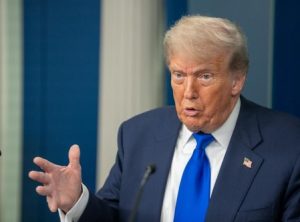
Three prominent members of the United States Congress have introduced a resolution aimed at abolishing the tariffs on India that were established during President Donald Trump’s administration. Representatives Deborah Ross of North Carolina, Marc Veasey of Texas, and Raja Krishnamoorthi of Illinois expressed that the current tariff strategy is detrimental to the crucial partnership between the two nations and undermines American interests.
The resolution, presented on October 27, 2023, seeks to revoke the national emergency that Trump invoked to impose tariffs as high as 50 percent on Indian imports. This includes a 25 percent tariff specifically on purchases of Russian oil by India. The lawmakers argue that these tariffs disrupt supply chains, elevate costs for consumers, and adversely affect American workers.
Under the provisions of the International Emergency Economic Powers Act (IEEPA), Trump’s tariffs represented one of the most significant duties on imports globally. The newly introduced resolution would not only terminate the national emergency but also rescind the additional 25 percent “secondary” duties that took effect on August 27, 2023. This collective action raised duties on numerous Indian-origin products to unprecedented levels.
In a statement, Krishnamoorthi remarked, “Trump’s irresponsible tariff strategy toward India is a counterproductive approach that weakens a critical partnership.” He emphasized that these tariffs do not advance American security or economic interests but rather create obstacles for both nations.
Ross noted the deep economic ties between North Carolina and India, highlighting that Indian companies have invested over $1 billion in the state, generating thousands of jobs, particularly in the life sciences and technology sectors. “When Trump destabilizes this relationship with illegal tariffs, he puts North Carolina jobs, innovation, and our long-term competitiveness at risk,” she added.
The resolution is a continuation of bipartisan efforts to address trade issues stemming from Trump’s presidency. It follows a similar measure in the Senate aimed at ending tariffs on Brazil, reflecting a broader movement within Congress to reclaim its constitutional authority over trade matters.
Veasey pointed out that “India is an important cultural, economic, and strategic partner, and these illegal tariffs are a tax on everyday North Texans who are already struggling with affordability at every level.”
The lawmakers have been vocal critics of Trump’s tariff policies and have previously urged the former president to mend the strained relations with India. In October, they collaborated with other congressional members, including Congressman Ro Khanna, to call for a reassessment of America’s trade relationship with India.
Ending the tariffs on India is viewed as a critical step in enhancing diplomatic and economic ties, allowing for greater collaboration in areas of mutual interest. The resolution reflects a growing bipartisan consensus that American trade policy should foster, rather than hinder, vital international partnerships.

Russia Claims Over 600 Chemical Attacks by Ukraine in Conflict

DRDO Opens Application Portal for 764 Technical Positions

Ryan Suter Honors 1980 Olympic Team at White House Ceremony

Maharashtra Approves Road Works Worth ₹1.50 Lakh Crore for 2026

Russia Claims Over 600 Chemical Attacks by Ukraine in Ongoing Conflict

GST Reforms Projected to Trim Retail Inflation by 35 Bps by 2026

Court Rules Higher Qualifications Don’t Guarantee Higher Pay

Indian Cabinet Approves Bill to Streamline Higher Education Regulation

KKR Chooses Livingstone Over Green in Ashwin’s Mock Auction

SBI Announces QIP Floor Price at ₹811.05 Per Share

Cept Unveils ₹3.1 Crore Urban Mobility Plan for Sustainable Growth

New Blood Group Discovered in South Indian Woman at Rotary Centre

Torrential Rains Cause Flash Flooding in New York and New Jersey

Konkani Cultural Organisation to Host Pearl Jubilee in Abu Dhabi

Broad Advocates for Bowling Change Ahead of Final Test Against India

Nothing Headphone 1 Review: A Bold Contender in Audio Design

Air India Crash Investigation Highlights Boeing Fuel Switch Concerns

Indian Stock Market Rebounds: Sensex and Nifty Rise After Four-Day Decline
-
 World5 months ago
SBI Announces QIP Floor Price at ₹811.05 Per Share
-
 Lifestyle5 months ago
Cept Unveils ₹3.1 Crore Urban Mobility Plan for Sustainable Growth
-
 Science5 months ago
New Blood Group Discovered in South Indian Woman at Rotary Centre
-
 World5 months ago
Torrential Rains Cause Flash Flooding in New York and New Jersey
-
 Top Stories5 months ago
Konkani Cultural Organisation to Host Pearl Jubilee in Abu Dhabi
-
 Sports5 months ago
Broad Advocates for Bowling Change Ahead of Final Test Against India
-
 Science5 months ago
Nothing Headphone 1 Review: A Bold Contender in Audio Design
-
 Top Stories5 months ago
Air India Crash Investigation Highlights Boeing Fuel Switch Concerns
-
 Business5 months ago
Indian Stock Market Rebounds: Sensex and Nifty Rise After Four-Day Decline
-

 Sports5 months ago
Cristian Totti Retires at 19: Pressure of Fame Takes Toll
-

 Politics5 months ago
Abandoned Doberman Finds New Home After Journey to Prague
-

 Top Stories5 months ago
Patna Bank Manager Abhishek Varun Found Dead in Well