
Science
Study Reveals ‘Batman Effect’ Boosts Kindness Among Commuters

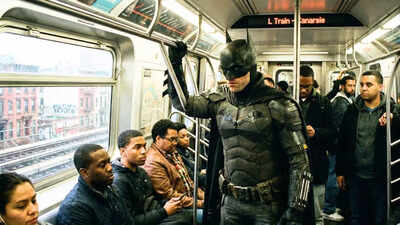
New research conducted in Milan has uncovered a phenomenon known as the “Batman effect,” which suggests that the presence of someone dressed as the iconic DC superhero can inspire greater kindness among commuters. The study, carried out during peak travel times on the Milan metro, highlights how unexpected visual stimuli can disrupt routine behaviors and foster compassion.
Research Methodology and Findings
The study involved a unique experiment where a woman wearing a prosthetic pregnancy belly boarded metro trains at busy times. On certain journeys, she was accompanied by a man dressed as Batman, complete with a cape and the character’s signature logo, though he did not wear the mask to avoid alarming passengers. The central question was whether this unexpected appearance would alter the behavior of fellow commuters.
The results were striking. When Batman was present, 67 percent of commuters offered their seat to the woman. In contrast, this number dropped significantly to 38 percent when he was absent. The presence of Batman acted as a catalyst, prompting individuals to become more aware of their surroundings and the needs of others.
The Role of Disruption in Fostering Kindness
According to the researchers, the presence of Batman served as a positive disruption in the commuter environment. People, often engrossed in their devices or locked into their routines, were jolted into a heightened state of awareness. This unexpected shift allowed for increased likelihood of altruistic behavior, demonstrating that even minor changes in one’s surroundings can have significant impacts.
Interestingly, 44 percent of those who gave up their seats reported that they did not consciously notice Batman at all. This suggests that the disruption caused by the superhero presence permeated the carriage, influencing behavior even among those who were unaware of his presence. The findings indicate that the “Batman effect” might not be solely tied to the character himself, but rather to the general principle that unusual situations can stimulate kindness.
The study also noted that women were more likely than men to offer their seats, regardless of Batman’s presence. Nevertheless, the caped crusader still enhanced courtesy among all commuters involved.
The researchers speculate about the potential for other unexpected figures—such as clowns or mascots—to elicit similar responses. They emphasize that it is the element of surprise and the break from routine that create opportunities for empathy to emerge.
These findings point to broader implications regarding human behavior in public spaces. Minor, unexpected changes can nudge individuals toward more prosocial actions, fostering cooperation in environments where people often remain isolated behind screens. The study ultimately serves as a reminder that a small change, such as the appearance of a superhero, can invoke a sense of community and kindness among strangers.
In a world increasingly dominated by technology and personal devices, the Batman effect highlights the importance of awareness and connection. Sometimes, it takes just a cape to inspire heroism in those around us.

Swiss Voters Reject Hefty Inheritance Tax Amid Public Opposition

Archaeologists Uncover 2,000-Year-Old Papyrus in Egyptian Coffin

Bijan Robinson Dominates Week 13, Davante Adams Sets New Record

Stockton Mass Shooting Claims Four Lives; Mayor Issues Stark Warning

Health Insights for December 1, 2025: Wellness Predictions for All Signs

Indian Government Supports Air Passengers in ₹50,000 Crore Suit

Shehbaz Badesha Eliminated from Bigg Boss 19; Amaal Mallik Reacts

India to Introduce New Cess on Tobacco and Pan Masala Products

Ram Kamal Mukherjee Celebrates Cinema at IFFI 2025

SBI Announces QIP Floor Price at ₹811.05 Per Share

Cept Unveils ₹3.1 Crore Urban Mobility Plan for Sustainable Growth

New Blood Group Discovered in South Indian Woman at Rotary Centre

Torrential Rains Cause Flash Flooding in New York and New Jersey

Konkani Cultural Organisation to Host Pearl Jubilee in Abu Dhabi

Broad Advocates for Bowling Change Ahead of Final Test Against India

Nothing Headphone 1 Review: A Bold Contender in Audio Design

Air India Crash Investigation Highlights Boeing Fuel Switch Concerns

Indian Stock Market Rebounds: Sensex and Nifty Rise After Four-Day Decline
-
 World5 months ago
SBI Announces QIP Floor Price at ₹811.05 Per Share
-
 Lifestyle5 months ago
Cept Unveils ₹3.1 Crore Urban Mobility Plan for Sustainable Growth
-
 Science4 months ago
New Blood Group Discovered in South Indian Woman at Rotary Centre
-
 World5 months ago
Torrential Rains Cause Flash Flooding in New York and New Jersey
-
 Top Stories5 months ago
Konkani Cultural Organisation to Host Pearl Jubilee in Abu Dhabi
-
 Sports4 months ago
Broad Advocates for Bowling Change Ahead of Final Test Against India
-
 Science5 months ago
Nothing Headphone 1 Review: A Bold Contender in Audio Design
-
 Top Stories5 months ago
Air India Crash Investigation Highlights Boeing Fuel Switch Concerns
-
 Business5 months ago
Indian Stock Market Rebounds: Sensex and Nifty Rise After Four-Day Decline
-

 Sports4 months ago
Cristian Totti Retires at 19: Pressure of Fame Takes Toll
-

 Politics5 months ago
Abandoned Doberman Finds New Home After Journey to Prague
-

 Top Stories5 months ago
Patna Bank Manager Abhishek Varun Found Dead in Well