
Science
MIT and Empirical Health Unveil AI Model Using Apple Watch Data

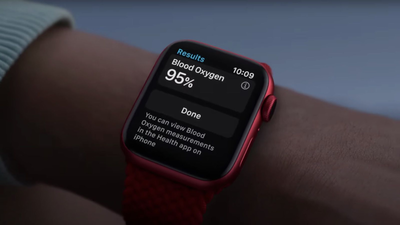
Researchers at MIT and Empirical Health have developed an innovative artificial intelligence (AI) model capable of predicting multiple medical conditions by leveraging data from the Apple Watch. This breakthrough, outlined in a recent study, employs a unique architecture known as Joint-Embedding Predictive Architecture (JEPA), enabling the AI to learn from incomplete and irregular health metrics, even when working with limited labeled data.
The study is based on an extensive dataset, comprising approximately 3 million person-days of data collected from a cohort of 16,522 individuals. The researchers focused on a range of health metrics, including heart rate, sleep patterns, and physical activity, which were recorded at varying frequencies. This diverse dataset offers significant potential for extracting valuable health insights that traditional AI models may overlook due to data inconsistencies.
Understanding the Joint-Embedding Predictive Architecture
The JEPA model, initially proposed by Yann LeCun, former Chief AI Scientist at Meta, marks a significant advancement in AI technology. The model’s ability to learn from both visible and hidden data makes it particularly adept at handling irregularities often found in health data. In the context of this research, JEPA maps the visible data into a common space, allowing the AI to accurately infer the meaning of hidden or incomplete information.
According to the researchers, the architecture’s underlying principle is to enable machines to form internal models of the world, thereby enhancing their capacity to learn quickly and adapt to new situations. LeCun’s vision for JEPA has influenced the development of what he calls “world models,” which focus on understanding rather than mere prediction.
Innovative Data Utilization for Health Insights
The study, titled “JETS: A Self-Supervised Joint Embedding Time Series Foundation Model for Behavioural Data in Healthcare,” was recently accepted for presentation at the NeurIPS workshop. The researchers designed the model to learn from a longitudinal dataset without relying solely on labeled data. Notably, only 15% of the participants had medical records that could be used for evaluation, leaving the remaining 85% of the data unusable for traditional AI training methods.
To address this challenge, the team organized the data into sets that included the day, measurement value, and type of measurement. Each observation was transformed into a “token,” allowing the AI to process the information effectively. The tokens were then masked, encoded, and used by a predictor to estimate the missing data.
The researchers evaluated the performance of JETS against other AI models, including a prior version utilizing Transformer technology. They employed AUROC (Area Under the Receiver Operating Characteristic) and AUPRC (Area Under the Precision-Recall Curve) metrics to assess the model’s efficacy in distinguishing between positive and negative cases. JETS achieved notable AUROC scores of 86.8% for high blood pressure, 70.5% for atrial flutter, 81% for chronic fatigue syndrome, and 86.8% for sick sinus syndrome.
These results highlight the model’s potential, even when it does not consistently outperform its peers. The significance of AUROC and AUPRC lies in their ability to measure a model’s ranking capabilities rather than solely its accuracy. This research underscores the potential for new AI models to derive meaningful insights from wearable device data, even when users do not wear their devices consistently.
The findings emphasize an exciting avenue for future AI training methods, particularly in healthcare. The ability to analyze data collected from wearables like the Apple Watch, even amidst irregularities, could lead to more effective monitoring and early detection of various medical conditions. This research not only showcases the capabilities of AI but also opens the door to a new era of health data analysis that could significantly enhance patient care and outcomes.

US Federal Reserve to Announce Interest Rate Decision Today

Melania Trump Reacts Strongly to TikTok Pastor’s Revelations

Udupi Implements Full EPF and ESI for Grama Panchayat Staff

Telugu Film ‘Sahakutumbaanaam’ Unveils Official Trailer

Dr. Shiran Shetty Advances Cancer Care with Training in Japan

Karnataka Yakshagana Academy Announces 2025 Awards for Excellence

India Appoints Rahul Rasgotra as Mauritius National Security Advisor

Yogi Adityanath Warns Against Divisive Forces in Society

Government Considers Voluntary Provident Fund Contributions

SBI Announces QIP Floor Price at ₹811.05 Per Share

Cept Unveils ₹3.1 Crore Urban Mobility Plan for Sustainable Growth

New Blood Group Discovered in South Indian Woman at Rotary Centre

Torrential Rains Cause Flash Flooding in New York and New Jersey

Konkani Cultural Organisation to Host Pearl Jubilee in Abu Dhabi

Broad Advocates for Bowling Change Ahead of Final Test Against India

Nothing Headphone 1 Review: A Bold Contender in Audio Design

Air India Crash Investigation Highlights Boeing Fuel Switch Concerns

Indian Stock Market Rebounds: Sensex and Nifty Rise After Four-Day Decline
-
 World5 months ago
SBI Announces QIP Floor Price at ₹811.05 Per Share
-
 Lifestyle5 months ago
Cept Unveils ₹3.1 Crore Urban Mobility Plan for Sustainable Growth
-
 Science4 months ago
New Blood Group Discovered in South Indian Woman at Rotary Centre
-
 World5 months ago
Torrential Rains Cause Flash Flooding in New York and New Jersey
-
 Top Stories5 months ago
Konkani Cultural Organisation to Host Pearl Jubilee in Abu Dhabi
-
 Sports4 months ago
Broad Advocates for Bowling Change Ahead of Final Test Against India
-
 Science5 months ago
Nothing Headphone 1 Review: A Bold Contender in Audio Design
-
 Top Stories5 months ago
Air India Crash Investigation Highlights Boeing Fuel Switch Concerns
-
 Business5 months ago
Indian Stock Market Rebounds: Sensex and Nifty Rise After Four-Day Decline
-

 Sports4 months ago
Cristian Totti Retires at 19: Pressure of Fame Takes Toll
-

 Politics5 months ago
Abandoned Doberman Finds New Home After Journey to Prague
-

 Top Stories5 months ago
Patna Bank Manager Abhishek Varun Found Dead in Well