
Science
Humanoid Robots Advance: Bridging Technology and Humanity

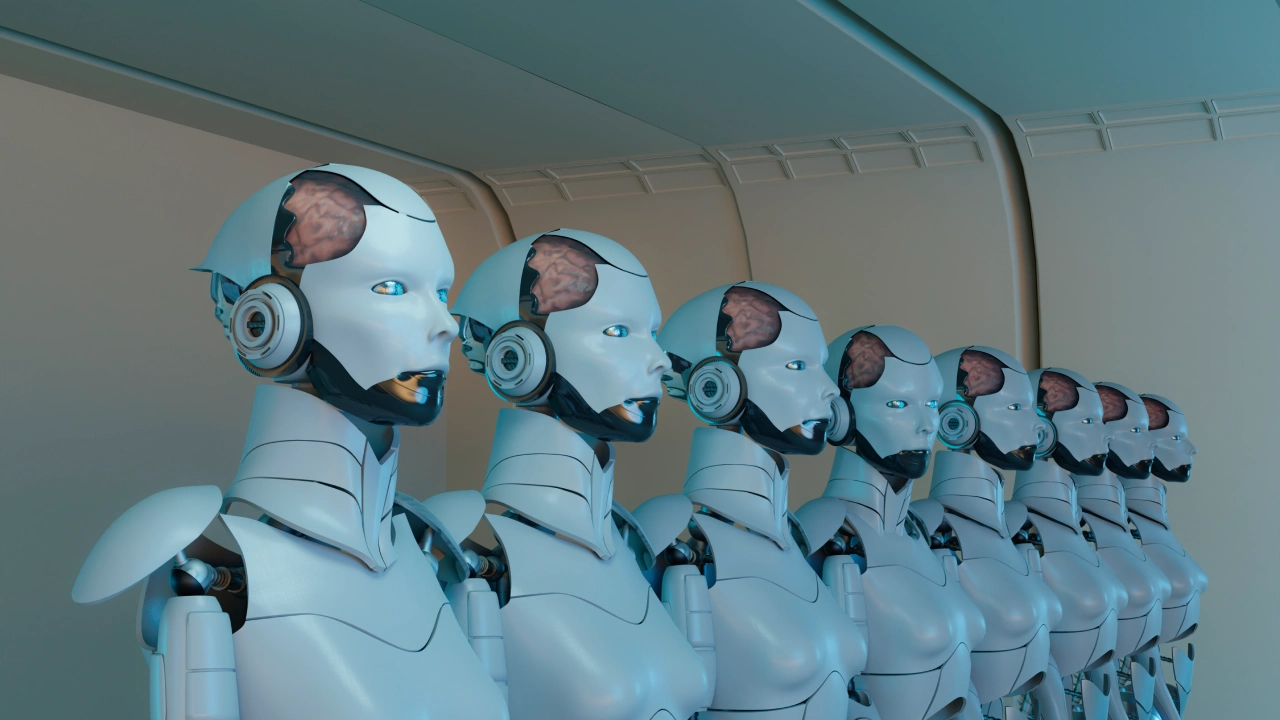
The emergence of humanoid robots marks a significant technological shift, with recent advancements in artificial intelligence, large language models (LLMs), and robotics driving their integration across various sectors. These robots are being utilized in industries ranging from healthcare to logistics, serving as companions and efficient assistants in workplaces. While progress is evident, challenges such as high costs, emotional understanding, and ethical implications still hinder the development of fully autonomous humanoid assistants.
The concept of humanoid robots has a long history, tracing back to ancient myths and automata in Europe. However, the 21st century is witnessing the first functional humanoids capable of performing real tasks. Companies like Boston Dynamics, Tesla, Agility Robotics, and Apptronik are at the forefront of this evolution. For instance, Boston Dynamics has developed Atlas, a robot known for its remarkable agility, while Agility Robotics has created Digit, designed for tasks such as walking, lifting, and human interaction. Tesla’s much-discussed Optimus aims to function as a versatile humanoid robot for both industrial and domestic use.
In Asia, robots like Pepper from SoftBank and Sophia from Hanssolo Robotics focus on social interaction, designed to read human emotions and engage in conversation. These advancements combine mechanical engineering, machine learning, computer vision, and natural language processing (NLP), pushing the boundaries of how humanoids interact with their environments and the people within them.
The Mechanisms Behind Humanoid Intelligence
Humanoid robots rely on a blend of AI and automation. Today’s models leverage large language models similar to those powering conversational AIs like ChatGPT, which enables them to understand and generate human-like language. Coupled with computer vision, these robots can recognize faces and emotions, interpreting visual cues. Machine learning algorithms facilitate adaptation, allowing them to learn from user interactions and improve their responses over time.
The physical capabilities of humanoids are enhanced by actuators and sensors that mimic human movement and balance. For example, Digit can navigate uneven terrain thanks to years of research in motion control. This combination of cognitive and mechanical skills allows humanoids to perceive, process, and respond to their surroundings in increasingly sophisticated ways.
Applications Across Industries
Humanoid robots are finding roles in manufacturing and logistics, where models like Digit and Optimus assist with tasks such as sorting and transporting goods. Their ability to operate in human-designed spaces gives them an advantage over traditional robotic arms, which are often limited to fixed positions.
In healthcare, Japan leads the way in utilizing humanoid robots to address the needs of an aging population. Robots like Robear assist caregivers in lifting patients, while Pepper provides companionship for elderly individuals. These robots are designed not to replace human empathy but to enhance it, serving as reliable assistants that do not tire.
In retail and hospitality, humanoids are greeting customers, answering inquiries, and demonstrating products. Their presence can improve customer service during peak times when staff may be limited. In educational settings, robots like Nao are helping children with autism develop social skills, providing a non-judgmental environment for practice.
Despite these promising applications, humanoid robots face significant hurdles. They can simulate emotions but do not genuinely experience them. While AI can identify patterns in emotional expression, the lack of true empathetic understanding poses a barrier. Researchers often design robots to assist rather than replicate human qualities, focusing on functionality over emotional depth.
Technical challenges persist, particularly in battery life and real-time perception. High manufacturing costs also limit widespread adoption. Ethical considerations arise regarding how closely humanoids should resemble humans, navigating the phenomenon known as the “uncanny valley,” where robots evoke discomfort due to their near-human appearance.
India has emerged as a notable player in humanoid robotics, with startups like ASIMOV Robotics and Genrobotics developing service-oriented robots tailored to local needs. ASIMOV Robotics has innovated in healthcare and elderly care, while Genrobotics’ Bandicoot robots are addressing sanitation challenges. These advancements illustrate how India’s robotics landscape is evolving to meet social needs, supported by government initiatives like Make in India and increasing investments in AI research.
As the development of humanoid robots continues, the question remains: how close are we to having android assistants that can truly integrate into our lives? While the technology is advancing, the ideal humanoid with human-like reasoning, empathy, and trust seems to be further off. Current models exemplify significant technological accomplishments, embodying our desire to create machines in our image. Ultimately, humanoid robots reflect our ongoing exploration of what it means to be human, blending technology with our innate understanding of emotion, purpose, and consciousness. Until these machines can genuinely grasp these concepts, the dream of fully realized android assistants will remain an evolving pursuit.

Airbus Discovers Quality Issue Affecting A320 Family Aircraft

Awami League Condemns Dhaka Court Ruling Against Sheikh Hasina

Supreme Court Denies Extension for Waqf Property Registration

Samantha Ruth Prabhu Weds Raj Nidimoru in Intimate Ceremony

Discover Engaging Ways to Stay Active Outside the Gym

Delhi High Court Sets Deadline for Government, CCI on Apple Fine

Charges Filed Against Sushil Kumar in IGP Bribery Case

BSF Foils Four Infiltration Attempts, Neutralizes Eight Terrorists

New Tax Bill Targets Pan Masala, Gutkha to Fund Health and Defence

SBI Announces QIP Floor Price at ₹811.05 Per Share

Cept Unveils ₹3.1 Crore Urban Mobility Plan for Sustainable Growth

New Blood Group Discovered in South Indian Woman at Rotary Centre

Torrential Rains Cause Flash Flooding in New York and New Jersey

Konkani Cultural Organisation to Host Pearl Jubilee in Abu Dhabi

Broad Advocates for Bowling Change Ahead of Final Test Against India

Nothing Headphone 1 Review: A Bold Contender in Audio Design

Air India Crash Investigation Highlights Boeing Fuel Switch Concerns

Indian Stock Market Rebounds: Sensex and Nifty Rise After Four-Day Decline
-
 World5 months ago
SBI Announces QIP Floor Price at ₹811.05 Per Share
-
 Lifestyle5 months ago
Cept Unveils ₹3.1 Crore Urban Mobility Plan for Sustainable Growth
-
 Science4 months ago
New Blood Group Discovered in South Indian Woman at Rotary Centre
-
 World5 months ago
Torrential Rains Cause Flash Flooding in New York and New Jersey
-
 Top Stories5 months ago
Konkani Cultural Organisation to Host Pearl Jubilee in Abu Dhabi
-
 Sports4 months ago
Broad Advocates for Bowling Change Ahead of Final Test Against India
-
 Science5 months ago
Nothing Headphone 1 Review: A Bold Contender in Audio Design
-
 Top Stories5 months ago
Air India Crash Investigation Highlights Boeing Fuel Switch Concerns
-
 Business5 months ago
Indian Stock Market Rebounds: Sensex and Nifty Rise After Four-Day Decline
-

 Sports4 months ago
Cristian Totti Retires at 19: Pressure of Fame Takes Toll
-

 Politics5 months ago
Abandoned Doberman Finds New Home After Journey to Prague
-

 Top Stories5 months ago
Patna Bank Manager Abhishek Varun Found Dead in Well