
Politics
Trump Claims Birthright Citizenship Only for Children of Slaves

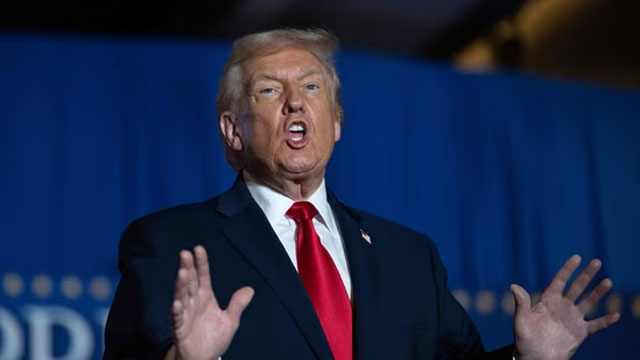
US President Donald Trump recently asserted that the principle of birthright citizenship was originally intended solely for the children of enslaved individuals. He made these comments during an interview with Politico, where he defended an executive order he signed on his first day back in office on January 20, 2025, aimed at ending the practice.
In the interview, Trump emphasized that birthright citizenship should not extend to what he termed “rich immigrants” who enter the country to secure citizenship for their families. “The case is very interesting because that case was meant for the babies of slaves,” Trump stated. He further argued that the original intent of the 14th Amendment of the US Constitution, which guarantees citizenship to all persons born or naturalized in the United States, has been misinterpreted over time.
The 14th Amendment, adopted in 1868 after the Civil War, was designed primarily to ensure that formerly enslaved individuals and their descendants were recognized as citizens. Trump contended that the modern application of this amendment has strayed from its initial purpose. He expressed concern that a potential Supreme Court ruling against his administration would be “devastating,” suggesting that the court understands his interpretation of the amendment.
Following Trump’s executive order, children born in the United States 30 days after January 20, 2025, would no longer automatically qualify for citizenship. This directive has faced significant legal challenges. Although several federal courts initially blocked the implementation of the order, the US Supreme Court ruled in June that lower courts do not have the authority to issue broad nationwide injunctions against presidential executive orders. The Supreme Court has since agreed to review the constitutionality of Trump’s action regarding birthright citizenship.
As the legal battle unfolds, the future of birthright citizenship, a fundamental aspect of American immigration policy for more than 150 years, remains uncertain. The implications of Trump’s stance could reshape the understanding of citizenship in the United States and raise important questions about immigration policy moving forward. The ongoing debates surrounding this issue highlight the complexities of interpreting constitutional principles in a modern context.

Mangaluru Police Conduct Random Drug Tests; 20 Students Positive

Deepavali Celebrated as UNESCO Recognizes Festival of Lights

Congress Defends Rahul Gandhi’s Berlin Trip Amid BJP Criticism

Nita Ambani Unveils Innovative Tree House Learning Hub in Mumbai

Royal Challengers Bengaluru Gear Up for IPL 2026 Auction

Teaser for Border 2 to Premiere with Avatar: Fire and Ash

Deepika Padukone’s Trainer Reveals Five Hotel Room Exercises

Kitenge Boots Revolutionize Winter Fashion with Vibrant Styles

Trump Claims Birthright Citizenship Only for Children of Slaves

SBI Announces QIP Floor Price at ₹811.05 Per Share

Cept Unveils ₹3.1 Crore Urban Mobility Plan for Sustainable Growth

New Blood Group Discovered in South Indian Woman at Rotary Centre

Torrential Rains Cause Flash Flooding in New York and New Jersey

Konkani Cultural Organisation to Host Pearl Jubilee in Abu Dhabi

Broad Advocates for Bowling Change Ahead of Final Test Against India

Nothing Headphone 1 Review: A Bold Contender in Audio Design

Air India Crash Investigation Highlights Boeing Fuel Switch Concerns

Indian Stock Market Rebounds: Sensex and Nifty Rise After Four-Day Decline
-
 World5 months ago
SBI Announces QIP Floor Price at ₹811.05 Per Share
-
 Lifestyle5 months ago
Cept Unveils ₹3.1 Crore Urban Mobility Plan for Sustainable Growth
-
 Science4 months ago
New Blood Group Discovered in South Indian Woman at Rotary Centre
-
 World5 months ago
Torrential Rains Cause Flash Flooding in New York and New Jersey
-
 Top Stories5 months ago
Konkani Cultural Organisation to Host Pearl Jubilee in Abu Dhabi
-
 Sports4 months ago
Broad Advocates for Bowling Change Ahead of Final Test Against India
-
 Science5 months ago
Nothing Headphone 1 Review: A Bold Contender in Audio Design
-
 Top Stories5 months ago
Air India Crash Investigation Highlights Boeing Fuel Switch Concerns
-
 Business5 months ago
Indian Stock Market Rebounds: Sensex and Nifty Rise After Four-Day Decline
-

 Sports4 months ago
Cristian Totti Retires at 19: Pressure of Fame Takes Toll
-

 Politics5 months ago
Abandoned Doberman Finds New Home After Journey to Prague
-

 Top Stories5 months ago
Patna Bank Manager Abhishek Varun Found Dead in Well