
Politics
India Summons Bangladesh Envoy After Threatening Remarks by Politician

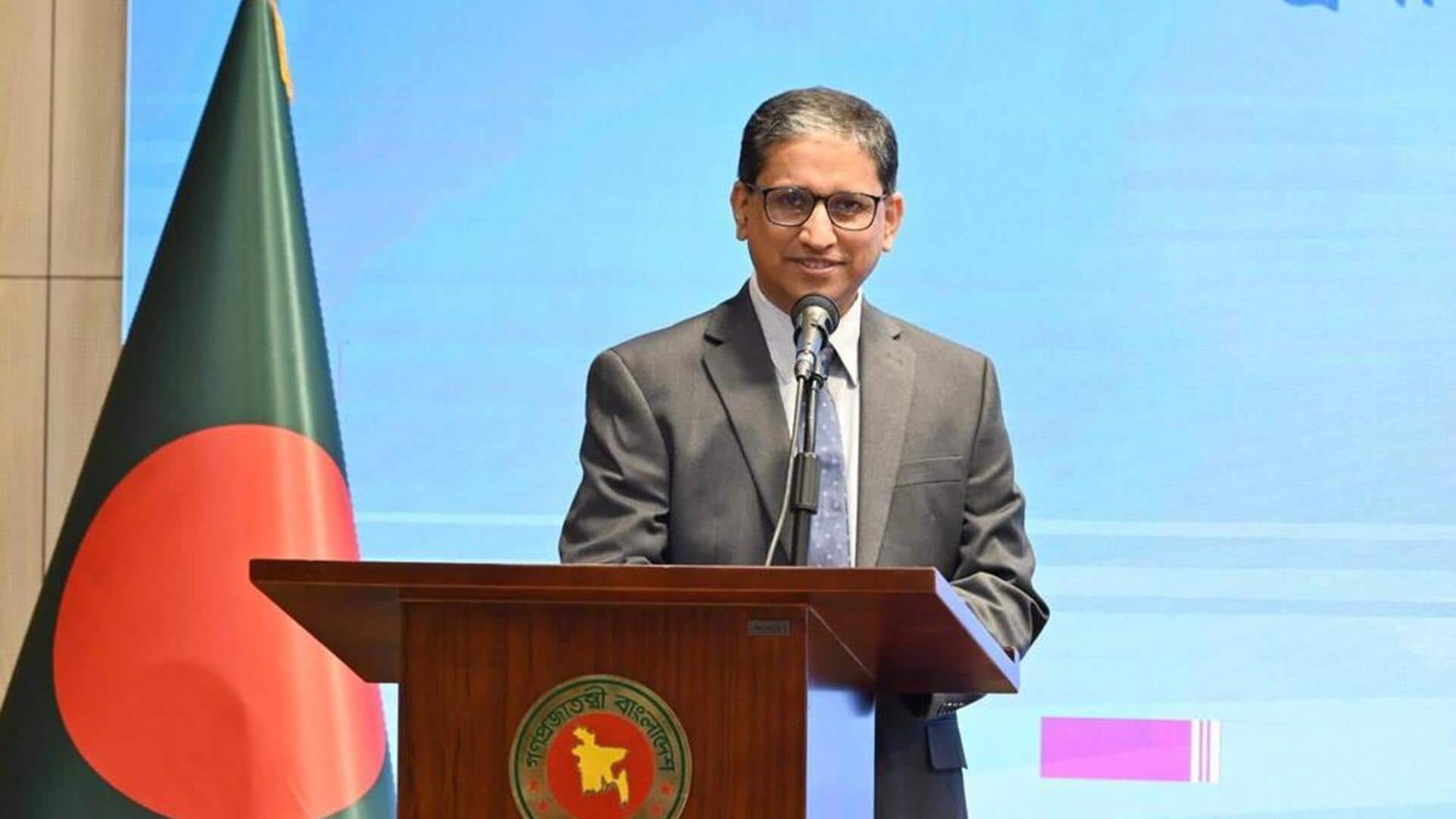
The Indian Ministry of External Affairs (MEA) has summoned the Bangladesh High Commissioner in New Delhi, Muhammad Riaz Hamidullah, following threatening remarks made by a Bangladeshi politician. The summons was issued after Hasnat Abdullah, the leader of the National Citizen Party (NCP), addressed a gathering at Dhaka’s Central Shaheed Minar and suggested that his party would support separatist movements in India’s northeastern states.
Abdullah stated, “We will shelter separatist and anti-India forces and then we will sever the seven sisters from India.” His comments raised alarms regarding the safety of Indian diplomats in Bangladesh and the overall diplomatic relations between the two countries. He further claimed that if Bangladesh were destabilized, his party would provide refuge to Northeast separatists.
These remarks followed a period of tension, as Abdullah insisted that India must respect Bangladesh’s sovereignty. He emphasized, “I want to make it clear to India that if you provide shelter to forces that do not respect Bangladesh’s sovereignty, potential, voting rights, and human rights, Bangladesh will respond.” Such statements contribute to a complex diplomatic landscape, particularly as India has long accused separatist groups of using Bangladesh as a safe haven.
In response to Abdullah’s comments, Himanta Biswa Sarma, Chief Minister of Assam, described the remarks as “irresponsible and dangerous.” He pointed out India’s status as a significant global power, stating, “How can Bangladesh even think about it?”
The Indian government reacted promptly through the Foreign Ministry, which asserted, “We expect that the interim government of Bangladesh will take all necessary measures for ensuring internal law and order, including for the purpose of holding peaceful elections.” This statement underscores India’s concerns about the potential for instability in the region and its impact on bilateral relations.
India has historically faced challenges from separatist groups operating in its northeastern states, many of which have reportedly used Bangladesh as a logistical base. In the late 1990s and early 2000s, several Northeast rebel groups were known to maintain camps and support networks across the border.
The recent exchange of remarks between Bangladeshi and Indian officials highlights the ongoing complexities affecting diplomatic relations between the two neighboring countries. As both nations navigate these sensitive issues, the focus remains on ensuring stability and fostering a cooperative environment.

Power Outage Strikes San Francisco, Leaving 130,000 in Darkness

Kumar Sanu’s Ex-Wife Responds to Defamation Suit Claiming Harassment

Indian Railways Announces Fare Hike Effective December 26

Santa Claus Swims with Sharks in Rio’s Enchanting Holiday Show

2026 Brings Emotional Growth and Opportunities for Cancer Signs

Soha Ali Khan Advocates for Awareness on Perimenopause

Imran Khan Calls for Nationwide Protests After 17-Year Sentence

Stocks Rise as Markets Stabilize; Analysts Recommend Key Buys

Navigating Tax Implications of Under-Construction and Ready Homes

SBI Announces QIP Floor Price at ₹811.05 Per Share

Cept Unveils ₹3.1 Crore Urban Mobility Plan for Sustainable Growth

New Blood Group Discovered in South Indian Woman at Rotary Centre

Torrential Rains Cause Flash Flooding in New York and New Jersey

Konkani Cultural Organisation to Host Pearl Jubilee in Abu Dhabi

Broad Advocates for Bowling Change Ahead of Final Test Against India

Nothing Headphone 1 Review: A Bold Contender in Audio Design

Air India Crash Investigation Highlights Boeing Fuel Switch Concerns

Indian Stock Market Rebounds: Sensex and Nifty Rise After Four-Day Decline
-
 World5 months ago
SBI Announces QIP Floor Price at ₹811.05 Per Share
-
 Lifestyle5 months ago
Cept Unveils ₹3.1 Crore Urban Mobility Plan for Sustainable Growth
-
 Science5 months ago
New Blood Group Discovered in South Indian Woman at Rotary Centre
-
 World5 months ago
Torrential Rains Cause Flash Flooding in New York and New Jersey
-
 Top Stories5 months ago
Konkani Cultural Organisation to Host Pearl Jubilee in Abu Dhabi
-
 Sports5 months ago
Broad Advocates for Bowling Change Ahead of Final Test Against India
-
 Science5 months ago
Nothing Headphone 1 Review: A Bold Contender in Audio Design
-
 Top Stories5 months ago
Air India Crash Investigation Highlights Boeing Fuel Switch Concerns
-
 Business5 months ago
Indian Stock Market Rebounds: Sensex and Nifty Rise After Four-Day Decline
-

 Sports5 months ago
Cristian Totti Retires at 19: Pressure of Fame Takes Toll
-

 Politics5 months ago
Abandoned Doberman Finds New Home After Journey to Prague
-
 Top Stories5 months ago
Patna Bank Manager Abhishek Varun Found Dead in Well