
Politics
Court Rules Higher Qualifications Don’t Guarantee Higher Pay

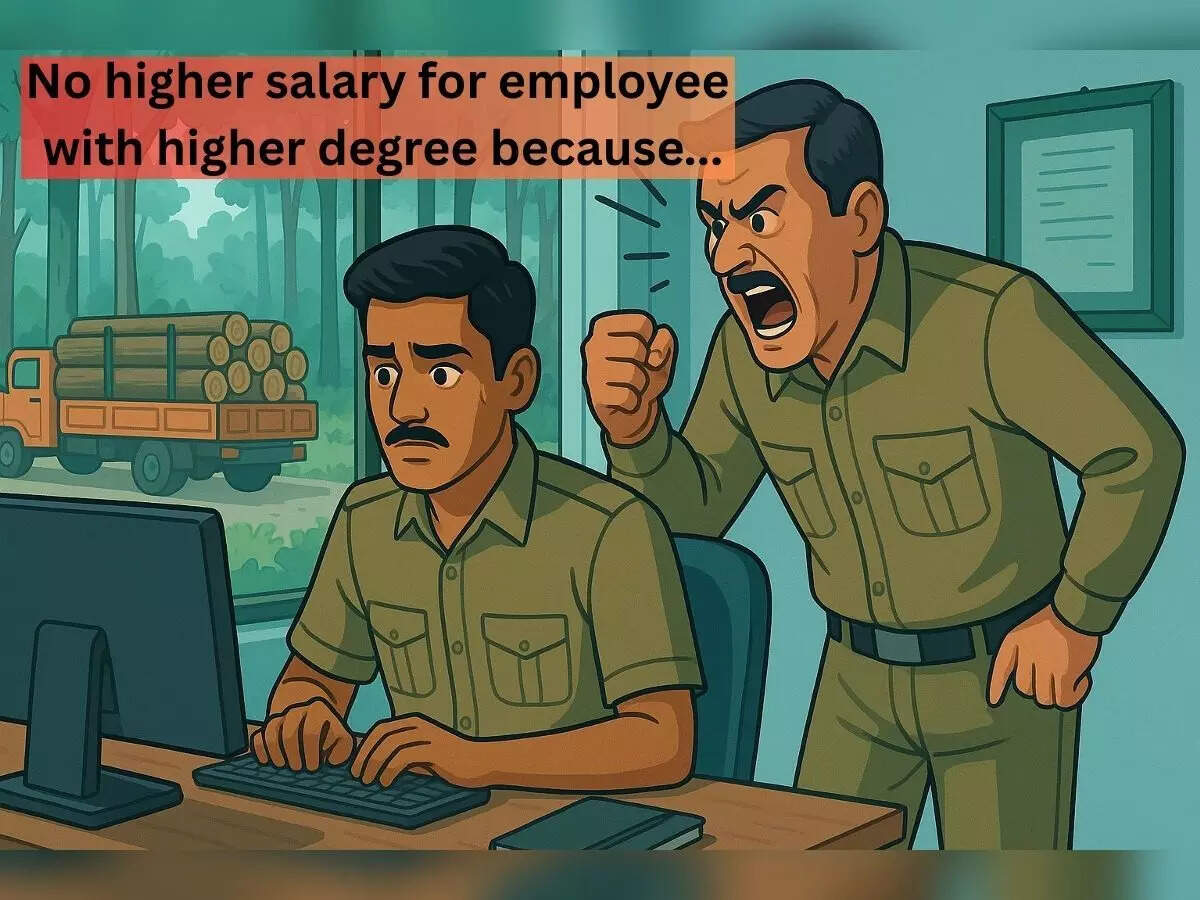
On November 11, 2025, the Jammu and Kashmir High Court issued a ruling clarifying that possessing higher qualifications does not entitle an employee to a higher salary unless they hold a corresponding position. This decision arose from a case involving Mr. Mir, who contested his classification as an unskilled worker despite his claims of performing the duties of a skilled Computer Operator.
Mr. Mir began his tenure with the Jammu and Kashmir State CAMPA (Forest Department) when he was appointed as an Orderly on July 12, 2013. Following his initial role, he was assigned to work as a Computer Operator but maintained his classification as an unskilled worker. He argued that according to S.O. 513 of 2022, skilled workers should receive a minimum daily wage of Rs 483. Consequently, he sought to have his wages adjusted to reflect this classification.
In court, Mr. Mir contended that he had been unjustly categorized as unskilled and that his responsibilities warranted a higher wage. He emphasized that he had been functioning as a Computer Operator for nearly a decade, which should qualify him for wages aligned with skilled workers under the SRO 335 of 1991. Mr. Mir argued that other employees in similar roles received recognition as skilled workers, while he felt discriminated against due to arbitrary classification.
The department countered Mr. Mir’s claims, stating that engagement classification for need-based workers is determined by their educational qualifications and the specific position they applied for. They noted that Mr. Mir had applied for the Orderly position and was appointed accordingly. The department argued that his ongoing compensation of Rs 9,330 per month reflected the minimum wages set for unskilled workers.
The court examined the engagement order and determined that Mr. Mir’s role was indeed as an Orderly, despite his computer skills. The ruling reinforced the idea that wages are intrinsically tied to the position held, rather than the qualifications possessed. The judges maintained that simply being knowledgeable in computer operations does not automatically qualify an employee for the corresponding skilled wage without a formal appointment or promotion.
In detail, the High Court stated, “An employee or a worker is entitled to wages attached to a post/position. He cannot claim wages attached to a higher post/position merely because he is qualified to hold such post/position.” This ruling dismissed Mr. Mir’s petition, emphasizing that his voluntary acceptance of the Orderly position precluded him from claiming higher wages associated with the Computer Operator role.
Legal expert Anshul Prakash from Khaitan & Co commented on the case, noting that the judgment underscored the importance of position over qualification in salary determination. While the ruling is significant, it leaves open questions regarding how responsibilities and duties should influence wage determinations, as outlined by the Supreme Court.
The implications of this judgment may affect other workers who perform duties beyond their designated roles without formal recognition or promotion. Although the ruling is binding for jurisdictional authorities, it may serve as a reference point in similar cases, albeit without the weight of Supreme Court rulings.
As labor laws continue to evolve, this case highlights the ongoing dialogue about fair wage practices and the balance between job classification and employee qualifications. The decision serves as a reminder that, in the eyes of the law, formal titles and roles remain paramount in determining salary scales.

Russia Claims Over 600 Chemical Attacks by Ukraine in Conflict

DRDO Opens Application Portal for 764 Technical Positions

Ryan Suter Honors 1980 Olympic Team at White House Ceremony

Maharashtra Approves Road Works Worth ₹1.50 Lakh Crore for 2026

Russia Claims Over 600 Chemical Attacks by Ukraine in Ongoing Conflict

GST Reforms Projected to Trim Retail Inflation by 35 Bps by 2026

Court Rules Higher Qualifications Don’t Guarantee Higher Pay

Indian Cabinet Approves Bill to Streamline Higher Education Regulation

KKR Chooses Livingstone Over Green in Ashwin’s Mock Auction

SBI Announces QIP Floor Price at ₹811.05 Per Share

Cept Unveils ₹3.1 Crore Urban Mobility Plan for Sustainable Growth

New Blood Group Discovered in South Indian Woman at Rotary Centre

Torrential Rains Cause Flash Flooding in New York and New Jersey

Konkani Cultural Organisation to Host Pearl Jubilee in Abu Dhabi

Broad Advocates for Bowling Change Ahead of Final Test Against India

Nothing Headphone 1 Review: A Bold Contender in Audio Design

Air India Crash Investigation Highlights Boeing Fuel Switch Concerns

Indian Stock Market Rebounds: Sensex and Nifty Rise After Four-Day Decline
-
 World5 months ago
SBI Announces QIP Floor Price at ₹811.05 Per Share
-
 Lifestyle5 months ago
Cept Unveils ₹3.1 Crore Urban Mobility Plan for Sustainable Growth
-
 Science5 months ago
New Blood Group Discovered in South Indian Woman at Rotary Centre
-
 World5 months ago
Torrential Rains Cause Flash Flooding in New York and New Jersey
-
 Top Stories5 months ago
Konkani Cultural Organisation to Host Pearl Jubilee in Abu Dhabi
-
 Sports5 months ago
Broad Advocates for Bowling Change Ahead of Final Test Against India
-
 Science5 months ago
Nothing Headphone 1 Review: A Bold Contender in Audio Design
-
 Top Stories5 months ago
Air India Crash Investigation Highlights Boeing Fuel Switch Concerns
-
 Business5 months ago
Indian Stock Market Rebounds: Sensex and Nifty Rise After Four-Day Decline
-

 Sports5 months ago
Cristian Totti Retires at 19: Pressure of Fame Takes Toll
-

 Politics5 months ago
Abandoned Doberman Finds New Home After Journey to Prague
-

 Top Stories5 months ago
Patna Bank Manager Abhishek Varun Found Dead in Well