
Politics
Ashok Gehlot Criticizes Environment Minister Over Aravalli Ruling

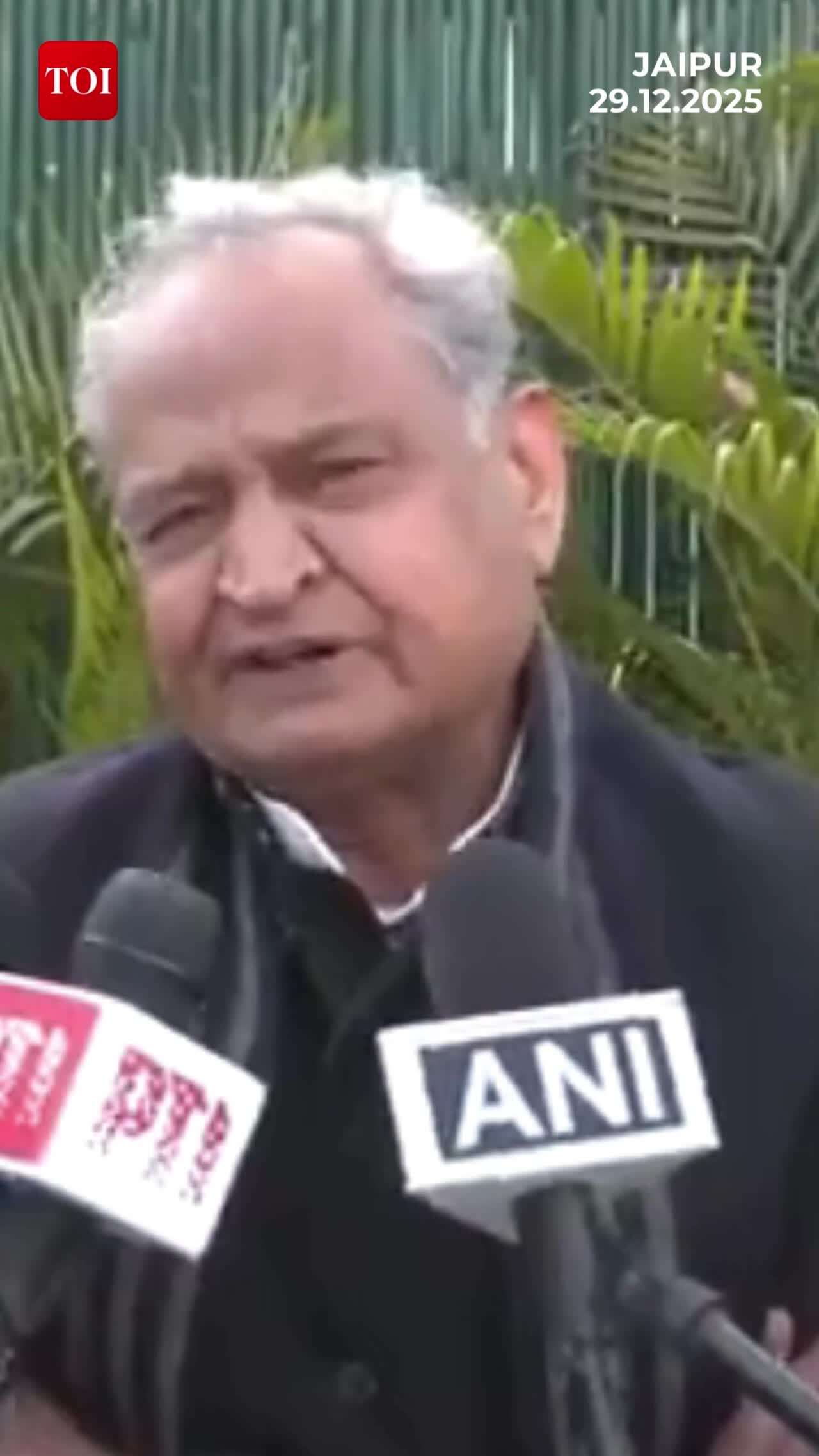
Former Rajasthan Chief Minister Ashok Gehlot has publicly criticized Union Environment Minister Bhupender Yadav following a recent ruling by the Supreme Court of India. The court has temporarily suspended its prior directions regarding the definition of the Aravalli hills, a move that has sparked significant debate among environmentalists and political leaders.
Gehlot’s remarks come in the wake of the Supreme Court’s decision, made on October 16, 2023, to keep its earlier orders on hold. These orders aimed to redefine the Aravalli hills, which are crucial for biodiversity and environmental protection. The former chief minister expressed his disappointment, stating that the environment minister seems to lack a fundamental understanding of the ecological importance of the region.
In a statement, Gehlot asserted that the Aravalli hills play a vital role in maintaining the ecological balance in Rajasthan. He emphasized that any alterations to their classification could have serious repercussions for the environment and the communities that depend on it. “The Aravalli range is not just a geographical feature; it is a lifeline for millions living in its vicinity,” Gehlot said.
The Supreme Court’s ruling has raised concerns among environmental activists who argue that the redefinition could facilitate unchecked development in the area. Critics warn that such actions could potentially lead to deforestation and further degradation of the ecosystem, threatening wildlife and local livelihoods.
Gehlot’s critique of Yadav reflects broader tensions within Indian politics regarding environmental policy. The former chief minister called for a more proactive approach to environmental conservation, urging the government to prioritize sustainable development over short-term economic gains. He highlighted the need for collaboration between state and central authorities to protect the Aravalli hills.
As discussions continue, the implications of the Supreme Court’s decision remain uncertain. The court’s ruling will likely influence future policy decisions related to the Aravalli hills and set a precedent for how environmental issues are addressed in India.
Gehlot’s comments underscore a growing recognition of the need for comprehensive environmental policies that balance development with sustainability. The debate surrounding the Aravalli hills serves as a reminder of the challenges faced in managing natural resources in a rapidly developing nation.
Looking ahead, it will be crucial for stakeholders at all levels to engage in dialogue aimed at fostering a sustainable approach to environmental governance.

Australia, US, and UK Warn of Fake Rabies Vaccine from India

CIET-NCERT Unveils New Nano Course to Enhance Digital Education

Baltimore Orioles Secure Zach Eflin with $10M Deal Ahead of 2026 Season

Amit Shah Accuses Congress of Exploiting Bangladeshi Migrants

Anthony Joshua Involved in Fatal Car Accident in Nigeria

Gold and Silver Prices Drop as Investors Book Profits

Karan Johar Praises ‘Dhurandhar’ for Inspiring Filmmaking Reflection

India Introduces National Security Cess Bill 2025 for Health Funding

INSV Kaundinya Sets Sail on Historic Voyage to Oman

SBI Announces QIP Floor Price at ₹811.05 Per Share

Cept Unveils ₹3.1 Crore Urban Mobility Plan for Sustainable Growth

New Blood Group Discovered in South Indian Woman at Rotary Centre

Torrential Rains Cause Flash Flooding in New York and New Jersey

Konkani Cultural Organisation to Host Pearl Jubilee in Abu Dhabi

Nothing Headphone 1 Review: A Bold Contender in Audio Design

Broad Advocates for Bowling Change Ahead of Final Test Against India

Air India Crash Investigation Highlights Boeing Fuel Switch Concerns

Indian Stock Market Rebounds: Sensex and Nifty Rise After Four-Day Decline
-
 World6 months ago
SBI Announces QIP Floor Price at ₹811.05 Per Share
-
 Lifestyle6 months ago
Cept Unveils ₹3.1 Crore Urban Mobility Plan for Sustainable Growth
-
 Science5 months ago
New Blood Group Discovered in South Indian Woman at Rotary Centre
-
 World6 months ago
Torrential Rains Cause Flash Flooding in New York and New Jersey
-
 Top Stories6 months ago
Konkani Cultural Organisation to Host Pearl Jubilee in Abu Dhabi
-
 Science6 months ago
Nothing Headphone 1 Review: A Bold Contender in Audio Design
-
 Sports5 months ago
Broad Advocates for Bowling Change Ahead of Final Test Against India
-
 Top Stories6 months ago
Air India Crash Investigation Highlights Boeing Fuel Switch Concerns
-
 Business6 months ago
Indian Stock Market Rebounds: Sensex and Nifty Rise After Four-Day Decline
-

 Sports5 months ago
Cristian Totti Retires at 19: Pressure of Fame Takes Toll
-

 Politics6 months ago
Abandoned Doberman Finds New Home After Journey to Prague
-

 Top Stories6 months ago
Patna Bank Manager Abhishek Varun Found Dead in Well