
Entertainment
Trump’s Leadership Echoes Andrew Jackson’s Controversial Legacy

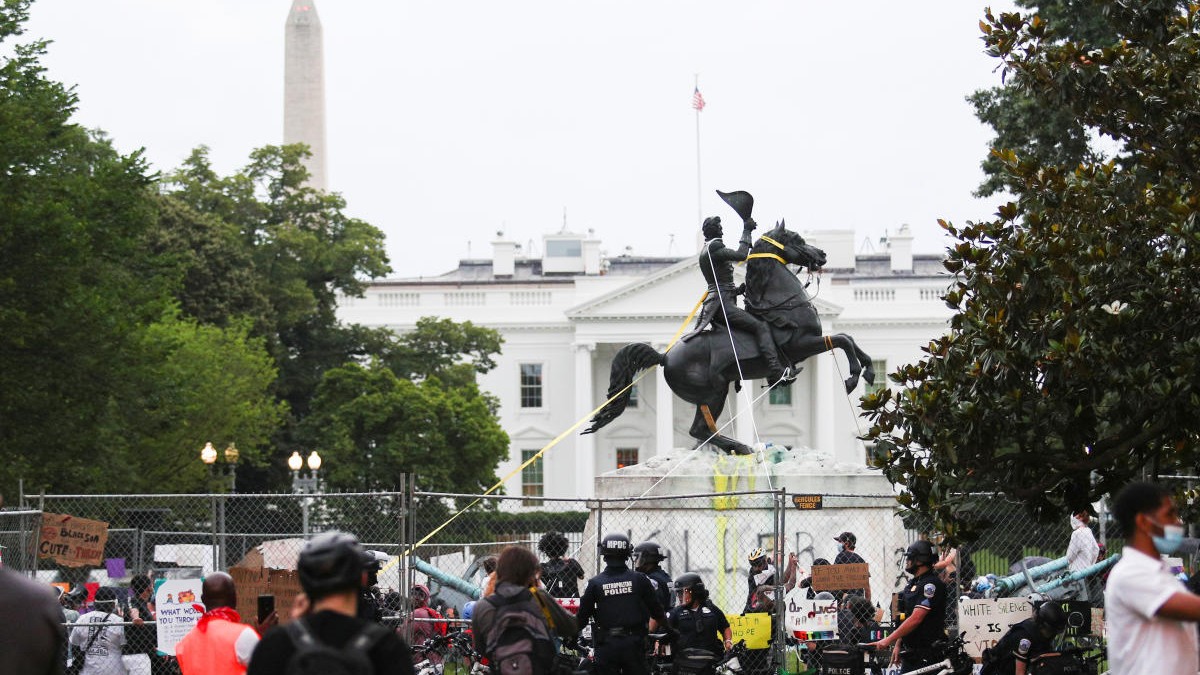
Donald Trump’s political strategies and leadership style have drawn parallels to those of Andrew Jackson, the seventh President of the United States. As Trump navigates his presidency, his actions reflect a historical playbook crafted by Jackson and his supporters in the early 19th century. This connection raises important questions about governance and the treatment of marginalized communities in American history.
Jackson’s rise to power in 1828 was marked by a campaign that emphasized his military accomplishments, notably his decisive victories in the Creek War and the Battle of New Orleans in 1815. However, these triumphs came at a grave cost to Native American populations. Jackson’s aggressive policies resulted in the surrender of over 21 million acres of land from the Muscogees, a native tribe, benefiting white land speculators, including Jackson himself.
Following his election, Jackson supported the Indian Removal Act of 1830, which forcibly relocated more than 60,000 American Indians from at least 18 tribes to the arid regions west of the Mississippi River, primarily in present-day Oklahoma. This act effectively emptied a significant portion of the American landscape of its Indigenous population.
Trump’s contemporary rhetoric regarding Gaza and his desire to transform it into a prosperous region reflects similar ambitions. His vision resembles Jackson’s ideology, where land and resources were prioritized over the well-being of Indigenous populations. Jackson’s infamous assertion, “What good man would prefer a country covered with forests and ranged by a few thousand savages…” illustrates his disdain for Native Americans, prioritizing a vision of progress that disregarded their rights.
The authoritarian tendencies exhibited by Jackson resonate with Trump’s approach to governance. Jackson often disregarded constitutional limits, waging war on Florida without congressional approval and facing unsuccessful censure attempts. His administration was marked by revenge against opponents, including imprisonment of political adversaries and censorship of critical media.
Trump’s recent decision to rename the Department of Defense to the Department of War signifies a conscious alignment with Jackson’s historical context, where such a department did not exist. Jackson’s image in Trump’s Oval Office and his aspiration to feature on U.S. currency further highlight this connection.
Legal challenges have also shaped Trump’s presidency. Following a federal grand jury indictment for his alleged role in overturning the results of the November 2020 election, he sought to dismiss the charges based on presidential immunity. The Supreme Court, influenced by his appointees, ruled in his favor. Trump’s history of retaliating against those who challenge him mirrors Jackson’s vendetta against his critics.
Jackson’s legacy is further complicated by his ownership of enslaved people, with estimates ranging from 95 to 150 during his presidency. His brutal treatment of them and Native Americans reflects a disturbing pattern of cruelty. Trump’s immigration policies, which involved separating children from their parents and deporting migrants under harsh conditions, echo this historical precedent.
Moreover, Jackson’s speculative real estate ventures, particularly on tribal lands, reveal a troubling aspect of his character. He often coerced Indigenous communities into unhonored agreements, profiting from their dispossession. Similarly, Trump’s tariff policies towards nations such as China and Canada have been criticized as coercive tactics aimed at extracting favorable concessions.
History continues to offer lessons, yet the public’s engagement with these narratives is often limited. The connection between Trump and Jackson serves as a reminder of the cyclical nature of political power and the persistent challenges faced by marginalized communities in the United States.
These parallels prompt a reevaluation of American leadership and the impact of historical figures like Andrew Jackson on contemporary governance. The implications of their actions resonate today, emphasizing the importance of understanding the past to inform future decisions.

Airbus Discovers Quality Issue Affecting A320 Family Aircraft

Awami League Condemns Dhaka Court Ruling Against Sheikh Hasina

Supreme Court Denies Extension for Waqf Property Registration

Samantha Ruth Prabhu Weds Raj Nidimoru in Intimate Ceremony

Discover Engaging Ways to Stay Active Outside the Gym

Delhi High Court Sets Deadline for Government, CCI on Apple Fine

Charges Filed Against Sushil Kumar in IGP Bribery Case

BSF Foils Four Infiltration Attempts, Neutralizes Eight Terrorists

New Tax Bill Targets Pan Masala, Gutkha to Fund Health and Defence

SBI Announces QIP Floor Price at ₹811.05 Per Share

Cept Unveils ₹3.1 Crore Urban Mobility Plan for Sustainable Growth

New Blood Group Discovered in South Indian Woman at Rotary Centre

Torrential Rains Cause Flash Flooding in New York and New Jersey

Konkani Cultural Organisation to Host Pearl Jubilee in Abu Dhabi

Broad Advocates for Bowling Change Ahead of Final Test Against India

Nothing Headphone 1 Review: A Bold Contender in Audio Design

Air India Crash Investigation Highlights Boeing Fuel Switch Concerns

Indian Stock Market Rebounds: Sensex and Nifty Rise After Four-Day Decline
-
 World5 months ago
SBI Announces QIP Floor Price at ₹811.05 Per Share
-
 Lifestyle5 months ago
Cept Unveils ₹3.1 Crore Urban Mobility Plan for Sustainable Growth
-
 Science4 months ago
New Blood Group Discovered in South Indian Woman at Rotary Centre
-
 World5 months ago
Torrential Rains Cause Flash Flooding in New York and New Jersey
-
 Top Stories5 months ago
Konkani Cultural Organisation to Host Pearl Jubilee in Abu Dhabi
-
 Sports4 months ago
Broad Advocates for Bowling Change Ahead of Final Test Against India
-
 Science5 months ago
Nothing Headphone 1 Review: A Bold Contender in Audio Design
-
 Top Stories5 months ago
Air India Crash Investigation Highlights Boeing Fuel Switch Concerns
-
 Business5 months ago
Indian Stock Market Rebounds: Sensex and Nifty Rise After Four-Day Decline
-

 Sports4 months ago
Cristian Totti Retires at 19: Pressure of Fame Takes Toll
-

 Politics5 months ago
Abandoned Doberman Finds New Home After Journey to Prague
-

 Top Stories5 months ago
Patna Bank Manager Abhishek Varun Found Dead in Well