
Entertainment
Koodiyattam Recital at Hindu College Enlivens Ancient Theatre

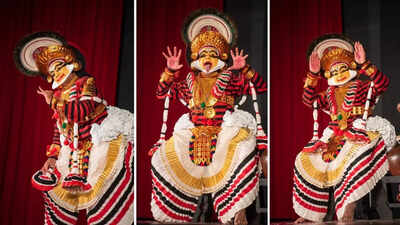
A captivating Koodiyattam recital took place at Hindu College in Delhi on March 12, 2024, showcasing this ancient Indian theatrical tradition. Organized by the Society for the Promotion of Indian Classical Music And Culture Amongst Youth (SPIC MACAY), the event aimed to immerse students in the rich cultural heritage of India. The performance featured acclaimed maestro Margi Madhu Chakyar, who mesmerized the audience with a portrayal of various avatars of Lord Vishnu.
Koodiyattam, recognized by UNESCO in 2001 as a Masterpiece of the Oral and Intangible Heritage of Humanity, has been practiced for over 2,000 years in Kerala. The art form is known for its intricate storytelling, combining dance, music, and theatre elements. As the performance unfolded at the Sanganeria Auditorium, spectators experienced the intensity and depth of Koodiyattam, which is said to command such respect that even the flames of oil lamps reportedly flicker in reverence.
Reviving Cultural Roots
The event garnered significant enthusiasm among students, highlighting their commitment to preserving and promoting classical art forms. Prof. Anju Srivastava, principal of Hindu College, expressed her delight at the student involvement, stating, “Today’s performance truly captivated the young audience across Delhi University, making it a mesmerizing event.”
The concert included skilled musicians who accompanied Chakyar on percussion instruments, enhancing the storytelling experience. The performance, titled “Balacharitam,” is based on a Sanskrit play by ancient playwright Mahakavi Bhasa. Chakyar’s portrayal of characters, including a poignant depiction of Ravana’s death at the hands of Ram, showcased the emotional range and skill intrinsic to Koodiyattam.
Dr. Kiran Seth, the founder of SPIC MACAY, emphasized the importance of such performances in fostering appreciation for traditional art. He remarked, “It brings concentration, a sense of equanimity, and patience. It helps students gain respect for the abstract.” This sentiment resonated deeply with the audience, many of whom found the experience transformative.
Audience Reactions
Attendees expressed their awe at the performance, with student Aviral Verma noting, “I’ve never seen anything like this! Seeing the artist’s expressions up-close was a great experience, one completely different from watching it on a screen.” Another student, Sushant Ranjan, president of the SPIC MACAY Hindu College chapter, described the performance as “divine,” highlighting its ability to deepen understanding of the Sanskrit language through its artistic expression.
The event not only entertained but also served as a learning opportunity, allowing students to engage with their cultural heritage in a profound manner. Maestro Chakyar reflected on the necessity of such performances, commenting, “If we give them the chance to see these kinds of classical performances, they can learn from it and change their perception.”
The Koodiyattam recital at Hindu College served as a vibrant reminder of the importance of preserving traditional art forms and the role they play in educating and inspiring future generations.

Swiss Voters Reject Hefty Inheritance Tax Amid Public Opposition

Archaeologists Uncover 2,000-Year-Old Papyrus in Egyptian Coffin

Bijan Robinson Dominates Week 13, Davante Adams Sets New Record

Stockton Mass Shooting Claims Four Lives; Mayor Issues Stark Warning

Health Insights for December 1, 2025: Wellness Predictions for All Signs

Indian Government Supports Air Passengers in ₹50,000 Crore Suit

Shehbaz Badesha Eliminated from Bigg Boss 19; Amaal Mallik Reacts

India to Introduce New Cess on Tobacco and Pan Masala Products

Ram Kamal Mukherjee Celebrates Cinema at IFFI 2025

SBI Announces QIP Floor Price at ₹811.05 Per Share

Cept Unveils ₹3.1 Crore Urban Mobility Plan for Sustainable Growth

New Blood Group Discovered in South Indian Woman at Rotary Centre

Torrential Rains Cause Flash Flooding in New York and New Jersey

Konkani Cultural Organisation to Host Pearl Jubilee in Abu Dhabi

Broad Advocates for Bowling Change Ahead of Final Test Against India

Nothing Headphone 1 Review: A Bold Contender in Audio Design

Air India Crash Investigation Highlights Boeing Fuel Switch Concerns

Indian Stock Market Rebounds: Sensex and Nifty Rise After Four-Day Decline
-
 World5 months ago
SBI Announces QIP Floor Price at ₹811.05 Per Share
-
 Lifestyle5 months ago
Cept Unveils ₹3.1 Crore Urban Mobility Plan for Sustainable Growth
-
 Science4 months ago
New Blood Group Discovered in South Indian Woman at Rotary Centre
-
 World5 months ago
Torrential Rains Cause Flash Flooding in New York and New Jersey
-
 Top Stories5 months ago
Konkani Cultural Organisation to Host Pearl Jubilee in Abu Dhabi
-
 Sports4 months ago
Broad Advocates for Bowling Change Ahead of Final Test Against India
-
 Science5 months ago
Nothing Headphone 1 Review: A Bold Contender in Audio Design
-
 Top Stories5 months ago
Air India Crash Investigation Highlights Boeing Fuel Switch Concerns
-
 Business5 months ago
Indian Stock Market Rebounds: Sensex and Nifty Rise After Four-Day Decline
-

 Sports4 months ago
Cristian Totti Retires at 19: Pressure of Fame Takes Toll
-

 Politics5 months ago
Abandoned Doberman Finds New Home After Journey to Prague
-
 Top Stories5 months ago
Patna Bank Manager Abhishek Varun Found Dead in Well