
Business
New Airline Approvals Raise Questions on Indian Aviation Competition

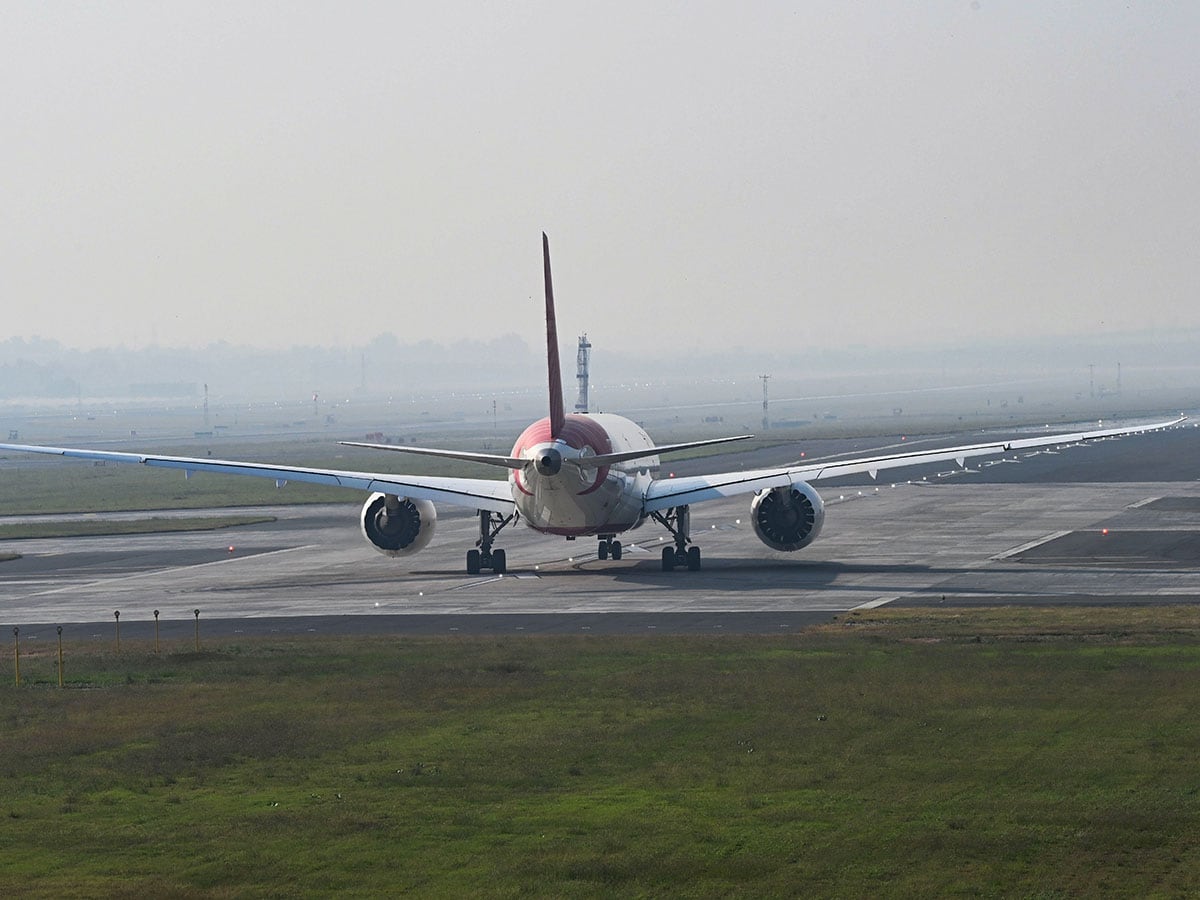
The Ministry of Civil Aviation has granted No Objection Certificates (NOCs) to both Al Hind Air and FlyExpress, marking a significant step towards launching new airline services in India. This decision follows the recent approval for Shankh Air and comes amid growing concerns about the concentration of market power among a few dominant carriers. IndiGo and the Air India Group together command nearly 90 percent of India’s domestic passenger traffic, raising questions about the potential for increased competition.
Al Hind Air, backed by the alhind Group based in Kerala, is preparing to enter the market as a regional commuter airline, targeting domestic routes with ATR 72-600 turboprop aircraft. The airline’s founder, Mohammed Haris T, is also the general secretary of the Indian Haj Umrah Association. Al Hind Air aims to establish its operational base at Cochin International Airport and plans to expand internationally over time.
FlyExpress, located in Hyderabad, remains in its pre-operational phase. While specific details regarding its fleet and route network are not yet available, reports suggest that the airline is focused on connecting Tier-2 and Tier-3 cities, bolstered by promoters experienced in logistics and cargo services. Before commencing operations, FlyExpress must secure its Air Operator Certificate (AOC).
Government Push for Regional Connectivity
The approval of new airlines aligns with the government’s UDAN (Ude Desh ka Aam Naagrik) scheme, which aims to enhance regional connectivity by subsidizing flights on underserved routes. Smaller carriers such as Star Air and IndiaOne Air have successfully expanded services under this initiative. The Ministry of Civil Aviation believes that ongoing demand from non-metro cities provides opportunities for new entrants like Al Hind Air and FlyExpress, positioning them to capitalize on this growth rather than competing directly with larger airlines on established routes.
An NOC signifies that the civil aviation ministry has reviewed and approved an airline’s ownership structure, financial background, and security checks. Nevertheless, obtaining an NOC does not authorize an airline to commence operations; that permission comes only after acquiring an AOC from the Directorate General of Civil Aviation (DGCA). The AOC process involves a thorough examination of safety systems, crew training, and operational procedures.
Despite the regulatory milestones, experts caution that financial backing remains the most significant barrier to entry in the Indian aviation market. Mark Martin, CEO of Martin Consulting, emphasizes that airlines require substantial financial resources, estimating a need for at least ₹3,000 crore to launch a viable airline. While the DGCA mandates a minimum capital requirement for approval, Martin argues that this measure often falls short of ensuring long-term sustainability.
Challenges in Breaking the Duopoly
The Indian aviation landscape is currently dominated by nine scheduled domestic airlines, a number that has diminished over the years due to the collapse of carriers like Jet Airways and Go First. As a result, IndiGo controls over 65 percent of domestic traffic, while the Air India Group accounts for approximately another quarter. This concentration has led to concerns about pricing power, operational resilience, and consumer choice.
The Federation of Indian Pilots (FIP) has expressed skepticism regarding the impact of new airline approvals on breaking the existing duopoly. In a recent statement, the FIP noted that the average lifespan of regional airlines in India is between three to seven years, suggesting that only well-capitalized entrants can effectively alter the competitive landscape.
The recent collapse of Go First, which ceased operations in May 2023, highlights the financial vulnerabilities within the industry. The airline, which faced significant revenue losses estimated at ₹10,800 crore due to faulty engines, was eventually liquidated despite operating a fleet of 54 aircraft. Similar challenges have been observed in the case of Jet Airways, which suspended operations in April 2019 and was ordered into liquidation in November 2024.
The government’s approach to supporting struggling airlines has drawn criticism, with experts arguing that without substantial reform and intervention, the market dynamics will remain largely unchanged.
As Al Hind Air and FlyExpress navigate the complexities of launching their operations, they face not only the challenge of securing aircraft and pilots but also the necessity of building strong financial foundations. The trajectory of India’s aviation market will depend significantly on the ability of new entrants to establish sustainable business models and the government’s commitment to fostering a more competitive environment.

Putin Celebrates Territorial Gains in Eastern Ukraine Amid Military Advances

SMC Launches AI-Enhanced Dental Screening Camp for Staff

Packers Face Playoff Pressure Amid Special Teams Struggles

Experienced Paragliding Pilot Dies in Bir Billing Accident

Putin Celebrates Military Gains in Eastern Ukraine Amid Tensions

No Obstacles for BJP-Shiv Sena Alliance Ahead of BMC Elections

Adani Group Launches AI Centre of Excellence in Baramati

Liverpool Secures 2-1 Win Over Wolves, Extends Unbeaten Run

Powerful 7.0 Magnitude Earthquake Shakes Taiwan, Tsunami Alerts Issued

SBI Announces QIP Floor Price at ₹811.05 Per Share

Cept Unveils ₹3.1 Crore Urban Mobility Plan for Sustainable Growth

New Blood Group Discovered in South Indian Woman at Rotary Centre

Torrential Rains Cause Flash Flooding in New York and New Jersey

Konkani Cultural Organisation to Host Pearl Jubilee in Abu Dhabi

Nothing Headphone 1 Review: A Bold Contender in Audio Design

Broad Advocates for Bowling Change Ahead of Final Test Against India

Air India Crash Investigation Highlights Boeing Fuel Switch Concerns

Indian Stock Market Rebounds: Sensex and Nifty Rise After Four-Day Decline
-
 World5 months ago
SBI Announces QIP Floor Price at ₹811.05 Per Share
-
 Lifestyle6 months ago
Cept Unveils ₹3.1 Crore Urban Mobility Plan for Sustainable Growth
-
 Science5 months ago
New Blood Group Discovered in South Indian Woman at Rotary Centre
-
 World6 months ago
Torrential Rains Cause Flash Flooding in New York and New Jersey
-
 Top Stories6 months ago
Konkani Cultural Organisation to Host Pearl Jubilee in Abu Dhabi
-
 Science6 months ago
Nothing Headphone 1 Review: A Bold Contender in Audio Design
-
 Sports5 months ago
Broad Advocates for Bowling Change Ahead of Final Test Against India
-
 Top Stories6 months ago
Air India Crash Investigation Highlights Boeing Fuel Switch Concerns
-
 Business6 months ago
Indian Stock Market Rebounds: Sensex and Nifty Rise After Four-Day Decline
-

 Sports5 months ago
Cristian Totti Retires at 19: Pressure of Fame Takes Toll
-

 Politics5 months ago
Abandoned Doberman Finds New Home After Journey to Prague
-

 Top Stories6 months ago
Patna Bank Manager Abhishek Varun Found Dead in Well