
Health
India Introduces National Security Cess Bill 2025 for Health Funding

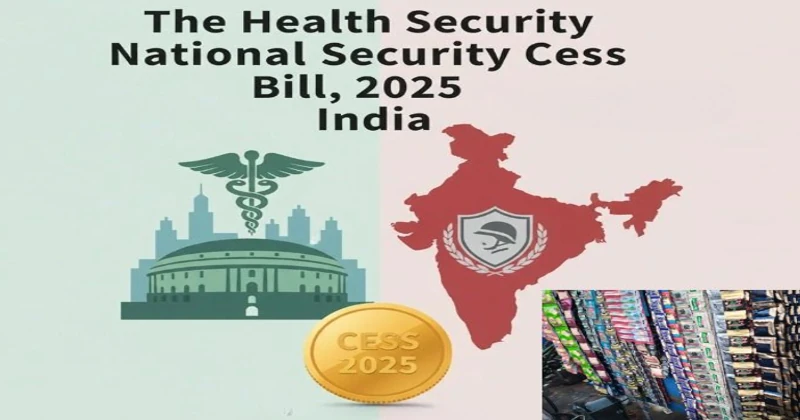
The Indian government has proposed the National Security Cess Bill 2025, marking a significant shift in the funding approach for public healthcare. This legislation recognizes health security as a vital aspect of national security, establishing a dedicated funding stream for health infrastructure through a tax on the production of harmful goods, starting with pan masala.
The Bill introduces a unique capacity-based cess, which differs from traditional sales taxes. Instead of being calculated based on sales figures, the cess will be determined by the production capacity of manufacturers. This approach aims to address issues such as under-reporting of output and tax evasion, ensuring more predictable revenue flows into government finances.
Key Features of the National Security Cess Bill
Under this new framework, manufacturers of designated health-damaging products will be required to register their production capabilities and pay the cess monthly. For automated production processes, the cess is calculated based on the maximum number of units produced per minute and the weight of each unit. For manual production, a fixed cess of Rs 11 lakh per month will apply for each unit.
For large-scale manufacturers, the cess could reach as high as Rs 101 lakh per month. This structured approach aims to promote compliance and ensure that revenue is consistently generated. In cases where production is halted, the Bill allows for adjustments in cess liability, reflecting a preference for administrative certainty.
The funds collected through this cess will be credited to the Consolidated Fund of India, intended for enhancing health services and security preparedness. While there is no specific allocation for particular programs, the Bill emphasizes the correlation between revenue from harmful consumption patterns and expenditures for hospitals, disease management, and health infrastructure improvements.
Compliance and Enforcement Mechanisms
The Bill places significant emphasis on compliance and enforcement to address the complexities of capacity-based taxation. Authorities will be granted powers to verify manufacturers’ declarations regarding their machinery and production capabilities. Strict penalties for non-compliance, including fines and potential imprisonment, are included to deter violations.
This rigorous enforcement framework aims to ensure that declarations are verifiable, fostering credibility and reliability in the taxation system. The relationship between enforcement and the judicial process is crucial for the effective operation of capacity-based systems.
The Bill reflects a growing recognition that health security and national security are interconnected. By compelling producers of harmful products to contribute to public health funding, the government seeks to internalize the social costs associated with these goods.
The introduction of this cess aligns with global trends where similar taxes are being rationalized not only for revenue generation but also for correcting health-related externalities. While some critics argue against the efficacy of such measures, the National Security Cess Bill 2025 aims to transform consumption patterns into a sustainable resource base for improving the nation’s health infrastructure.
As the Bill progresses, questions remain regarding which additional products might be included in the future and how the funds will be transparently utilized. The effectiveness of compliance measures, particularly for smaller producers, will also be a critical factor in the success of this initiative.
Ultimately, the success of the National Security Cess Bill 2025 will not only be measured by its financial outcomes but also by the tangible improvements in health capacity and national resilience stemming from the resources generated by this innovative funding model.

Albert Camus’ Insightful Quote on Human Identity Resurfaces

Drone Strikes and Missile Attacks Disrupt UAE Amid Rising Tensions

Japanese Yen Rises Sharply Against US Dollar Ahead of Key Decisions

Priyanka Chopra and Nick Jonas Avoid Near Miss en Route to Oscars

Gujarat Vaccinates Over 11 Lakh Infants in Major Health Drive

Alexandre Singh Wins Oscar, Celebrates Immigrant Heritage

Lok Sabha Speaker Issues Warning Over Placards in Parliament

Global Electrosurgical Devices Market Expands to $10.2 Billion by 2034

North Zone Dominates Cricket; SJAM-1 Shines in Table Tennis

SBI Announces QIP Floor Price at ₹811.05 Per Share

Cept Unveils ₹3.1 Crore Urban Mobility Plan for Sustainable Growth

New Blood Group Discovered in South Indian Woman at Rotary Centre

Konkani Cultural Organisation to Host Pearl Jubilee in Abu Dhabi

Torrential Rains Cause Flash Flooding in New York and New Jersey

Nothing Headphone 1 Review: A Bold Contender in Audio Design

Indian Stock Market Rebounds: Sensex and Nifty Rise After Four-Day Decline

Air India Crash Investigation Highlights Boeing Fuel Switch Concerns

Broad Advocates for Bowling Change Ahead of Final Test Against India
-
 World12 months ago
SBI Announces QIP Floor Price at ₹811.05 Per Share
-
 Lifestyle12 months ago
Cept Unveils ₹3.1 Crore Urban Mobility Plan for Sustainable Growth
-
 Science12 months ago
New Blood Group Discovered in South Indian Woman at Rotary Centre
-
 Top Stories12 months ago
Konkani Cultural Organisation to Host Pearl Jubilee in Abu Dhabi
-
 World12 months ago
Torrential Rains Cause Flash Flooding in New York and New Jersey
-
 Science12 months ago
Nothing Headphone 1 Review: A Bold Contender in Audio Design
-
 Business12 months ago
Indian Stock Market Rebounds: Sensex and Nifty Rise After Four-Day Decline
-
 Top Stories12 months ago
Air India Crash Investigation Highlights Boeing Fuel Switch Concerns
-
 Sports12 months ago
Broad Advocates for Bowling Change Ahead of Final Test Against India
-

 Sports12 months ago
Cristian Totti Retires at 19: Pressure of Fame Takes Toll
-

 Politics12 months ago
Abandoned Doberman Finds New Home After Journey to Prague
-
 Lifestyle12 months ago
Villagers Unite to Raise ₹45 Lakh for Water Solutions in Vadgam